J.S. Car Services opens new Class 7 ATL MOT bay in Elstree

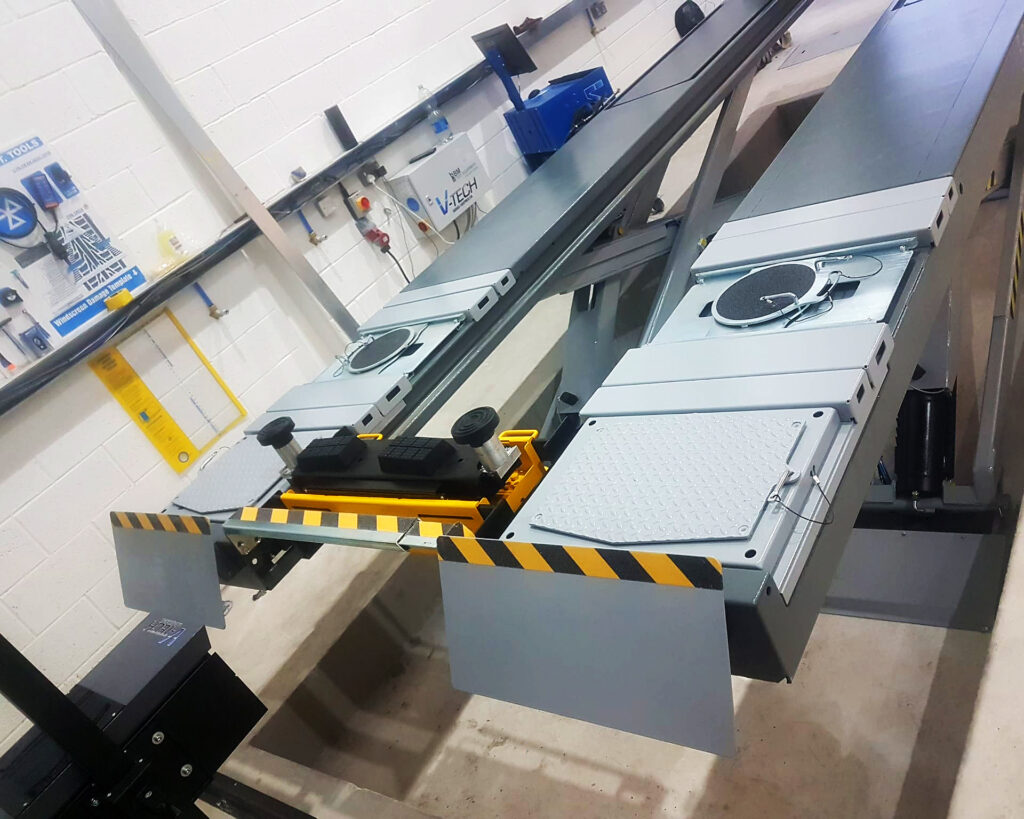
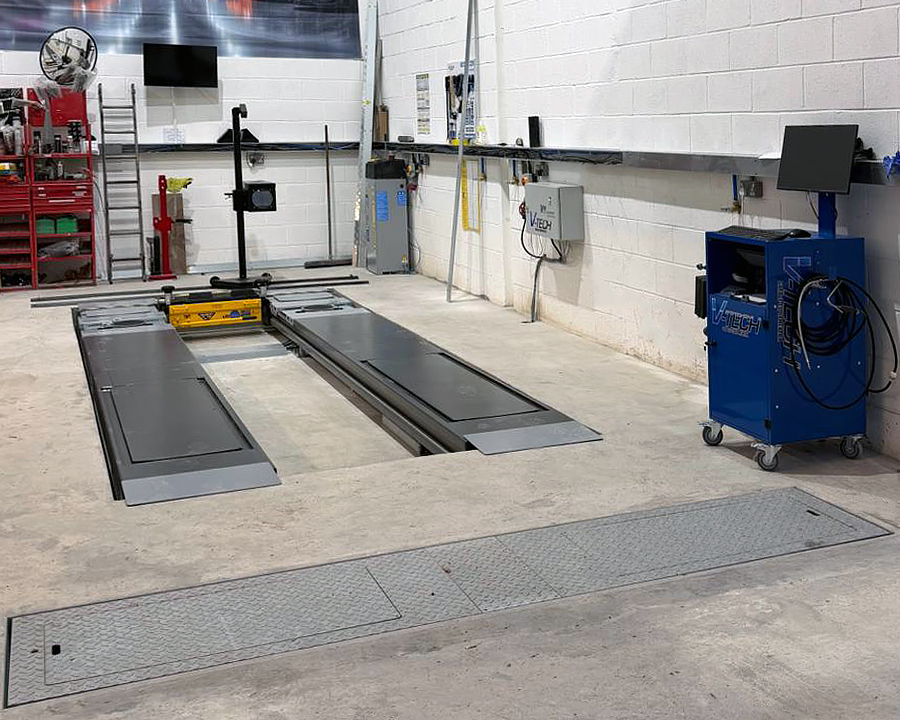
V-Tech Garage Equipment supplied and installed a complete Class 7 ATL MOT bay for J.S. Car Services in Elstree, including a 5-tonne ATL lift, brake tester, jacking beam, emissions analyser and DVSA application support.

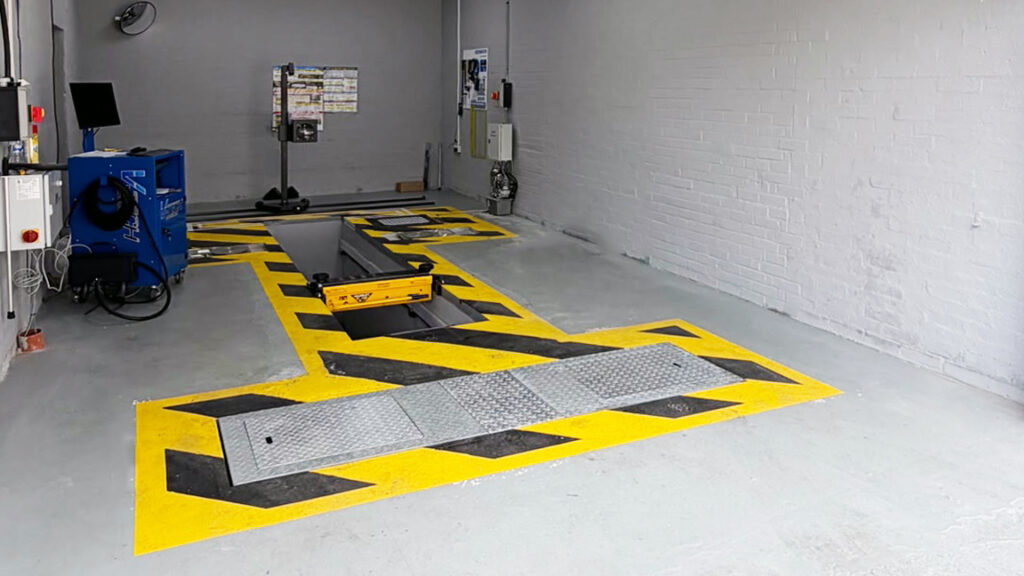
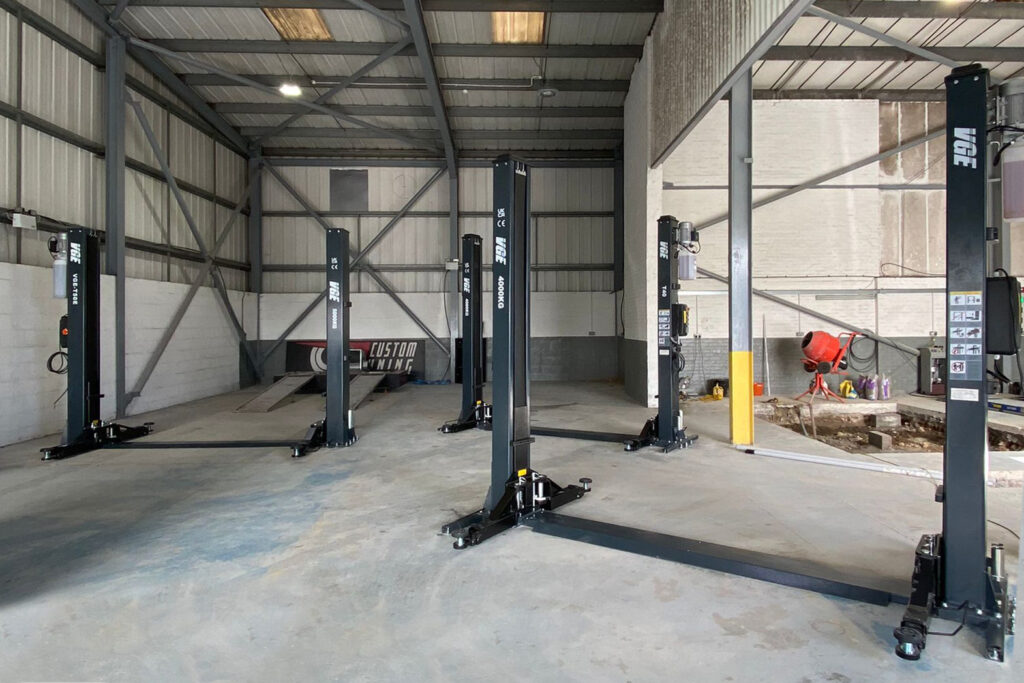
J.S. Car Services Ltd has opened a new Class 7 ATL MOT bay at its workshop in Elstree, Borehamwood, following a complete equipment supply, installation and DVSA application support project delivered by V-Tech Garage Equipment.

Based in Centennial Park, Borehamwood, J.S. Car Services has invested in a full MOT testing lane designed for larger vans and light commercial vehicles. The project gives the business a professional Class 7 ATL facility, with the key MOT bay equipment installed as one joined-up package.

The new bay has now passed the final Part D stage of the DVSA application process and is operational, following the earlier Approval in Principle being granted with support from the V-Tech team.

A complete Class 7 ATL package

For J.S. Car Services, this project was about more than adding one new item of workshop equipment. The business needed a complete Class 7 MOT bay package, specified around the right lift, brake tester, jacking beam, emissions equipment and ancillary items required to complete the test lane.

V-Tech supplied and installed the full package, which included:

The result is a complete ATL MOT bay installation, built around Class 7 testing requirements and day-to-day workshop workflow.

Built around the Space 5-tonne ATL scissor lift

At the centre of the installation is the Space SF6505N.55IMOT7 5-tonne ATL scissor lift.


This lift was chosen to give J.S. Car Services the platform capacity and layout needed for Class 7 MOT testing, while keeping the bay practical for regular workshop use. The flush-fit scissor lift layout helps create a clean, efficient test lane and supports a professional presentation for both testers and customers.

For workshops looking to add or upgrade Class 7 capability, the lift is one of the most important decisions in the whole project. It has to suit the vehicle class, the available space, the MOT bay layout and the long-term needs of the business.

V-Tech Garage Equipment supplied and installed a complete Class 7 ATL MOT bay for J.S. Car Services in Elstree, including a 5-tonne ATL lift, brake tester, jacking beam, emissions analyser and DVSA application support.

Brake testing, emissions testing and lifting support

The Class 7 ATL package also included a BM4010 roller brake tester, providing the brake testing capability required as part of the MOT test lane.

To support underside inspection and axle lifting requirements, V-Tech installed a 2.8 tonne wide-reach jacking beam. This gives the workshop the lifting support needed within the MOT bay, while helping the technician carry out inspections safely and efficiently.

The package was completed with V-Tech’s Combi Emissions Analyser, giving J.S. Car Services the equipment needed for MOT emissions testing across petrol and diesel vehicles.

By supplying the main items together, V-Tech helped ensure the full bay was planned as a complete working system rather than a collection of separate equipment purchases.

Support from AIP through to final Part D

One of the most important parts of this project was the support provided with the DVSA application process.

V-Tech helped J.S. Car Services with the VT01 application, including the earlier Approval in Principle stage and the final Part D requirements. This meant the equipment specification, layout and supporting information could be managed in line with the application process from the start.

The site has now passed the final Part D stage and the new Class 7 ATL MOT bay is operational.

For many garages, this is where working with an experienced MOT bay supplier makes a real difference. The right equipment matters, but so does understanding the process, the paperwork and the practical steps needed to get the bay approved and ready for use.

A professional MOT bay installation in Borehamwood

With the project now complete, J.S. Car Services has a new operational Class 7 ATL MOT bay at its Borehamwood workshop.

The finished installation gives the business the ability to test larger vans and light commercial vehicles, adding valuable capacity and helping the workshop support a wider range of customers from its Elstree site.

For V-Tech Garage Equipment, this project is another example of how we support workshops with complete MOT bay solutions, from specification and planning through to installation, application support and final handover.

Planning a Class 7 MOT bay?

Here at V-Tech Garage Equipment, we supply and install complete MOT bay packages for workshops across the UK, including Class 4, Class 7, ATL and OPTL test lanes.

Whether you are setting up a new MOT station, upgrading existing equipment or adding Class 7 testing capability, our team can help with equipment specification, layout planning, DVSA application support and installation.

Call us today on 0208 498 1288 or email sales@v-techuk.com, and one of our team will be happy to help.

Auto Capital Adds Another 2-Post Lift to Support Workshop Growth

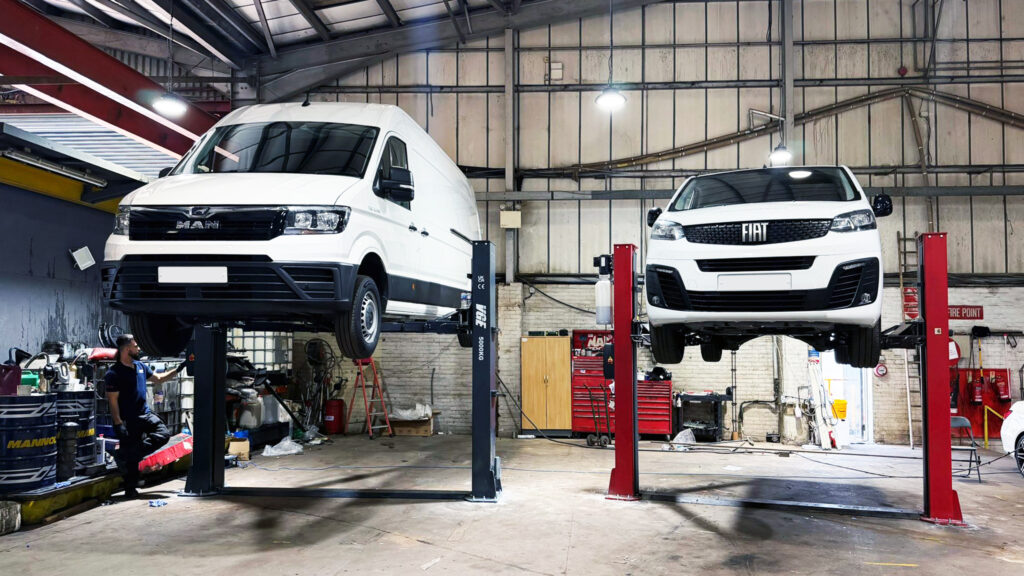
Auto Capital Ltd has added a second VGE-T50EX 5 tonne 2-post lift from V-Tech Garage Equipment, supplied through PartsPlus and installed with workshop layout improvements.

Auto Capital Ltd has continued its investment in workshop equipment with the purchase of a second VGE-T50EX 5 tonne 2-post lift from V-Tech Garage Equipment.

The Stanmore-based business, known for its large indoor showroom and wide choice of commercial vehicles, first invested in a VGE-T50EX in early 2024. Following the performance of that first lift, Auto Capital made the easy decision to opt for a second unit, supplied through their local PartsPlus branch and installed at the site by our installation team.

Supporting a Busy Commercial Vehicle Operation

For a business working with vans, pick-ups, cars and light commercial vehicles, reliable lifting equipment is an important part of day-to-day workshop flow.

Auto Capital needed a lift that could support a broad range of vehicle types while giving technicians good access for inspection, preparation and general workshop work. Having already used the VGE-T50EX on site, the team had direct experience of how the lift performed in their own working environment.

That made the decision to invest in a second unit a natural next step.

Why Auto Capital Chose the VGE-T50EX Again

The VGE-T50EX is a 5 tonne electro-hydraulic 2-post lift designed for professional garages, service centres, bodyshops and light commercial workshops.

Its 5 tonne lifting capacity makes it well suited to larger vehicles, while the triple telescopic arm design helps provide flexible access to jacking points across different vehicle sizes. For workshops handling commercial vans as well as cars, that flexibility matters.

The lift also features electric lock release, low-voltage controls, synchronising cables and built-in safety systems, giving workshops a practical, easy-to-use lifting solution for regular daily use.

For Auto Capital, the key point was consistency. The first VGE-T50EX had already proved itself in the workshop, so adding a second matching lift helped increase capacity without introducing a different operating process for the team.

Installation and Workshop Layout Improvements

As part of the latest installation, our engineers also relocated existing workshop equipment to improve the site layout.

This meant the project was not just about adding another lift. It was also an opportunity to make better use of the available workshop space and support a smoother flow around the bay.

By reviewing the existing layout and repositioning equipment where needed, the V-Tech installation team helped Auto Capital create a more practical working area around the new lift.

Supplied Through PartsPlus, Installed by V-Tech

The new lift was supplied through Auto Capital’s local PartsPlus branch, continuing the strong working relationship between PartsPlus, ourselves and professional workshops across the UK.

Our installations team then handled the setup, ensuring the second VGE-T50EX was correctly positioned, fitted, and ready for use.

This joined-up approach gives workshops access to professional garage equipment through a trusted trade supply route, backed by specialist installation and support from V-Tech.

A Repeat Investment Built on Experience

Repeat purchases are always a strong sign that the original equipment has done its job.

Auto Capital’s decision to add a second VGE-T50EX reflects the lift’s suitability for a busy vehicle sales and preparation environment where uptime, access and day-to-day usability all matter.

With the new 5-tonne 2-post lift now installed, Auto Capital has added additional lifting capacity to support its workshop operations and improve the way vehicles move through preparation, inspection and aftercare.

Looking to Upgrade Your Workshop Lifting Equipment?

Here at V-Tech Garage Equipment, we supply and install 2-post lifts, 4-post lifts, scissor lifts, MOT equipment and complete workshop equipment packages for garages, dealerships and commercial vehicle businesses across the UK.

If you are looking to add lifting capacity, replace older equipment or improve your workshop layout, our team can help you choose the right equipment for your site.

Call us today on 0208 498 1288 or email sales@v-techuk.com, and one of our team will be happy to help.
AB and Cars Invests in a New Class 7 ATL MOT Bay

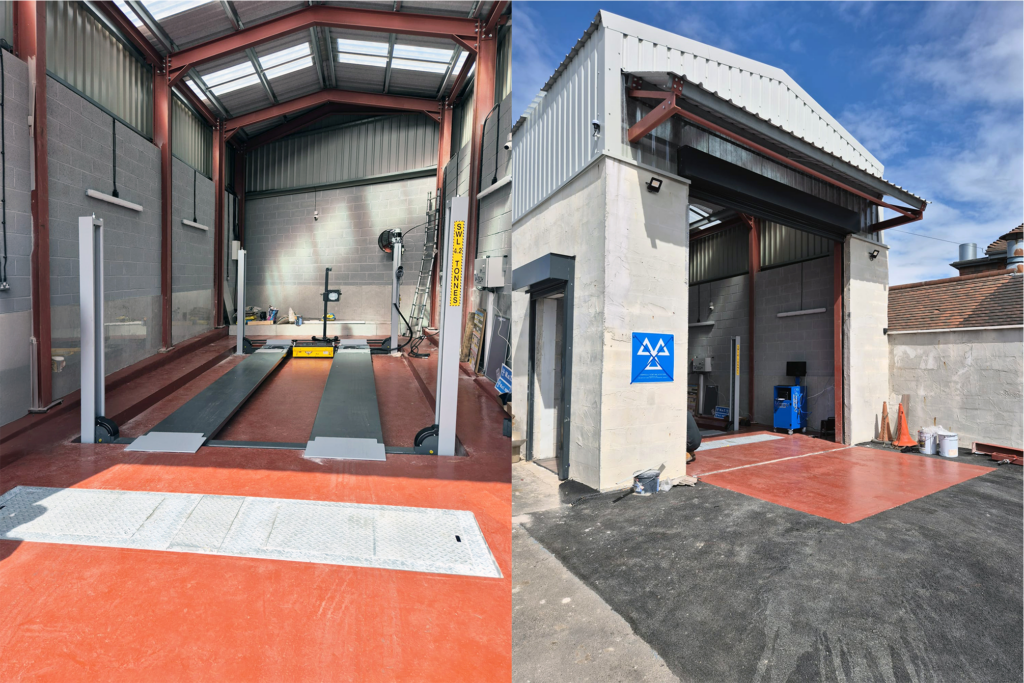
AB and Cars in Stoke-on-Trent has taken a major step forward with the development of a new workshop building designed to house a Class 7 ATL MOT bay.

Trading from Hartshill Road, AB and Cars has built its name on used vehicle sales, servicing and repairs, with the wider operation supporting customers with diagnostics, repairs, timing belts, clutches, exhausts, tyres, brakes and MOT work.

The latest investment gives the business a stronger platform for growth. By creating a dedicated MOT testing facility within a new workshop building, AB and Cars is adding both capacity and control, helping the team keep more work in-house while giving customers a more complete service from one site.

A new building for a serious workshop upgrade

Investing in a Class 7 ATL MOT bay is not just a simple equipment purchase. It needs the right space, the right layout and the right mix of approved MOT equipment to support efficient testing.

For AB and Cars, the new workshop building provided the opportunity to plan the MOT bay properly from the start. That meant installing equipment that could support the day-to-day needs of a busy garage while giving the business the flexibility to test larger light commercial vehicles as part of its MOT offering.

We supplied and installed the Class 7 ATL MOT bay equipment package, including:

Together, this equipment gives AB and Cars the foundation for a professional, compliant and productive ATL MOT testing area.

Class 7 ATL lift for larger vehicle testing

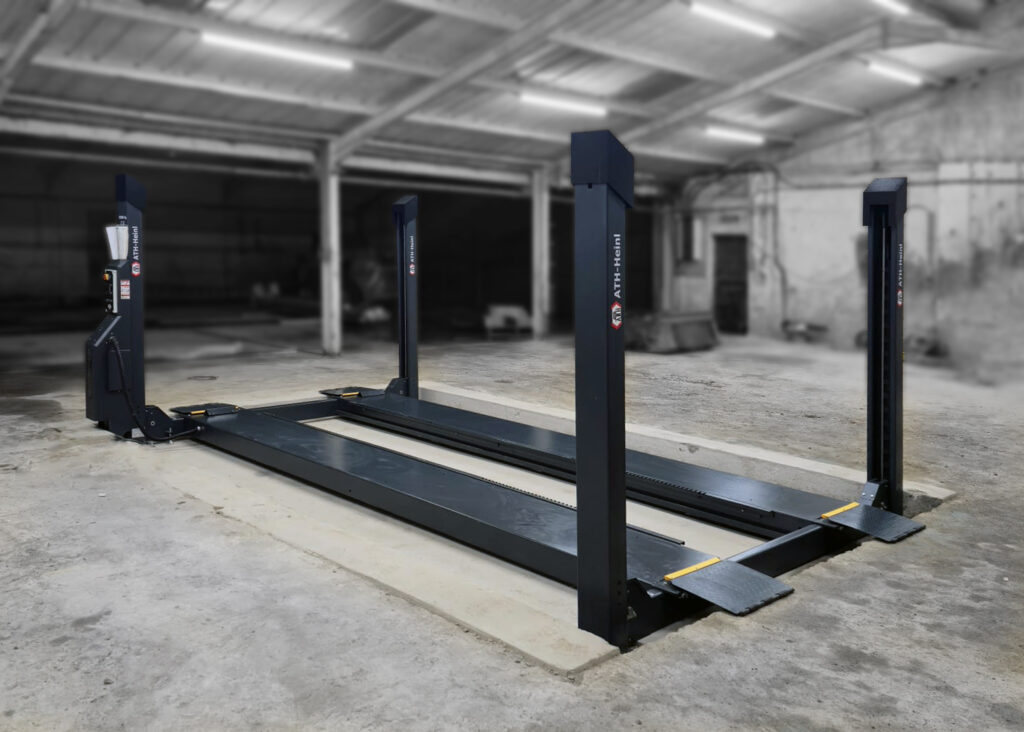
At the heart of the new bay is the SPACE SQ500.3IMOT7 Class 7 ATL 4-post lift. This 5-tonne Class 7 MOT lift is designed for ATL testing and provides the main lifting platform for the new bay.

For garages working with vans, light commercial vehicles and larger passenger vehicles, lift selection matters. The SQ500.3IMOT7 gives AB and Cars the lifting capacity and platform size needed for a Class 7 MOT setup, while also fitting into a workshop layout planned around efficient vehicle flow.

As part of the ATL bay, the lift works with the wider testing equipment to help the business carry out MOT inspections in a more controlled and organised way.

Brake testing, jacking and emissions equipment

The bay also includes a BM4010 roller brake tester, giving the workshop a professional brake testing solution as part of the MOT lane.

For underbody checks and wheel-free inspection work, the extra-wide vehicle lift jacking beam adds another practical layer to the bay. This is especially useful in a modern MOT environment where workshops regularly handle a broad mix of vehicle sizes, shapes and jacking point positions.

The MOT setup is completed with DVSA-approved headlamp aligner equipment and the V-Tech Combi emissions analyser.

The V-Tech Combi is a PC-based gas and smoke emissions analyser designed for MOT stations and professional workshops. For AB and Cars, it provides the new bay with a single emissions-testing solution for both petrol and diesel vehicles, helping the team carry out MOT checks with the right equipment close to hand.

Helping AB and Cars keep more work in-house

For a business already active in used vehicles, servicing and repair work, adding a Class 7 ATL MOT bay is a natural next step.

Instead of relying on outside MOT capacity, AB and Cars can now build MOT testing into its own workshop process. That supports customer convenience, helps reduce delays and gives the business more control over the quality and timing of each job.

It also creates a stronger link between vehicle sales, preparation, servicing, repairs and MOT work. Vehicles can move through the business more smoothly, and customers have a clearer reason to return to the same site for ongoing maintenance.

Supporting garage growth from planning to equipment supply

Here at V-Tech Garage Equipment, we work with garages, MOT stations and workshop operators across the UK, supplying and installing MOT bays, vehicle lifts, brake testers, jacking beams, headlamp aligners, emissions equipment and wider garage equipment packages.

For projects such as this, the right advice at the planning stage can make a real difference. A new workshop building gives a garage the chance to think carefully about vehicle flow, MOT bay position, equipment access, civil works, power, compressed air and future service needs.

By investing in a properly equipped Class 7 ATL MOT bay, AB and Cars has created a stronger workshop facility that supports its next stage of growth.

Planning a Class 7 MOT bay?

If you are looking to install a new Class 7 ATL MOT bay, upgrade an existing MOT lane or develop a new workshop building, V-Tech Garage Equipment can help with equipment supply, layout guidance, installation and ongoing support.

Contact V-Tech Garage Equipment to discuss your workshop plans and find the right MOT bay package for your business.

Call us today on 0208 498 1288 or email sales@v-techuk.com, and one of our team will be happy to help.
Choosing the Right 2-Post Lift for Your Garage Workshop

How to choose a 2-post lift for your workshop, including lift capacity, concrete depth, ceiling height, safety, installation, servicing and compliance.

A 2-post lift is one of the most practical and profitable pieces of garage equipment a workshop can install. For many independent garages, tyre shops, repair centres, bodyshops and service bays, it gives technicians fast access to the wheels, underside, suspension, brakes, exhaust, driveline and side areas of a vehicle. Unlike axle stands or trolley jacks, a properly installed 2-post car lift is designed to raise a vehicle to a comfortable working height, helping technicians work more efficiently and with better access around the vehicle.

Choosing the right 2-post lift, however, is not simply a case of picking the first model that fits the budget. The best lift for your workshop depends on the vehicles you service, the space you have available, the concrete floor specification, the ceiling height, the power supply, the type of work you carry out, and the long-term support you expect after installation. A 2-post lift is lifting equipment, so safety, operator training, servicing, inspection and compliance all need to be part of the buying decision.

V-Tech Garage Equipment supplies and installs premium-quality garage equipment nationwide, including vehicle lifts and a wide range of workshop equipment, making the lift selection process easier for businesses that need practical advice before committing to a new workshop lift.

What is a 2-Post Lift?

A 2-post lift, sometimes called a two-post car lift, 2-post ramp, or 2-post hoist, uses two upright columns with lifting arms positioned beneath the manufacturer-approved lifting points of the vehicle. The vehicle is raised from its chassis or jacking points, leaving the wheels hanging free and giving the technician clear access to many key service and repair areas.

A typical 2-post car lift consists of two steel posts or columns, lifting arms, lifting pads, a drive system, safety locks and a synchronisation system. In many designs, cables, chains, or other synchronising mechanisms help both sides rise and lower evenly, so that the vehicle remains level during the lift cycle.

That combination of access and compact footprint is why 2-post lifts remain so popular. They take up less room than many 4-post lifts, they allow the arms to be tucked away when not in use, and they make many common workshop jobs quicker. For servicing, mechanical repairs, wheel removal, brake work, suspension work and general inspection, a good 2-post vehicle lift can become one of the hardest-working pieces of equipment in the building.

Why 2-Post Lifts are so Popular in UK Workshops

The main attraction of a 2-post lift is access. Once the vehicle is positioned correctly and raised safely, the technician can move around the vehicle without platforms blocking the wheels. That is especially useful for brake work, tyre and wheel removal, suspension checks, steering components, exhaust repairs, underbody inspection and many routine service tasks.

A 2-post lift can also improve workshop efficiency. Instead of spending time raising a vehicle with jacks, positioning stands and working at ground level, technicians can bring the vehicle up to a more comfortable height and get straight to the job. Faster access can reduce labour time, improve job flow and help workshops turn vehicles around more quickly. One of the key highlights is the efficiency benefit of easier underside access, as technicians can diagnose and repair problems faster than when working from a creeper or a basic support method.

Cost is another reason many garages choose a 2-post lift. Compared with some larger lift types, a 2-post ramp is often a cost-effective option for workshops that need full-rise lifting but lack the space or budget for a larger platform lift. It can deliver a strong lifting capacity and good access while keeping the bay layout relatively simple. The total cost, however, must include more than the lift itself. Groundworks, electrical supply, delivery, installation, staff training, servicing and statutory examinations all need to be included in the budget.

2-Post Lift vs 4-Post Lift vs Scissor Lift

Before choosing a 2-post lift, it helps to compare it with other common vehicle lift types.

A 4-post lift uses four columns and runways or platforms. The vehicle is driven onto the platforms, then lifted. This can be ideal for MOT bays, wheel alignment, storage, larger vehicles and situations where the vehicle needs to remain supported by its wheels. A 4-post lift usually has a larger footprint, but it can feel familiar to drive onto and can be well-suited to heavier or longer vehicles.

A scissor lift uses a scissor-style lifting mechanism, often with platforms or lift tables. Depending on the model, it may be recessed into the floor or surface-mounted. Scissor lifts can be excellent in tight spaces, where a ‘clear floor’ is desired, or where a workshop needs a neat installation. Some are designed for MOT use, some for tyre and service work, and some for bodyshop or quick-service operations.

A 2-post lift uses two columns and adjustable arms. It is generally chosen when a workshop needs good all-round access, especially to the wheels and underside. Compared with a 4-post lift, it takes up less floor space and gives excellent wheel-free access. Compared with some scissor lifts, it may provide better access to the vehicle’s centre underside, depending on the model.

The right answer depends on the work you do. For general mechanical repairs, servicing, brakes, clutches, suspension and inspection, a 2-post lift is often the most versatile choice. For MOT testing, alignment, vehicle storage, larger vehicles or low-profile specialist cars, another lift type may be more appropriate. Remember to consider factors such as price, lifting capacity, floor space, ceiling height, and vehicle type when comparing vehicle lifts.

Start with the Vehicles You Lift Most Often

The first buying question is simple: what vehicles will the lift handle every day?

A garage working mainly on small cars and family hatchbacks may not need the same lift as a workshop servicing long-wheelbase vans, pick-ups, electric vehicles, camper conversions or heavier commercial vehicles. The stated lifting capacity of the ramp must be suitable for the heaviest vehicles you plan to lift, but capacity is only part of the decision. You also need to consider wheelbase, lifting point positions, weight distribution, arm reach and how the vehicle sits between the posts.

Do not choose a 2-post car lift based only on the average vehicle you service. Choose it around the heaviest and most awkward vehicle that realistically comes into the workshop. If you regularly work on vans, check whether the lift has the capacity, column height, arm configuration and pad options to handle them safely. If you work on electric vehicles, remember that battery placement can affect weight distribution and lifting procedures. If you handle low sports cars, check whether the arm profile and pad height will allow safe access to the lifting points.

For mixed workshops, a higher-capacity 2-post lift can be a good investment, but the capacity still needs to be matched to the correct installation and floor specifications. A lift that is technically rated for the vehicle is not the right lift if the site cannot safely support it.

Symmetric or Asymmetric 2-Post Lift?

One of the most common choices is between a symmetric and asymmetric 2-post lift.

A symmetric 2-post lift basically has arms of equal reach, with the vehicle positioned more centrally between the posts. This can be useful for many general workshop tasks and can provide balanced support when the vehicle is correctly positioned. It is a common layout for workshops that work on a broad mix of vehicles and want a straightforward lifting setup.

An asymmetric 2-post lift features one arm pair with a shorter reach than the other, allowing the vehicle to sit slightly further back. This design makes opening doors easier, as they are less likely to hit the columns. Such a setup is particularly beneficial in busy service bays where technicians need frequent access to the vehicle, such as connecting diagnostic tools, checking mileage, moving seats, releasing the bonnet, or performing interior work. Remember, asymmetric lifts position more weight on the rear arms, which facilitates better door access.

The choice is not about one being universally better. It is about how the lift will be used. For tight workshops where door access is a daily frustration, an asymmetric 2-post lift can be a smart choice. For heavier vehicles or workshops that prefer central vehicle positioning, a symmetric lift may be more suitable. A site visit and vehicle mix review can help narrow this down quickly.

Check Lifting Capacity Carefully

Lifting capacity is one of the most searched-for 2-post lift specifications, but it is also one of the easiest to misunderstand. A lift rated at 4 tonnes, for example, does not mean every 4-tonne vehicle can automatically be lifted in every workshop. The vehicle must be positioned correctly, the arms must reach the correct lifting points, the weight distribution must be safe, the floor must meet specifications, and the lift must be installed, maintained and operated correctly.

When comparing lifts, look beyond the headline capacity. Check the safe working load, arm capacity, minimum and maximum arm reach, pad height, column height, overall width, lifting height and drive-through clearance. A lift that looks good on paper may not suit wide vans, long-wheelbase vehicles or low-profile cars. Likewise, a lift with impressive capacity may be unnecessary if the workshop only services light passenger cars.

HSE guidance warns that lifting equipment should not exceed its rated capacity and that lifting points must be correct for the vehicle. This is not just a compliance point. It is a practical safety rule that should shape the whole buying process. The right 2-post lift is the one that safely suits the work you actually do.

Measure Your Workshop Properly

A 2-post lift needs more than enough room for the columns. You need enough space for the lift, the vehicle, the doors, technician movement, toolboxes, fume extraction, lighting, diagnostic equipment and safe access routes. Ceiling height is particularly important because the raised vehicle, the lift posts and the lifting height must all be considered together.

A full-rise 2-post car lift usually requires a substantial ceiling height, and most guidance recommends that a standard full-rise installation needs at least 3.5m, depending on the lift and the vehicle. Always check the specific lift model and site conditions rather than relying on a general figure. A high-roof van on a 2-post ramp needs much more clearance than a small hatchback.

Width also matters. There must be enough room to open doors, move around the vehicle, position equipment and avoid creating pinch points. Depth matters too, especially when working on long vehicles or when the lift is close to doors, walls or other bays. The lift must improve workflow, not create a bottleneck.

A professional site survey can identify these issues before money is spent. That is especially important for workshops planning to add more than one ramp, add an MOT bay, redesign a workshop, or install a lift in an older building.

Concrete Floor Requirements are Critical

The floor is one of the most important parts of a 2-post lift installation. A 2-post lift is anchored into the concrete floor, so the concrete must be strong enough, thick enough, level enough and in suitable condition for the specific lift and loads involved.

At V-Tech Garage Equipment, we advise verifying that the concrete surface is suitable and level before installation. We can’t emphasise enough that floor depth is crucial for a safe setup. Generally, a concrete depth of 150mm to 250mm is recommended for installing a 2-post lift, though thinner concrete may not withstand the forces involved. Ultimately, the precise requirements should always follow the lift manufacturer’s specifications and be assessed by a qualified installer based on the site conditions.

HSE guidance is clear that the floor and fixings should meet the lift manufacturer’s specification, and that specialist advice should be obtained where there is doubt. It also states that, once installed, the lift must be tested by a competent person before use, with a certificate issued.

This is why buying a 2-post lift as a simple delivered product is rarely the best route for a professional garage. Installation quality matters. Anchor bolts, concrete condition, floor levels, power supply, post alignment and final testing all affect safety and long-term performance.

Choose the Right Power Supply

Before ordering a 2-post lift, check the electrical requirements. Some lifts may be available in single-phase or three-phase versions, while others may require a specific supply. The workshop must have the correct power available, and any electrical work should be carried out by a competent, registered electrician.

It is worth checking this early, as electrical upgrades can affect the project’s cost and timeline. A lift that appears good value may become less attractive if the workshop needs additional electrical work, distribution changes or cable routing to support it. On the other hand, properly planning the power supply can help future-proof the workshop for additional ramps, compressors, tyre equipment, diagnostic tools, or EV-related equipment.

When comparing 2-post vehicle lifts, ask what power supply is required, where the control unit will be located, whether the lift has overhead or floor-level connections, and how the installation will fit into the wider workshop layout.

Safety Features to Look For

A modern 2-post lift should be designed with safety in mind, but buyers still need to understand which features matter. Look for strong arm locking systems, reliable safety locks, quality lifting pads, clear controls, emergency lowering arrangements, synchronisation between posts and robust mechanical construction.

Arm locks are especially important. HSE guidance specifically states that, for 2-post lifts, workers should ensure arm locks are fully engaged and secure and that lifting pads are correctly positioned before raising the vehicle to full height. Damaged or missing lifting pads should be replaced before they become unsafe, and operators should understand how vehicle balance changes with different vehicle types or when major components, such as a gearbox, are removed.

Do not treat safety features as optional extras. They are part of a sound business case. A safe lift protects technicians, vehicles, customers, and the workshop’s reputation. It can also reduce downtime, prevent avoidable damage and make daily operation more consistent.

Installation Should Be Professional, Tested, and Documented

A 2-post lift should be installed by trained professionals who understand lift positioning, floor requirements, fixings, levelling, electrical connection, commissioning and testing. Poor installation can undermine even a high-quality lift.

Before installation, the site should be checked. That means measuring the bay, confirming ceiling height, inspecting the concrete, confirming the power supply, checking access for delivery and agreeing on the final position. During installation, the lift should be assembled and fixed in line with the manufacturer’s instructions. After installation, it should be load tested before use.

HSE guidance states that lifting equipment must be correctly installed, that the floor and fixings must meet the manufacturer’s specification, and that the lift must be tested before it is used by a competent person. It also advises regularly checking the fixing bolts with a torque wrench to make sure they remain tight.

The paperwork matters as well. Keep installation records, certificates, manuals, service records and examination reports together. This makes future servicing easier and helps demonstrate that the workshop is properly managing lifting equipment.

Operator Training is Part of the Purchase

A 2-post lift is only safe when the operator understands how to use it correctly. Training should cover vehicle positioning, identifying lifting points, arm placement, pad use, arm lock engagement, load limits, raising procedure, stability checks, lowering procedure, daily checks and what to do if something does not look right.

Technicians should know not to overload the lift, not to guess lifting points, not to use damaged pads, not to bypass safety devices, and not to continue using equipment that appears defective. They should also understand how vehicle balance can change when heavy components are removed. Removing an engine, gearbox, axle or battery pack can change the centre of gravity, so additional support may be needed.

HSE guidance emphasises the need for lifting equipment to be maintained and for operators to be trained to use it correctly. A good lift supplier should be able to advise on safe use at handover, but the workshop should also build lift checks into its own safe systems of work.

Servicing, Maintenance, and Thorough Examination

A 2-post lift is not a fit-and-forget purchase. It needs routine maintenance, in-house checks and periodic thorough examination by a competent person.

PUWER applies to work equipment and covers areas such as inspection, maintenance, training and competence. HSE describes PUWER as applying to people and companies that own, operate or have control over work equipment. The regulations also require work equipment to be maintained in efficient working order and in good repair, with maintenance logs kept up to date where machinery has them.

LOLER is also central to lifting equipment. HSE explains that safe lifting operations depend heavily on the continued safety of lifting equipment and accessories, and that lifting equipment should be checked and maintained to remain safe for use. A thorough examination under LOLER is a systematic, detailed assessment of equipment and safety-critical parts by a competent person, followed by a written report.

For vehicle lifts, HSE recommends a thorough examination every six months, while making it clear that this is not a replacement for regular in-house checks and maintenance. In practice, that means a workshop should have a routine for daily or pre-use checks, planned servicing and statutory examination. All three have a role.

Do Not Ignore the Total Cost of Ownership

When comparing 2-post lift prices, it is tempting to focus on the purchase price. That can be misleading. The true cost of a 2-post lift includes the lift, delivery, installation, electrical work, any groundworks, training, accessories, servicing, thorough examinations, repairs and downtime if the lift is not supported properly.

A cheaper lift may not be cheaper over its working life if parts are difficult to obtain, support is poor, the warranty is limited, or the equipment is not well matched to the workshop. Likewise, a premium lift may provide better value if it improves productivity, reduces downtime and gives technicians more confidence.

Before buying, ask these questions:

  • What vehicles can it lift safely?
  • Does the arm reach suit the vehicles we service?
  • Will it fit our ceiling height and bay width?
  • Does our concrete floor meet the required specification?
  • Is the power supply suitable?
  • Who will install and test it?
  • What warranty is included?
  • What servicing is available?
  • Are spare parts available?
  • Who will carry out thorough examinations?
  • What training will operators receive?

That list may feel longer than expected, but it is much cheaper to ask these questions before installation than to discover problems afterwards.

Is a 2-Post Lift Suitable for Every Garage?

A 2-post lift is ideal for many workshops, but it is not automatically right for every site. A garage with limited ceiling height, poor concrete, very low-profile vehicles, heavy vans or MOT testing requirements may need a different lift type or additional equipment.

For low-profile vehicles, arm clearance can be an issue. Some vehicles sit too low for standard arms and pads to reach the lifting points easily. Low-profile arms or alternative lifting equipment may be needed.

For long-term vehicle storage, a 4-post parking lift may be more suitable because the vehicle sits on platforms with its wheels supported. For MOT bay planning, the correct equipment depends on the class of testing, layout and DVSA requirements. The current MOT testing guide is maintained by DVSA and covers how MOT test stations are administered and what test stations need to know.

For general servicing and repair, however, a 2-post lift remains one of the most useful workshop lift options. The key is choosing one that suits the site and the work.

A Practical 2-Post Lift Buying Checklist

A good 2-post lift buying process should start with the workshop, not the brochure.

  1. List the vehicles you work on most often, including the heaviest, longest and lowest vehicles. Include vans, electric vehicles and specialist vehicles if they are part of your workload.
  2. Measure the workshop. Check ceiling height, bay width, bay depth, door clearance, lighting, power supply and access routes. Think about how technicians will move around the vehicle once it is raised.
  3. Assess the concrete. Do not assume the floor is suitable because it looks solid. The lift manufacturer’s specification and the installer’s advice should guide the decision.
  4. Choose the lift type. Decide whether a symmetric or asymmetric 2-post lift is best for your workflow. Consider capacity, arm reach, pad options, lifting height and safety features.
  5. Plan installation. Agree who is responsible for delivery, offloading, installation, electrical connection, testing, handover and paperwork.
  6. Plan compliance and aftercare. Set up servicing, daily checks, six-monthly thorough examination, maintenance logs and operator training from day one.

This approach helps avoid the common mistake of buying the lift first and solving the site problems later.

Why Buy Through V-Tech Garage Equipment?

The right 2-post car lift should make your workshop safer, faster and more productive. The wrong lift can create access problems, compliance headaches and avoidable costs. That is why advice, installation and aftercare matter as much as the lift itself.

V-Tech Garage Equipment provides a wide range of garage equipment, including vehicle lifts, MOT bay equipment, brake testers, tyre changers, wheel balancers, air compressors, jacking beams, pit jacks and other workshop essentials. The business also highlights nationwide supply and installation of premium-quality garage equipment, which is particularly important when buying equipment that needs correct installation and ongoing support.

For a new workshop, a growing garage or an existing site that needs an additional ramp, professional advice can save time and money. A site visit can help confirm whether a 2-post lift is the right choice, whether another type of vehicle lift would be more suitable, and what preparation is needed before installation.

Strong Productivity Benefits

A 2-post lift is one of the best investments a busy garage can make, but it needs to be chosen carefully. The right lift depends on vehicle type, lifting capacity, arm design, workshop space, concrete condition, ceiling height, power supply, safety features, installation quality and aftercare.

For most repair and service workshops, a well-chosen 2-post car lift delivers excellent access, strong productivity benefits and a compact footprint. It can help technicians work faster and more comfortably while giving the business more capability from the same workshop space.

The safest and most cost-effective approach is to treat the lift as a complete project rather than a boxed product. Get the site checked, choose the correct specification, have it professionally installed and tested, train operators properly, keep it maintained, and make sure thorough examinations are carried out by a competent person.

When all those pieces are in place, a 2-post vehicle lift becomes much more than another item of garage equipment. It becomes a core part of a productive, professional and safer workshop.

For help choosing the right 2-Post lift for your workshop, contact V-Tech Garage Equipment to discuss your requirements, book a site visit, or plan a complete workshop equipment package.

Call us today on 0208 498 1288 or email sales@v-techuk.com, and one of our team will be happy to help.
Oakdene Autos upgrades workshop lifting with a new 2-post lift

Oakdene Autos in Basildon has replaced an ageing 2-post lift with a new VGE T40E/B 4-tonne electric-release 2-post lift, supplied by V-Tech Garage Equipment.

For a busy independent garage, a reliable vehicle lift is not just another piece of workshop equipment. It sits at the centre of daily operations, helping technicians complete servicing, repairs, inspections and general maintenance work safely and efficiently.

That is why Oakdene Autos in Basildon, Essex, chose to replace an old, tired and failing 2-post lift with a new VGE T40E/B 4-tonne electric-release 2-post lift from V-Tech Garage Equipment.

Oakdene Autos is a well-established, family-run garage with decades of experience in the motor trade. The business provides a wide range of services for local motorists, including car servicing, MOT work, mechanical repairs, tyres, brakes, exhausts, clutch work, gearbox repairs, welding and more. With such a varied workload coming through the workshop, dependable lifting equipment is essential.

The existing 2-post lift had reached the point where replacement was the sensible option. Rather than continuing to work around ageing equipment, Oakdene Autos invested in a modern 4-tonne lift better suited to the demands of a professional garage environment.

The VGE T40E/B is a 4-tonne electro-hydraulic 2-post lift with electric safety lock release and an H-frame base. Designed for regular workshop use, it gives garages a practical lifting solution for a wide range of cars and light commercial vehicles.

Support the Business Every Day

For Oakdene Autos, the new lift provides a strong, reliable platform for day-to-day servicing and repair work. The 4-tonne capacity gives the workshop useful flexibility, while the electric-release system helps make lift operation straightforward for technicians during busy working days.

The H-frame base design is also a practical choice where floor conditions need extra consideration, helping provide a stable installation without the need to move to a more complex lifting solution. For many independent garages replacing older 2-post lifts, this type of configuration offers a sensible balance of strength, value and usability.

The installation means Oakdene Autos can continue supporting its customers with the level of service they expect, while giving the workshop team a newer, more dependable lift to work with.

At V-Tech Garage Equipment, we work with garages of all sizes to help them select the right lifting equipment for their workshop, workload and available space. Whether a business is replacing an ageing lift, expanding capacity or planning a wider workshop upgrade, choosing the right equipment at the start makes a real difference.

The Oakdene Autos installation is a good example of a straightforward but important upgrade: replacing unreliable equipment with a modern, workshop-ready 2-post lift that can support the business every day.

Equipment Installed

VGE T40E/B 4-tonne Hydraulic 2-Post Lift
Product type: Electro-hydraulic 2-post vehicle lift
Capacity: 4 tonnes
Configuration: H-frame base
Application: Professional garage servicing, maintenance and repair work

Looking to replace an old 2-post lift or upgrade your workshop lifting equipment?

Speak to V-Tech Garage Equipment about the right lift for your garage, MOT bay or service workshop.

Call us today on 0208 498 1288 or email sales@v-techuk.com, and one of our team will be happy to help.
Swan AVO Invests in New Lifting Equipment to Support Growing Workshop Demand

Swan AVO in Billingham, County Durham, has invested in a VGE T60EX 6 tonne 2 post lift and VGE Z30M mobile mid-rise scissor lift to support growing workshop demand.

Swan AVO in Billingham, County Durham, has built its reputation around specialist vehicle work, with a strong focus on creating and restoring high-performance cars.

For a workshop dealing with performance vehicles, restoration projects and varied day-to-day mechanical work, dependable lifting equipment is essential. Access, stability, lifting capacity and bay flexibility all play a part in keeping jobs moving properly, especially when the work can range from detailed underside access to heavier vehicle lifting.

To support growing demand for its services, Swan AVO has recently invested in two new pieces of VGE workshop lifting equipment: a VGE T60EX 6-tonne electric release 2-post lift and a VGE Z30M mobile mid-rise scissor lift.

The equipment was purchased through Swan AVO’s local PartsPlus centre, providing the workshop with access to practical garage equipment solutions via a trusted trade supply route.

The Challenge

As a well-established garage well known for vehicle repairs and servicing as well as motorsport preparation, Swan AVO needed lifting equipment that could support both capacity and workflow.

Servicing, repairs, and restoration work can place very different demands on a workshop compared with standard service and repair. Vehicles may need to stay on a lift for longer periods while detailed mechanical, suspension, underside or fabrication-related work is carried out. At the same time, the workshop still needs the flexibility to handle shorter jobs efficiently.

Adding just one lift can help, but adding the right mix of lifting equipment gives a workshop much more control over how it uses its available space.

For Swan AVO, the combination of a heavy-duty 2-post lift and a mobile mid-rise scissor lift was a practical way to increase lifting options without tying every job to one fixed bay.

The Solution

At the centre of the installation is the VGE T60EX 6-tonne electric release 2-post lift.

With its 6 tonne lifting capacity, this lift gives Swan AVO a strong, versatile option for cars, 4x4s and light commercial vehicles. The clear-floor design helps keep the working area between the columns open, making it easier to move equipment around the vehicle and giving technicians better access during service, repair, build and restoration work.

The electric lock release system is designed to make day-to-day operation straightforward, while the dual hydraulic cylinder setup and synchronisation cables support stable, level lifting. For a busy specialist workshop, that combination of capacity, access and usability makes the T60EX a sensible choice.

Alongside the 2-post lift, Swan AVO has also added a VGE Z30M mobile mid-rise scissor lift.

This 3-tonne lift gives the workshop a flexible lifting option for jobs where a full-height lift is not always required. Its mobile trolley kit means it can be moved around the workshop as needed, making it useful for tyre work, brake work, bodywork preparation, detailing, general maintenance and lower-level access.

The Z30M also has a low-profile design, helping make vehicle loading straightforward, while still raising the vehicle to a practical working height. This makes it a useful addition for fast-access jobs and helps avoid using the main 2-post lift for work that can be handled more efficiently on a mid-rise platform.

Supporting a Specialist Workshop

The installation gives Swan AVO more flexibility across the workshop.

The T60EX provides the strength and access needed for heavier, larger or more involved jobs, while the Z30M gives the team a moveable lifting solution for quicker tasks and lower-level work.

Together, the two lifts help the workshop manage different types of work more efficiently. Long-running build or restoration work can be planned around the main 2-post lift, while shorter jobs can continue on the mobile scissor lift. That helps protect workflow and reduces the risk of one vehicle holding up other work in the workshop.

For a garage with a reputation built on specialist, high-quality vehicle work, that extra lifting capacity is a valuable investment.

Purchased Through PartsPlus

Swan AVO purchased the equipment through its local PartsPlus centre, showing how workshops can access quality garage equipment through an established trade supply route.

For independent garages, specialists, and repairers, sourcing workshop equipment through a familiar supplier can make the buying process more straightforward. It also helps connect garages with equipment that suits the way they actually work, whether that means adding a single lift, improving bay capacity or planning a wider workshop upgrade.

Installation Complete

With the VGE T60EX 6-tonne 2-post lift and VGE Z30M 3-tonne mobile mid-rise scissor lift now installed, Swan AVO has strengthened its workshop setup and added the lifting flexibility needed to support continued demand.

We’d like to thank Swan AVO for choosing VGE lifting equipment and PartsPlus for supporting the supply of the V-Tech garage equipment through its national network.

If your workshop is looking to add lifting capacity, replace older equipment or improve bay efficiency, V-Tech Garage Equipment can help you choose the right solution for your space, workload and budget.

To discuss your next workshop equipment project or book a site visit, call us today on 0208 498 1288 or email sales@v-techuk.com, and one of our team will be happy to help.

Turning an existing inspection pit into a modern ATL MOT lane

Fordbridge Service Station Class 4 ATL MOT Pit Lane Upgrade

When a workshop already has a good inspection pit, the most practical route is often to make better use of what is already there.

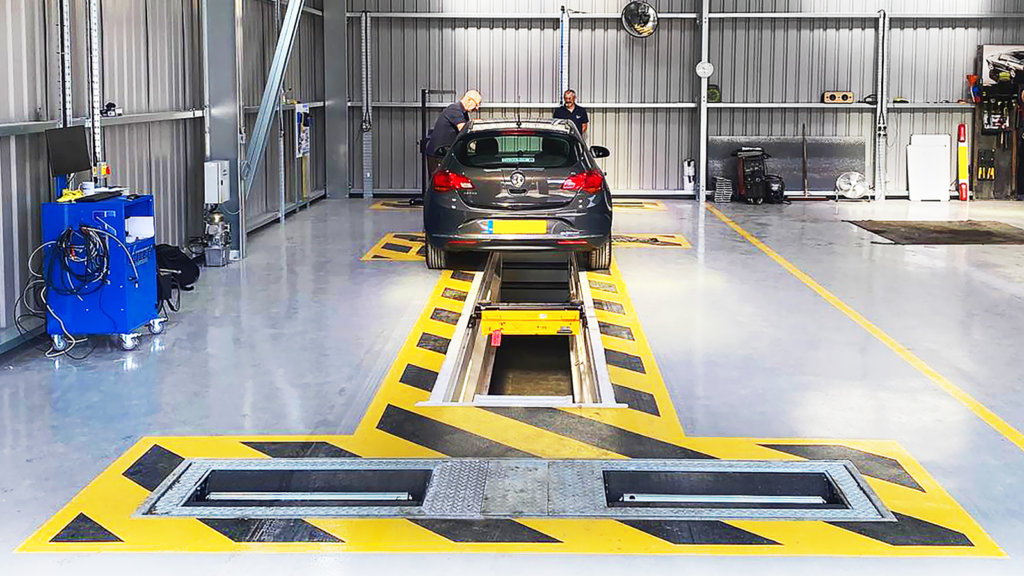
That was the case at Fordbridge Service Station in Ashford, Surrey, where they wanted to update their existing vehicle inspection pit and convert the bay into a modern Class 4 ATL MOT test lane.

The project called for more than simply supplying and installing MOT equipment. The workshop needed a test lane layout that worked with the building, the pit and the day-to-day flow of vehicles through the site. They also needed advice on the DVSA VT01 application, including the drawings, equipment planning, and site access requirements, which can make or break an MOT bay project.

We worked with the team at Fordbridge Service Station to design, supply and install a complete Class 4 ATL MOT testing solution around the existing pit.

The Brief

Fordbridge Service Station wanted a professional MOT bay that would allow the workshop to carry out Class 4 testing using ATL equipment, while keeping the existing inspection pit at the heart of the layout.

The main aims were clear:

  • Create a Class 4 ATL MOT test lane using the existing pit.
  • Install equipment suitable for modern MOT testing and workshop use.
  • Keep the layout practical for technicians and vehicle movement.
  • Provide a complete ancillary pack so the bay is properly equipped.
  • Support the DVSA VT01 process with practical advice and layout guidance.
  • Identify any building or access issues early, before they become a problem during authorisation.

That last point mattered. During the planning stage, it became clear that the existing roller shutters did not meet the access requirements for the MOT test bay. We advised on the issue so that the necessary building adjustments could be made as part of the wider project.

The Equipment Installed

The finished Class 4 ATL lane included a complete package of MOT testing equipment and supporting items.

A PD2700 Single-Sided Play Detector was installed to support steering and suspension checks from the inspection pit.

For a pit-based MOT bay, this is a neat and practical choice. The single-platform design allows the unit to be fitted to one side of the pit, helping the tester check movement in the vehicle’s steering and suspension components in a controlled, repeatable way.

The lane was fitted with a BM4010 Class 4 ATL roller brake tester, selected for its suitability in light vehicle MOT testing and pit-based installations.

The BM4010 is well-suited to this type of project because it can be installed as a split-bed brake tester over an inspection pit. That makes it a strong fit when a workshop wants to upgrade an existing pit rather than start again with a completely different bay layout.

Fordbridge Service Station also received a headlamp aligner with longitudinal laser alignment, giving the workshop a dedicated unit for headlamp aim checks as part of the MOT process.

The longitudinal laser alignment helps the tester position the equipment accurately in relation to the vehicle, supporting clear, consistent headlamp testing within the lane.

A 2-tonne extra-wide jacking beam was supplied for the inspection pit.

This gives the workshop a practical lifting solution for MOT checks, wheel-free inspections and under-vehicle work. With modern vehicles getting wider, heavier and lower, the extra-wide jacking beam gives the team more flexibility across a wider mix of Class 4 vehicles.

The installation also included a V-Tech Combi Emissions Analyser, giving the workshop gas and smoke emissions testing capability in one integrated PC-based unit.

For a busy MOT bay, having the right emissions equipment in place from day one helps keep the test process smooth and avoids the need for separate workarounds later.

  • Full ATL MOT bay ancillary pack

To complete the MOT bay, Fordbridge Service Station received a full ancillary pack, including:

  • Convex mirrors
  • MOT wall charts
  • Decelerometer
  • MOT tool board with tools

These items may not be the biggest pieces of equipment in the lane, but they are part of what turns an equipment installation into a working MOT bay. They help keep the bay organised, compliant and ready for daily use.

Supporting the DVSA VT01 Application

A key part of this project was supporting Fordbridge Service Station through the DVSA VT01 application process.

For many garages, this is where MOT bay projects can become frustrating. The equipment may be right, but the application still needs the correct details, drawings and supporting information. The premises also need to suit the class of vehicle being tested.

We provided advice on the VT01 process, including the test bay layout and the practical requirements for access to the MOT bay.

During this stage, an issue with the roller shutter door was identified. The existing shutter arrangement did not meet the requirements for access to the MOT test bay, so adjustments to the building were needed.

Spotting that early helped keep the project moving in the right direction. It also meant the workshop could deal with the building requirements as part of the setup, rather than discovering them too late in the process.

The Result

Fordbridge Service Station now has a Class 4 ATL MOT test lane built around its existing inspection pit, with the right mix of equipment for MOT testing and day-to-day workshop use.

The completed lane brings together:

  • A pit-based play detector.
  • A Class 4 ATL roller brake tester.
  • Headlamp alignment equipment.
  • A 2-tonne jacking beam.
  • Combined petrol and diesel emissions testing.
  • A complete MOT ancillary pack.

V-Tech’s support with layout planning and DVSA VT01 preparation also helped the garage deal with the practical details that sit behind a successful MOT bay project.

For Fordbridge Service Station, the upgrade makes better use of the existing workshop space and provides a modern testing lane that is ready to meet the demands of Class 4 MOT work.

Planning a Class 4 ATL MOT Lane?

Every MOT bay project is slightly different. Some workshops are starting with a clear floor. Others, like Fordbridge Service Station, already have an inspection pit that can be adapted into a working ATL MOT lane.

The right answer depends on the building, the pit, vehicle flow, access, equipment position and DVSA requirements.

We can help with site surveys, MOT bay planning, equipment supply, installation and advice around the DVSA VT01 process.

To discuss a Class 4 MOT bay, ATL upgrade or inspection pit conversion, call us today on 0208 498 1288 or email sales@v-techuk.com, and one of our project managers will be in touch to get you started.

How to Choose the Right 4-Post Lift for Cars and Vans

Choosing the Right 4-Post Lift for Your Workshop | Garage Equipment UK

Choosing the right 4-post lift is one of the most important workshop decisions a garage owner can make. The right vehicle lift can improve productivity, make inspection work safer and easier, support MOT testing, enable wheel alignment services, and help technicians work more comfortably on cars and vans. The wrong lift, however, can restrict the types of vehicles you can take in, slow down daily operations, create access issues, and lead to costly changes later.

A 4-post lift, often called a four-post lift, 4-post ramp or garage ramp, is a drive-on platform lift supported by four columns. The vehicle is driven onto two platforms, raised to the correct working height and held securely so the technician can inspect or service the underside of the car or van. Because the vehicle remains supported by its wheels, a 4-post car lift gives excellent access to the chassis, exhaust system, engine underside, gearbox area, fuel system, braking lines and general underbody components.

For many UK garages, MOT centres, fast-fit operations and independent workshops, a 4-post vehicle lift is the practical centrepiece of the bay. It is especially useful where the garage works on a mix of cars, SUVs, electric vehicles, hybrids, light commercial vehicles and vans. If you are planning a new MOT bay, replacing older garage equipment or expanding the services your workshop can offer, understanding how to choose the right 4-post lift will help you buy once and buy properly.

This guide explains what to look for, which specifications matter, how 4-post lifts compare with other lift types and why details such as platform length, lifting capacity, jacking beam compatibility, concrete depth, ceiling height and MOT class should be considered before you place an order.

What is a 4-Post Lift?

A 4-post lift is a workshop lifting system with four upright columns and two runways or platforms. The vehicle is driven onto the platforms and raised using a hydraulic or electro-hydraulic lifting system. Once the lift reaches the required height, safety locks support the load, allowing technicians to work underneath the vehicle.

The main difference between a 4-post lift and a 2-post lift is how the vehicle is supported. A 2-post lift raises the vehicle from its lifting points using arms. A 4-post lift supports the vehicle through the wheels. That makes a 4-post lift simple to load, stable in use and well-suited to inspection, MOT testing, servicing, exhaust work, underbody checks and alignment tasks.

In everyday workshop language, people use several phrases that broadly mean the same thing. You may hear 4-post lift, four-post lift, 4-post ramp, MOT ramp, car ramp, van lift, vehicle lift or garage ramp. The important point is not the wording. It is whether the lift is specified correctly for the vehicles, services and premises it will be used for.

A 4-post lift can be used for cars and vans, but only if the lift capacity, platform dimensions and bay layout are right. A lift designed mainly for smaller cars may not be suitable for larger vans, long-wheelbase models, or heavier electric vehicles. Before buying, you need to match the lift to the heaviest and longest vehicles you realistically expect to raise.

Why Choose a 4-Post Lift?

A 4-post lift is popular because it is quick to load, easy to use and highly versatile. For a busy garage, time spent positioning vehicles matters. With a drive-on 4-post vehicle lift, the technician can load the car or van onto the platforms without setting the lifting arms to individual jacking points. This can reduce setup time, especially for inspection work and repeat servicing jobs.

The second major benefit is access to the underside. Because the vehicle sits on its wheels, the centre underside is clear. This makes a 4-post lift particularly useful for oil changes, exhaust replacement, fuel tank work, underbody inspections, MOT checks, gearbox inspections, brake pipe checks and general fault diagnosis. For MOT bays, this clear access to the underside is a major reason many workshops choose a 4-post MOT lift.

Stability is another reason workshops choose a four-post lift. The vehicle is supported on platforms at each wheel, with the structure spread across four posts. For cars and vans, this gives a reassuring working platform, particularly when carrying out inspection and service work under the vehicle. As with any lifting equipment, safety depends on correct installation, correct use, regular maintenance and thorough examination, but a 4-post lift is generally seen as a stable, confidence-inspiring option for routine workshop use.

A 4-post ramp can also support add-on services. With the right specification, it can be used for wheel alignment, MOT testing, and service work. That makes it more than a way to lift a vehicle. It can become a revenue-generating workstation that supports multiple jobs in a single bay.

Start With the Vehicles You Need to Lift

The first question is simple: what vehicles will you lift now, and what vehicles do you want to lift in three to five years?

Many garages start by thinking only about the average car they see today. That can be a mistake. Vehicle size and weight are changing. SUVs, electric cars, hybrid vehicles, camper-style conversions and larger vans are now common in independent workshops. A 4-post lift for cars and vans should be chosen with enough capacity and platform length for the work you want to attract, not just the work you already handle.

Make a list of the vehicle types your garage regularly sees. Include small cars, family cars, sports cars, SUVs, taxis, light vans, long wheelbase vans, crew vans and electric vehicles. Then look at the heaviest and longest examples. Your 4-post lift should be selected around the upper end of that range.

For car servicing only, a smaller 3.5-tonne 4-post lift may be suitable. For workshops handling larger vans and light commercial vehicles, a higher-capacity 5-tonne 4-post lift is often the more practical choice. If you intend to run an MOT bay, you must choose carefully, as the lift and related equipment must be appropriate for the vehicle classes for which you are seeking approval.

You should also consider vehicle clearance. Low sports cars may need longer, gentler run-up ramps. Vans may need longer platforms, more lifting capacity and more headroom. Electric vehicles (EVs) also have jacking considerations because battery packs can affect lifting points, weight distribution and access under the vehicle.

Lifting Capacity: Do Not Buy on Price Alone

Lifting capacity is one of the most visible specifications, but it is often misunderstood. A lift capacity figure tells you the maximum load the lift is designed to handle under the correct conditions. It does not mean every vehicle below that weight will automatically be suitable. Wheelbase, weight distribution, platform length and positioning all matter.

For a 4-post car lift, capacity may be sufficient for most cars, but vans are a different matter. A loaded van, crew van or converted vehicle can be much heavier than expected. Even where a van is technically within the safe working load, you still need to check whether the platforms are long enough and whether the vehicle can be positioned correctly.

When comparing 4-post lifts, consider the safe working load, platform length, platform width, distance between platforms, overall dimensions, and lifting height. Ask whether the lift is suitable for the heaviest or largest vehicle you intend to raise. If you are working with vans, check the specific van types and wheelbases you see most often. Do not assume that every 4-tonne lift is equally suitable for every 4-tonne job.

It is also worth thinking about future vehicle trends. Electric and hybrid cars can be heavier than similar petrol or diesel models due to the added weight of the battery. This affects both the jacking beam specification and the main lift. When choosing a 4-post lift for modern cars and vans, allow a margin rather than buy to the bare minimum.

Platform Length, Width and Access

A 4-post lift needs to fit both the workshop and the vehicle. Platform dimensions can make the difference between a lift that feels effortless and one that causes daily frustration.

Platform length is especially important for vans and long wheelbase vehicles. If the platforms are too short, the vehicle may not sit correctly, the technician may struggle to position it safely, and certain jobs may become awkward or impossible. For a garage that lifts cars and vans, choosing longer platforms can be a sensible investment.

Platform width and the distance between platforms also matter. Wider vehicles, larger vans and some SUVs need enough room to load comfortably. If the lift is too narrow, staff may find it harder to drive on straight, open doors or work around the vehicle. If it is too wide for the bay, it may reduce safe walking routes and make the workshop feel cramped.

Think about the door opening space as well. A 4-post ramp often allows easier door opening than some centre-post arrangements, but only if there is enough room around the lift. In a tight workshop, every post, wall, cabinet and brake tester matters.

The best approach is to measure actual vehicles, not just the empty bay. Check the overall vehicle length, wheelbase, track width, mirror width and roof height. Then, map the lift into the workshop with working space around it. A 4-post lift is not just a footprint on the floor. It needs approach space, exit space, technician space, tool access and safe movement routes.

Ceiling Height and Lifting Height

Before choosing a 4-post lift, measure the ceiling height carefully. Then measure it again. Height issues are one of the most expensive mistakes in workshop planning.

You need enough height for the lift, the vehicle on the lift, and the technician working beneath it. Cars may be straightforward, but vans can quickly create height problems. A lift that works well for low cars may not provide the usable raised height you expect when a tall van is on the platforms.

As a rough guide, most standard 4-post lift installations need around 3.5m of clear ceiling height, but this is not a universal rule. The exact requirement depends on the lift model, maximum lifting height, platform thickness, vehicle roof height, ceiling structure, lighting, heaters, roller shutter tracks and any other overhead obstruction.

For vans, do not rely on a generic minimum height. Use the tallest vehicle you plan to work on, then calculate the working height needed beneath it. If technicians are expected to stand comfortably under the van, the bay needs to be planned around that requirement.

In some buildings, a lower ceiling does not automatically rule out a 4-post lift, but it may affect the model you choose and the type of work you can carry out. A site visit is the safest way to confirm what will work.

Concrete, Floor Condition and Anchoring

A 4-post lift must be installed on a suitable floor. The concrete needs to be sound, level, and strong enough to support the lift, the vehicle, and the forces generated during lifting and lowering.

Concrete thickness requirements vary by lift model, installation method and site conditions. Many installations work with concrete depths of 150mm to 250mm, but the installer should confirm what is required for the specific lift and premises. In some cases, the existing floor may be unsuitable because it is too thin, cracked, uneven or poorly reinforced. If that happens, sections may need to be cut out and relaid before installation.

Anchoring also needs proper consideration. In most commercial garages, workshops and MOT bays, a 4-post lift should be fixed according to the manufacturer’s installation instructions. Some storage-style parking lifts may be designed differently, but a professional workshop lift must be installed as specified, not improvised on-site.

Floor condition is not the place to save money. A premium 4-post lift installed on a poor floor is still a poor installation. The floor, fixings and lift structure all work together. Before buying, arrange for the site to be checked so that any groundworks can be planned into the budget and schedule.

Access to Wheels, Brakes and Suspension

One of the main trade-offs with a 4-post lift is wheel access. Because the vehicle sits on its wheels, the wheels are not automatically free. That is not a problem for underbody inspections, oil service work or exhaust jobs, but it does matter for brake, tyre, wheel bearing and suspension work.

The solution is a jacking beam. A jacking beam runs between the platforms, allowing the technician to raise part of the vehicle from its approved jacking points while it is already on the 4-post lift. This takes the weight off the wheels, allowing them to be removed safely.

If your garage does regular brake work, tyre work, suspension checks, MOT repairs or wheel bearing jobs, jacking beam compatibility should be treated as essential, not optional. It is also important for MOT testing, where wheel play and suspension inspection are part of the process.

When choosing a jacking beam, check the safe working load, minimum and maximum reach to the lifting pads, pad style, lift compatibility and operation type. Some beams are manual, while others are air-operated. For busy workshops, air operation can improve ease of use and reduce technician effort.

From 1 April 2026, new or changed Class 4 MOT centres need to pay particular attention to the specification of jacking equipment. The latest DVSA requirement for relevant new or changed centres includes a minimum safe working load of 2 tonnes and a minimum distance of 1,700mm between the centres of the lifting pads. Existing approved Class 4 bays that are not being changed are treated differently, so it is important to check the current position before upgrading or altering an MOT bay.

4-Post Lifts for MOT Bays

A 4-post MOT lift is one of the most common choices for MOT testing because it provides a stable platform, clear access to the underside, and the ability to integrate with other MOT equipment. For a garage setting up a Class 4 or Class 7 MOT bay, the lift needs to work as part of the whole test lane.

A good MOT lift should allow the tester to access inspection areas clearly and safely. The vehicle should be easy to load, raise and secure. The platform should be stable and level. The bay should allow room for the tester, assistant if required, equipment and safe movement around the vehicle.

For one-person testing, an ATL or OPTL specification may be required, depending on the setup. For two-person testing, the requirements may differ. The best lift choice depends on the MOT class, available space, workflow and the rest of the equipment being installed.

If your MOT bay tests only cars, the requirements may differ from those for a bay designed for cars and vans. A garage that wants Class 7 approval needs to accommodate larger vehicles, greater lifting capacity, longer platforms, and the appropriate supporting equipment.

Planning an MOT bay is not simply a matter of buying a lift and bolting it down. You need to consider application requirements, drawings, equipment approval, calibration, installation, staff workflow and long-term maintenance. This is why many garage owners choose a full project-managed installation rather than buying individual pieces of equipment without a joined-up plan.

4-Post Lifts for Wheel Alignment

A 4-post alignment lift can help a workshop offer a valuable additional service. Wheel alignment is a natural fit for 4-post lifts because the vehicle remains supported on its wheels, which is exactly what alignment work usually requires.

An alignment 4-post lift may include recessed turn plates at the front and slip plates at the rear. These allow the wheels to move correctly while the technician measures and adjusts the geometry. For garages working on tyres, suspension, steering, accident repair or fleet maintenance, wheel alignment capability can turn the lift into a more profitable bay.

If you may want to add alignment services later, raise that point before choosing the lift. Not every standard 4-post lift is the best platform for alignment work. It is usually better to specify the right alignment lift from the start than to retrofit around a lift that was not designed for it.

Consider the type of vehicles you want to align. Cars, SUVs and vans may need different platform lengths and load capacities. You should also consider camera or sensor positions, lighting, and the space around the bay. Alignment needs accuracy, so the lift must be level, stable and suitable for the equipment being used.

4-Post Lift vs Scissor Lift

Some garages compare a 4-post lift with a scissor lift, especially when planning an MOT bay. Both are platform lifts and are suitable in the right setting. The best choice depends on space, vehicle size, access needs and the type of work being carried out.

A scissor lift can be useful where workshop width is limited because it does not have four external posts. However, platform length and underbody access can be more restricted depending on the design. A 4-post lift often offers a broader range of capacities and platform lengths, which can be useful for garages that lift both cars and vans.

For MOT testing, servicing, and general inspection work, many workshops choose a 4-post lift because it offers a familiar drive-on process, a stable raised platform, and good access to the underside of the vehicle. For narrower premises, a scissor lift may still be considered, but it should be carefully compared with the vehicles you need to test or service.

The decision should not be based on appearance alone. Look at bay size, vehicle mix, test class, access under the vehicle, jacking beam options, maintenance needs and long-term flexibility.

4-Post Lift vs 2-Post Lift

A 2-post lift is excellent for many repair jobs because it leaves the wheels free. It is often used for mechanical repair, brakes, suspension and jobs where wheel access is the main requirement. A 4-post lift is different. It is generally faster to load, easier for inspection work and gives excellent access to the underside of the vehicle.

For a high-throughput service bay, MOT bay or alignment bay, a 4-post vehicle lift can be the better choice. Staff can drive the vehicle on, raise it and begin inspection without positioning the lifting arms under the chassis. That saves time and reduces the chance of incorrect arm placement.

The trade-off is that wheel work usually needs a jacking beam. Once a jacking beam is fitted, a 4-post lift becomes much more flexible, as technicians can raise the vehicle from the platforms and remove wheels as needed.

For many garages, the best workshop has both types of lifts. A 2-post lift may handle repair-heavy work, while a 4-post lift handles MOT, inspection, alignment and van work. If you are choosing just one lift for a mixed car and van bay, the 4-post lift often gives broader inspection and MOT capability.

Power Supply and Operation

Before ordering a 4-post lift, check the power supply available in the building. Some lifts can operate from a single-phase supply, while others require a three-phase supply. The right answer depends on the lift model, motor specification, workshop electrical setup and intended use.

Air supply may also be relevant, particularly where air-operated jacking beams, safety releases or auxiliary equipment are used. Make sure your compressor and air system can support the equipment without creating pressure drops or nuisance delays.

The operation should be simple and consistent. Busy workshops need equipment that technicians can use confidently every day. Controls should be positioned sensibly, safety locks should engage properly and lowering should be controlled. Staff should be trained in correct loading, lifting, locking and lowering procedures.

The best lift is not just the one with the strongest specification sheet. It is the one that fits naturally into the garage’s working rhythm.

Safety, LOLER, PUWER and Maintenance

A 4-post lift is safety-critical garage equipment. It raises heavy vehicles, and people work beneath them. That means installation, inspection, maintenance and staff training must be taken seriously.

Under UK health and safety legislation, lifting equipment should be kept safe for use and thoroughly examined by a competent person at suitable intervals. Workshop owners should also keep records, act on defects, and ensure that routine maintenance is not mistaken for a statutory thorough examination. Maintenance keeps the lift in good working order. A thorough examination is a systematic safety inspection carried out by a competent person.

Pre-use checks also matter. Technicians should look for obvious damage, unusual noise, hydraulic leaks, cable issues, worn pads, damaged platforms, faulty locks and anything that suggests the lift should not be used. If there is doubt, the lift should be taken out of service until it has been checked.

Staff training is equally important. A 4-post ramp may look simple because the vehicle is driven onto it, but proper use still matters. Vehicles need to be positioned correctly. Safety locks need to be engaged. Jacking beams must be used at the correct lifting points. Heavy components should not be removed without considering changes in vehicle balance.

A reliable service plan protects both uptime and safety. For a busy garage, lift downtime means lost billable hours, delayed MOTs and frustrated customers. Regular servicing, prompt repairs and good record-keeping help keep the bay working.

Installation and Site Survey

A site survey is one of the most valuable steps in choosing a 4-post lift. It confirms whether the lift will fit the building, whether the floor is suitable, where power and air supplies are needed and how the bay will work in practice.

During a survey, the installer should consider ceiling height, floor level, concrete condition, bay width, bay length, door clearance, lighting, heating, drainage, roller shutters, electrical supply, air supply and access for delivery. For MOT bays, the survey should also consider the full test lane layout.

This stage helps avoid expensive surprises. A lift may look perfect on paper but still be wrong for a particular site. For example, the workshop may have enough floor length but a poor vehicle approach. The ceiling may be high enough in the centre but obstructed by beams or lighting. The floor may look sound but be too thin for the specified fixings.

Good planning also reduces downtime. If groundworks, electrical changes or air line installation are required, they can be scheduled before the lift arrives. That helps the installation run smoothly and gets the bay earning sooner.

Cost and Return on Investment

Price matters, but the cheapest 4-post lift is rarely the best value. A workshop lift should be judged on suitability, durability, safety, support and revenue potential.

A correctly specified 4-post lift can increase workshop capacity by speeding up inspections, improving MOT efficiency, supporting van servicing, and enabling wheel alignment. It may also help technicians work more comfortably, improving job quality and reducing wasted time.

When comparing quotes, check what is included. Does the price include delivery, installation, commissioning, staff handover, jacking beam, turn plates, play detectors, calibration support or service cover? Does it include any groundworks or electrical work? Are there clear warranty terms and after-sales support?

It is also worth considering the cost of buying too small. If the lift cannot handle larger vans, heavier EVs or future MOT requirements, you may lose work or need to replace the lift earlier than planned. Spending more at the start can be cheaper than changing the bay twice.

A good buying decision balances initial cost with long-term earning potential. For many garages, the right 4-post lift is not an expense. It is a core piece of productive equipment.

Common Mistakes When Choosing a 4-Post Lift

One common mistake is choosing a lift based only on capacity. Capacity matters, but it must be assessed alongside platform length, vehicle size, floor condition and working access.

Another mistake is forgetting the jacking beam. If you need to remove the wheels or properly inspect the suspension, the jacking beam should be part of the original specification. Adding it later may be possible, but it is better to check compatibility and capacity before installation.

A third mistake is underestimating vans. Vans are longer, taller and heavier than many buyers expect. If your garage wants to attract van servicing or Class 7 MOT work, choose a 4-post van lift with the right dimensions and safe working load.

Ceiling height is another trap. Always calculate height using the tallest vehicle you expect to lift. Do not rely on generic measurements from a brochure.

Some garages also forget future services. If wheel alignment, ATL testing or Class 7 work may become part of the business plan, discuss that before buying. Your 4-post lift should support your next stage of growth, not lock you into your current service list.

Practical Checklist Before Buying

Before you choose a 4-post lift, answer these questions:

  • What is the heaviest vehicle the lift must raise?
  • What is the longest wheelbase van or car the lift must accommodate?
  • Will the lift be used for MOT testing, servicing, repairs, wheel alignment or all of these?
  • Do you need a Class 4 MOT lift, a Class 7 MOT lift or a general service lift?
  • Will the lift need a jacking beam from day one?
  • Will the jacking beam meet current MOT requirements for the type of bay you are planning?
  • Is the ceiling high enough for the tallest vehicle you intend to raise?
  • Is the floor suitable, level and deep enough for the lift installation?
  • Does the workshop have the right electrical supply?
  • Is compressed air required for the lift or jacking beam?
  • Will technicians have enough space to move safely around the bay?
  • Can the lift be serviced and thoroughly examined without difficulty?
  • Is the supplier able to provide installation, support, servicing and advice after the sale?

If you cannot answer these questions confidently, book a site visit before buying. It is far better to identify issues during planning than after equipment has arrived.

Why Buy Through a Specialist Garage Equipment Supplier?

A 4-post lift is not a simple off-the-shelf purchase. It needs to be matched to the workshop, installed correctly and supported throughout its working life. A specialist garage equipment supplier can help you choose the right lift for your vehicle mix, building and business plan.

At V-Tech Garage Equipment, we supply and install premium-quality garage equipment nationwide, including vehicle lifts, MOT bays, jacking beams, brake testers, headlamp aligners, tyre changers, wheel balancers, and related workshop equipment. That matters because a 4-post lift often needs to work with other equipment rather than sit in isolation.

For a new MOT bay, project support can be especially valuable. The lift, brake tester, play detector, emissions equipment, headlamp aligner and site layout all need to fit the approval process and the practical needs of the workshop. Getting those details right from the start can save time, cost and stress.

For an existing garage, the right advice can help you upgrade without disrupting the business unnecessarily. Whether you are replacing an old lift, adding van capacity, improving MOT workflow or creating an alignment bay, a proper specification makes the project more predictable.

Open Up More Profitable Jobs

The right 4-post lift should make your workshop safer, faster and more capable. It should suit the cars and vans you work on, fit your building properly, support your technicians and give your business room to grow.

For general servicing, a 4-post car lift provides excellent access to the underside and quick drive-on loading. For van work, a higher-capacity 4-post van lift with longer platforms can open up more profitable jobs. For MOT testing, the lift must be chosen as part of the full test lane and matched to the correct vehicle class. For wheel alignment, the lift should be specified with the correct platforms, turn plates and alignment features from the start.

Do not choose on price alone. Choose on suitability, safety, workflow, compliance, installation quality and long-term support. Measure the vehicles and the building, check the floor, confirm the power supply, and plan the services you want to offer.

If you are considering a 4-post lift for cars, vans, MOT testing or wheel alignment, V-Tech Garage Equipment can help you specify the right solution for your workshop. Book a site visit, talk through your vehicle mix and get practical advice before committing to a lift. A well-planned 4-post lift installation can become one of the most useful and profitable bays in your garage.

Call us today on 0208 498 1288 or email sales@v-techuk.com, and one of our team will be happy to help.
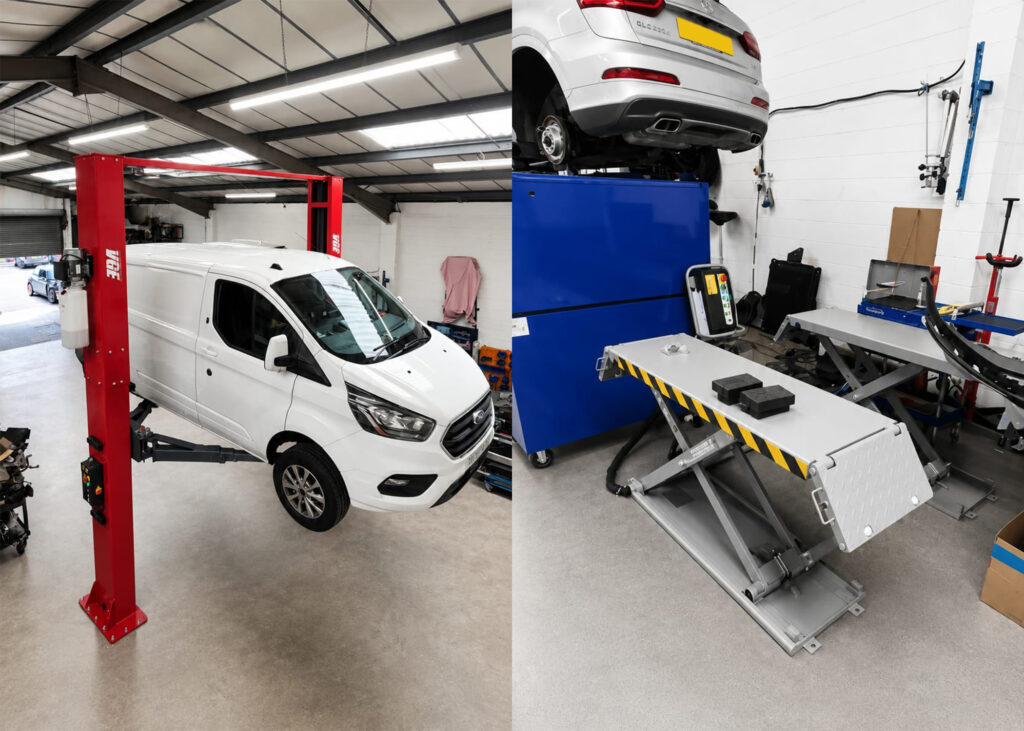
DVSA Class 7 MOT Update: Is Your Lift Ready for Zero-Emission Goods Vehicles?

From 1 June 2026, zero-emission goods vehicles up to 4,250kg DGW become Class 7 MOT vehicles. V-Tech helps MOT centres upgrade Class 7 lifts, ATL bays and test equipment.
Effective 1 June 2026, MOT requirements for Class 7 testing stations will change.
Under DVSA Special Notice 01-26, zero-emission goods vehicles with a design gross weight between 3,501kg and 4,250kg will be classed as Class 7 vehicles and will need a Class 7 MOT test. These vehicles will receive their first Class 7 MOT three years after registration.
 
For many MOT test centres, this change represents both a regulatory update and a commercial opportunity.
 
Battery-electric vans and other zero-emission goods vehicles are often similar in size to existing Class 7 vehicles, but their batteries can increase their design gross weight. According to the DVSA, including these vehicles in Class 7 testing will increase HGV testing capacity and encourage the adoption of zero-emission vehicles in haulage fleets.
 
If you run a Class 7 MOT test centre, you should now consider the following question:
 
Can our existing Class 7 MOT lift safely handle vehicles up to 4,250kg?
 
The Hidden Issue: Not Every Class 7 MOT Lift is Ready

A DVSA survey found that 80% of Class 7 testing stations used lifts. Of these, 18% had a safe working load between 3,500kg and 4,000kg, 3% between 4,001kg and 4,250kg, and only 79% had a safe working load above 4,250kg.

Upgrading to compliant lifts helps your MOT test centre avoid service gaps and lost revenue, attract new customers, and capitalise on the 4,250kg vehicle testing opportunity.
 
By reviewing your lift capacity and test lane configuration, you can maximise MOT revenue, maintain workflow, and ensure readiness for heavier zero-emission vehicles, turning a potential challenge into a competitive advantage.
 
Why You Should Act Now
Remember, the new rule takes effect at the beginning of June 2026. While you might be tempted to wait until these vehicles start turning up for testing, delaying preparations may expose you to three avoidable issues.
 
First, there is a risk of lost MOT revenue. If a customer presents a 4,250kg zero-emission goods vehicle and your lift cannot safely accommodate it, the business may be lost to another provider.
 
Second, there is an operational concern. DVSA requires Class 7 testing stations to accept these zero-emission goods vehicles. However, if a vehicle is presented laden and cannot be safely tested, the test may be declined, or the presenter may need to unload the vehicle.
 
Third, there is a risk to your reputation. Fleet operators value reliability. If your MOT centre can promote its readiness for 4,250kg zero-emission vans, you reinforce your position in a changing market.
 
Upgrade Your Class 7 MOT Bay with V-Tech Garage Equipment
At V-Tech Garage Equipment, we supply and install premium garage equipment nationwide, including MOT bays, HGV brake testers, commercial column lifts, vehicle lifts, jacking beams, and pit jacks. We are a one-stop shop, offering you equipment from leading European brands.
 
For Class 7 operators reviewing their MOT bay, V-Tech offers replacement lift options, complete MOT bay packages, and ATL solutions. Our Class 7 MOT equipment range includes 4-post lift bays, scissor lift bays, jacking beams, brake testers, radius plates, and play detectors.
 
We also provide 5-tonne Class 7 lift options, including a 5-tonne ATL Class 7 4-post lift and a 5-tonne Class 7 scissor lift. You should consider these higher-capacity solutions when preparing for 4,250kg zero-emission goods vehicle MOT demand.
 
New Class 7 ATL Bay or Lift Replacement?
Not every MOT centre requires a complete bay replacement. Some may only need to replace an under-rated Class 7 lift. Others may use this change as an opportunity to modernise to one-person testing.
 
We offer Class 4 and Class 7 ATL MOT bays. Automated Test Lanes reduce labour requirements, as only one person is needed to test a vehicle, compared to standard MOT bays that require multiple technicians. Our ATL packages include essential MOT bay equipment, such as a brake tester, emissions analyser, headlamp aligner, radius plates, jacking beam, play detector, and a choice of 4-post lift, scissor lift, or pit-based installation.
 
As an existing Class 7 test centre, you should follow this simple checklist:
 
  • Check your current lift’s SWL and capacity
  • Confirm whether it can safely support zero-emission goods vehicles up to 4,250kg DGW
  • Assess whether your brake tester, jacking beam, play detector, and lane layout remain suitable for the work you aim to secure
  • Update your equipment before demand increases
Turn the DVSA Change into a Revenue Opportunity
This DVSA update is not solely about compliance. Upgrading your MOT test centre can expand your service offering, retain customers, attract new business, and meet the needs of future commercial vehicles.
 
Fleet operators are already transitioning to electric vans and zero-emission goods vehicles. From June 2026, many of these vehicles will require Class 7 MOT testing. MOT centres equipped to handle 4,250kg zero-emission goods vehicles will be better positioned to attract fleet work, retain local van operators, and win customers from sites that have not upgraded.
 
Don’t wait. If your Class 7 MOT lift is rated below 4,250kg, or if you are unsure about your test lane’s capacity, act now to secure your future business.
 
Contact V-Tech Garage Equipment now for a free review of your Class 7 MOT bay. Receive expert advice on the best upgrade options, including 4-post lifts, scissor lifts, ATL bays, or full MOT equipment, to ensure you are prepared for the 4,250kg market.
 
Call 0208 498 1288 or email sales@v-techuk.com today to discuss your upgrade and prepare your MOT centre for 4,250kg zero-emission vehicles. Don’t miss out. Take action now to capture this new business.

From Concept to Completion: AL Engineering’s New Class 7 MOT Pit Bay in Yaxley

Today, AL Engineering has a modern, compliant Class 7 MOT Bay

When AL Engineering decided to expand in Yaxley, they realised they needed more than just equipment. They wanted a complete turnkey solution, covering everything from planning and design to installation and DVSA approval. We made this happen, turning their vision into reality in just 12 weeks.

The Challenge – Building for Compliance and Growth

AL Engineering had a clear goal: to build a Class 7 MOT Bay that met DVSA standards and local planning rules. After seeing our work for another well-known company, they trusted V-Tech to deliver the same quality. We started by visiting the site to plan the project and confirm costs. The plan included a new two-bay building, groundworks with an MOT pit, and a full workshop design and fit-out. By working closely with their planning advisor, we ensured the design met both local authority rules and DVSA requirements, helping to avoid risks and delays.

The Build – Delivered in Record Time

After getting planning approval, the V-Tech team managed the whole build as a turnkey project. We handled everything, from groundworks to the final details: laying the concrete slab, drainage and levelling, building a two-bay structure with electric roller shutter doors, installing an MOT pit in one bay, preparing the second bay for a future four-post lift for light commercial vehicles, and adding epoxy resin flooring with safety markings to meet DVSA rules. Between April and the end of June, the site transformed from an empty plot into a fully operational MOT Bay.

The MOT Bay – Fully Equipped and DVSA Approved

The entire project was completed in 12 weeks, enabling the prompt submission of job completion evidence to the DVSA for sign-off. The DVSA approved the bay, which was equipped with all the essential MOT tools: the pit, an MTS Connected Brake Tester, an MTS Connected Gas Analyser and Smoke Meter, a Headlamp Aligner, a Jacking Beam, and a full Ancillary Pack. Everything was set up to make testing Class 7 vehicles smooth, compliant, and efficient.

The Turnkey Difference – Why V-Tech

This project stands out not only for its fast delivery but also for how it was managed. V-Tech offered a full turnkey service, bringing every part of the build together. We coordinated several contractors, including electricians, flooring specialists, piping fitters, and planning advisors, while also handling the design, workshop layout, and integration. This allowed AL Engineering to focus on its business while we managed all the details.

The Result – Ready for the Future

Today, AL Engineering has a modern, compliant Class 7 MOT Bay in Yaxley, with room to expand into light commercial servicing because of the second bay. This project shows what V-Tech does best: delivering turnkey solutions that save time, reduce hassle, and ensure compliance.

Why Choose V-Tech Turnkey Solutions?

At V-Tech, we do more than install MOT Bays. We provide a complete turnkey solution that covers every detail from start to finish. When you choose us, you get more than equipment; you get peace of mind. Here’s what makes us different:

  • An exceptional range of MOT equipment tailored to your workshop needs
  • Flexible finance options designed to suit your cash flow
  • MOT equipment supplied in one uniform colour for a clean, professional finish
  • Equipment manufactured to fantastic European standards for quality and durability
  • Competitive pricing to give you the best value on your investment
  • Full UK-based aftercare and support whenever you need it
  • Service plans available for hassle-free maintenance
  • Professional CAD Design service to bring your workshop vision to life
  • A dedicated project management team overseeing every stage of your build

With V-Tech, you’re not just buying equipment. You’re working with a team that manages the whole process, so you can focus on running your business.

Ready to start your MOT journey with the best of the best? Call us today on 0208 498 1288 or email sales@v-techuk.com, and one of our project managers will be in touch to get you started.

✖