
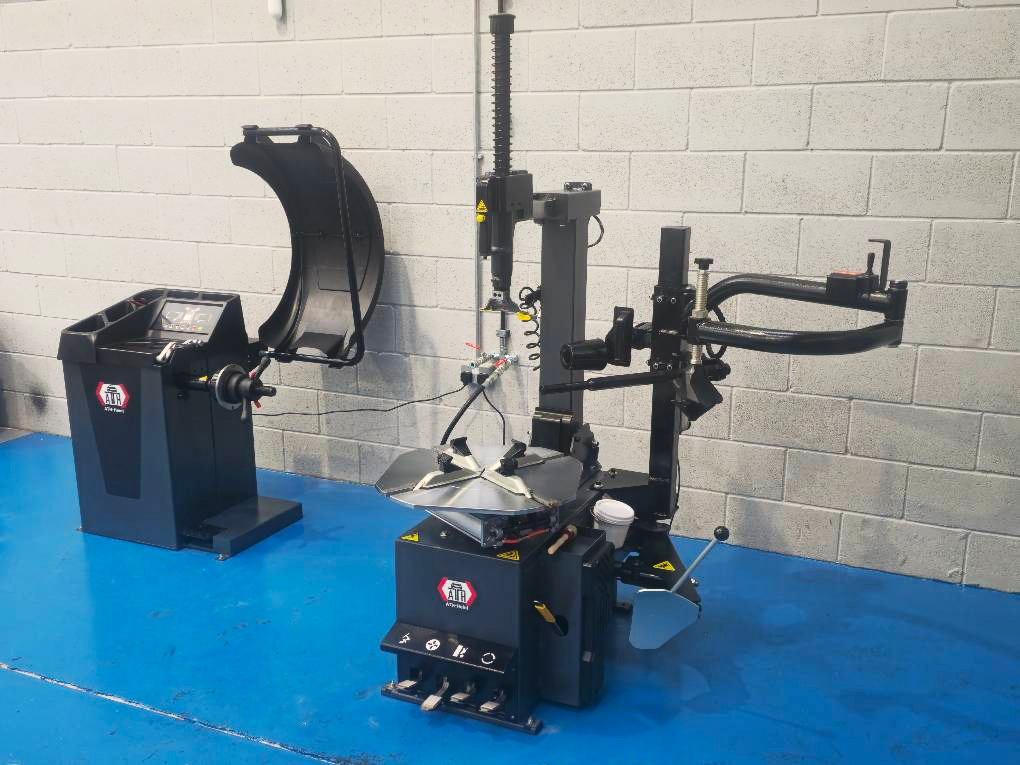
A tyre changer is one of the most important pieces of garage equipment a workshop can buy. Whether you run an MOT bay, a fast fit tyre centre, a general repair garage, a fleet maintenance workshop or a mobile tyre fitting business, the right tyre changing machine can improve productivity, protect expensive alloy wheels, reduce technician strain and help your business complete tyre work more efficiently.
The wrong tyre changer, however, can slow the job down. A machine with the wrong clamping range, weak bead breaker, limited assist features or unsuitable power requirements can become a daily frustration. It may work well enough on standard steel wheels and ordinary passenger car tyres, but it may struggle as soon as you meet low-profile tyres, run-flat tyres, larger SUV wheels, van wheels, or high-value alloys.
This guide explains how to choose the right tyre changer for your workshop, what features matter most, which tyre machine suits each type of garage and why it is worth thinking beyond the initial purchase price. At V-Tech Garage Equipment, we supply and install premium garage equipment nationwide, including tyre changers, wheel balancers, MOT bay equipment, vehicle lifts, and other workshop equipment. The aim here is practical: to help you understand what you really need before you invest.
What Does a Tyre Changer Do?
A tyre changer, also called a tyre-changing machine, tyre-fitting machine, or tyre machine, is designed to remove and refit tyres from wheel rims in a controlled and efficient way. The basic process involves deflating the tyre, breaking the bead between the tyre and rim, clamping the wheel securely, demounting the old tyre, lubricating the bead, mounting the replacement tyre, inflating it and then balancing the wheel before refitting it to the vehicle.
Professional tyre changers reduce the manual effort required during tyre fitting. They also give the technician better control over the rim, tyre bead and mounting head. That control is important because modern wheels and tyres are not always forgiving. Low-profile tyres can have stiff sidewalls. Run flat tyres can be particularly difficult to mount and demount. Alloy wheels can be easily marked by poor technique or unsuitable clamps. A suitable tyre changer helps reduce these risks by holding the wheel securely and applying controlled force where needed.
Most professional tyre changers help with four core jobs: bead breaking, wheel clamping, demounting and mounting. Many machines also include or support extra features such as assist arms, blast inflation, pneumatic column movement, leverless operation, plastic jaw protectors, motorcycle adaptors and larger clamping ranges. These features make a major difference when the workshop handles a broad mix of cars, vans, SUVs, performance vehicles or commercial vehicles.
Why Choosing the Right Tyre Changer Matters
A good tyre changer is not just a tool. It affects workshop efficiency, technician safety, wheel protection and profitability. For a busy garage, shaving a few minutes off each tyre change can add up quickly. For an MOT station or repair garage that currently subcontracts tyre work, bringing tyre fitting in-house can create an additional revenue stream and give customers a more complete service.
The Health and Safety Executive notes that tyre removal, replacement and inflation should only be handled by competent staff, and identifies hazards including manual handling injuries, tool-related injuries and compressed air accidents. Better equipment does not replace training, but it can reduce unnecessary physical strain and support safer, more consistent working methods.
The right tyre changer can also help protect customer wheels. Many vehicles now come with larger alloy wheels, diamond-cut finishes, low-profile tyres, and tyre pressure monitoring systems. Damage to a wheel, bead or TPMS valve can be costly, especially on prestige and performance vehicles. That is why workshops should look beyond the cheapest tyre machine and consider the type of wheel and tyre work they expect to handle every week.
The Main Types of Tyre Changers
There is no single best tyre changer for every workshop. The best tyre changer depends on your workload, vehicle mix, available space, budget and power supply. The main categories are manual tyre changers, semi-automatic tyre changers, fully automatic swing-arm tyre changers, tilt-back tyre changers, leverless tyre changers, mobile tyre changers, motorcycle tyre changers, and truck tyre changers.
Manual Tyre Changers
Manual tyre changers are simple, low-cost machines often used by hobby mechanics, home garages and occasional users. They usually rely on a manual bead breaker and tyre bar rather than powered turntable operation. They are compact and affordable, but they are not the right choice for a professional workshop handling regular customer tyre work.
For a domestic enthusiast, a manual tyre changer can be better than relying on tyre levers alone. For a commercial garage, it will usually be too slow and too labour-intensive. If your workshop plans to fit tyres for paying customers, repair punctures, handle seasonal tyre changes, or support an MOT bay, a powered tyre-changing machine will normally be the better investment.
Semi-Automatic Tyre Changers
A semi-automatic tyre changer is often the entry point for small independent garages and for low- to medium-volume tyre work. These machines usually have a powered turntable and bead breaker, but the mounting arm or head is positioned manually. A swing-arm design keeps the machine relatively compact, making it useful where workshop space is limited.
Semi-automatic tyre changers are well-suited to standard passenger car tyres and occasional tyre fitting. They are usually more affordable than tilt-back or leverless machines, and they can be a sensible choice for a workshop that changes a few tyres a day rather than running a dedicated tyre bay.
The limitation is speed and convenience. The operator has more manual setup to do, especially when moving between different wheel sizes. If the workshop regularly handles low-profile tyres, run flats or larger SUV wheels, a basic semi-automatic tyre changer can start to feel underspecified. In that case, an assist arm or a higher specification automatic machine is worth considering.
Fully Automatic Swing Arm Tyre Changers
A fully automatic swing arm tyre changer sits above a basic semi-automatic model. It typically provides more powerful assistance and an improved workflow while retaining a compact swing-arm layout. For many general garages, this is a practical middle ground: more capable than a basic machine, but not as costly or space-hungry as a heavy-duty tilt-back model.
This type of tyre changer is well-suited to workshops that handle regular tyre fitting alongside servicing, repairs and MOT work. It provides the technician with a more efficient process for everyday tyres while still fitting neatly into a standard workshop layout. A fully automatic swing-arm tyre changer can be a strong choice for garages that want to keep tyre work in-house without building a full fast-fit operation.
Tilt-Back Tyre Changers
Tilt-back tyre changers are designed for faster setup and smoother operation. The rear column tilts back, giving better access to the wheel and making it quicker to work through different rim sizes. Generally, tilt-back machines are best-suited for higher-volume workshops and tyre bays because they offer faster, more consistent setup than basic swing-arm machines.
A tilt-back tyre changer is a good option for busy general workshops, MOT centres, tyre retailers, and garages that handle a high volume of modern vehicles. If your technicians are regularly changing tyres throughout the day, the extra efficiency can justify the investment. The better workflow also matters when staff are working on stiff sidewalls, large wheels and awkward tyre profiles.
When comparing tilt-back tyre changers, check the clamping range, bead breaker force, rim width capacity, assist arm options, air supply requirement and electrical supply. Some higher specification machines require three-phase power, which must be considered before installation.
Leverless Tyre Changers
A leverless tyre changer is designed to mount and demount tyres without using a traditional tyre lever in the usual way. This can reduce the risk of damage to the rim and tyre bead, especially on premium alloy wheels, low-profile tyres and run-flat tyres. Leverless tyre changers are generally aimed at tyre specialists, prestige vehicle workshops, performance centres and high-volume businesses that regularly deal with difficult wheel and tyre combinations.
If your workshop frequently handles expensive alloys, ultra-high-performance tyres, or run-flat tyres, a leverless tyre changer can be a serious upgrade. It may not be essential for every general garage, but it is worth considering if your customers expect high-quality work on valuable wheels. In many cases, a good tilt-back tyre changer with assist arms will be enough for mixed workshop use, while leverless machines are better for businesses where difficult tyres are routine rather than occasional.
Assist Arm Tyre Changers
An assist arm, sometimes called a helper arm or third arm, gives the operator extra controlled pressure during mounting and demounting. This is especially useful for low-profile tyres, run-flat tyres, stiff sidewalls and larger wheels. The assist arm helps keep the tyre bead in the correct position and reduces the physical effort needed from the technician.
For most professional workshops, an assist arm is one of the most valuable upgrades available on a tyre changer. If you only fit standard tyres occasionally, you may manage without one. If you handle modern cars, SUVs, vans, performance vehicles, or run-flats, an assist arm is strongly recommended. It improves control, reduces operator fatigue and helps lower the risk of rim or bead damage.
Single assist arms can be enough for general workshop use. Dual or multi-assist arm systems are better for high-volume tyre bays, run-flat specialists and workshops dealing with larger wheels. When assessing a tyre changer, do not simply ask whether it has an assist arm. Look at how the arm works, how easily it is controlled and whether it gives enough support for the tyres your technicians actually fit.
Mobile Tyre Changers
Mobile tyre changers are designed for vans and mobile tyre fitting businesses. They are usually more compact than fixed workshop machines and may be configured for vehicle installation. It should be noted that mobile tyre changers are generally used by mobile tyre-fitting van businesses and can be powered from a 12-volt power source, making them suitable for tyre fitting on the move.
A mobile tyre-fitting setup has different priorities than a static workshop. Space, weight, power supply, compressor capacity and secure installation are all crucial. The machine needs to be reliable enough for daily use but compact enough to work inside a van. Mobile operators should also consider wheel balancer options, air supply, storage, lighting, consumables, and safe working procedures at customer sites.
Motorcycle Tyre Changers
Motorcycle tyre changers are designed for smaller wheels and different rim profiles. Some tyre changers are built specifically for motorcycle tyres, while others use adaptors that allow a car tyre changer to hold motorcycle wheels correctly.
If motorcycle work is a core part of your business, dedicated motorcycle tyre equipment is usually the best option. If it is occasional, adaptors may be enough, provided the machine is compatible and the operator is trained. Motorcycle wheels can be prone to marking, so clamping protection and proper setup matter.
Truck and Heavy Commercial Tyre Changers
Truck, bus and heavy commercial tyres require specialist tyre changers. A standard car tyre changer is not suitable for large commercial vehicle tyres because the wheel diameter, tyre weight, clamping method, and bead-breaking requirements differ. It should be noted that truck and bus tyre changers use specialist heavy-duty systems, roller bead breaking and different clamping arrangements, with a much larger footprint and different installation requirements.
Workshops that handle HGVs, buses, fleet vehicles or commercial tyre work should consider a dedicated truck tyre changer. They may also need tyre safety cages, wheel handling equipment and specific inflation procedures. HSE guidance highlights that light commercial tyres can be inflated to pressures high enough to cause serious injury, and that enhanced safety measures may be required when inflating above 15 psi in certain circumstances.
Key Features to Compare When Buying a Tyre Changer
Once you know the type of tyre changer you need, the next step is comparing specifications. This is where many buyers make mistakes. A tyre changer might look suitable at first glance, but the details determine whether it will perform well in your workshop.
Clamping Range
The clamping range indicates which wheel sizes the machine can hold safely. Check both internal and external clamping figures. Do not just buy for the wheels you see today. Think about the vehicles your workshop is likely to see over the next five years. SUVs, larger alloy wheels and light commercial vehicles are common, so a wider clamping range gives the workshop more flexibility.
A machine with a limited range may be fine for older passenger cars, but unsuitable for larger modern wheels. If your workshop deals with vans, SUVs or performance vehicles, check the upper end of the clamping range carefully. Also consider rim width and maximum wheel diameter, not just wheel diameter in inches.
Bead Breaker Strength and Design
The bead breaker separates the tyre bead from the rim. Basic car tyre changers often use a side-mounted bead breaker blade. Heavy-duty, leverless and commercial machines may use roller bead breaker systems. Side-mounted bead breakers are common on car changers, while roller bead breaker systems are often used for stiff sidewalls and heavy-duty applications.
A weak bead breaker will slow the job down and make difficult tyres harder than they need to be. A strong, well-controlled bead breaker helps technicians work efficiently while reducing unnecessary force. For low-profile, run-flat, and van tyres, bead-breaker performance should be a priority.
Mounting Head and Wheel Protection
The mounting head, sometimes called the duck head, guides the tyre bead during mounting and demounting. On alloy wheels, protection is essential. Look for plastic inserts, nylon protection, rim protectors and well-designed clamps. These small details can prevent expensive wheel damage.
If your workshop handles prestige vehicles, diamond-cut wheels, or customer-supplied wheels, wheel protection should be treated as a buying requirement, not an optional extra. The tyre changer should give the technician a controlled process that reduces metal-to-metal contact wherever possible.
Assist Arms
Assist arms are no longer a luxury for many garages. Modern tyres can be stiff, wide and awkward. Low-profile and run-flat tyres often need controlled bead pressure to prevent the tyre from riding up or placing excess strain on the bead. A pneumatic assist arm gives the operator additional control while reducing physical effort.
If you are buying a tyre changer for a general repair garage, an assist arm is a sensible upgrade. If you are buying for a tyre bay, fast fit centre or performance workshop, it is close to essential.
Inflation System
Most tyre changers offer standard inflation through the valve. Some machines include blast inflation, which helps seat difficult beads by delivering a controlled burst of air. This can be useful when fitting certain tyres where the bead does not seat easily.
Inflation must be treated seriously. HSE warns that inflated tyres contain stored energy and that tyre failures can cause severe injuries or fatalities. For larger commercial tyres and higher-pressure applications, operators may need restraints, long enough airlines, and safe exclusion zones.
Power and Air Supply
Before buying a tyre changer, confirm that your workshop has the correct power and compressed air supplies. Many machines operate on 230V single-phase power, but some heavy-duty or high specification tyre changers require three-phase power. Pneumatic features, bead breakers and assist arms also need a suitable compressed air supply.
Do not leave this until delivery day. Check the machine specification, compressor capacity, electrical supply, floor space and access route into the workshop. If a machine needs a stable 10-bar air supply or a three-phase electrical supply, plan the installation properly.
Footprint and Workflow
A tyre changer needs more space than its footprint. The operator needs room to load wheels, move safely, use the bead breaker and handle tyres. You also need space for a wheel balancer, tyre storage, valves, weights, bead lubricant, airline access and waste tyres.
The best layout creates a smooth workflow: wheel off vehicle, tyre changed, wheel balanced, tyre inflated safely, wheel refitted. If your tyre changer is squeezed into a corner with poor access, even a good machine will underperform.
Choosing a Tyre Changer by Workshop Type
The easiest way to choose the right tyre changer is to start with your workshop profile.
Small Independent Garage
A small independent garage that changes a few tyres a day will usually be well served by a semi-automatic or automatic swing arm tyre changer. The machine should have a reliable bead breaker, a suitable clamping range, wheel protection, and, ideally, an optional assist arm.
The priority is value, reliability and ease of use. You may not need the fastest or most advanced tyre changer, but you do need a machine that can handle everyday car tyres without slowing down the workshop. If your customer base includes SUVs, vans and low-profile tyres, move up a level and choose a machine with an assist arm.
Busy General Workshop or MOT Test Centre
A busy general workshop or MOT test centre should consider a tilt-back tyre changer with an assist arm. MOT bays often see a wide mix of vehicles, and customers appreciate being able to have tyre issues resolved without being sent elsewhere. V-Tech Garage Equipment positions itself as a one-stop shop for garage equipment, including tyre changers, wheel balancers, MOT bays, brake testers, lifts, and air compressors, reflecting the fact that tyre equipment often forms part of a broader workshop setup.
For this type of business, speed and versatility matter. A tilt-back machine reduces setup time, while an assist arm helps with modern tyre profiles. The machine should have a good clamping range for passenger cars, SUVs and light commercial vehicles.
Tyre Bay or Fast-Fit Centre
A tyre bay or fast-fit centre should consider a heavy-duty tilt-back tyre changer, a leverless tyre changer, or an advanced assist-arm machine. This environment needs speed, durability and repeatable results. Dual assist arms, blast inflation, wide clamping capacity and robust construction are all worth considering.
The machine will be used all day, so saving operator effort is important. Technician fatigue can affect productivity and quality. A capable tyre changer maintains consistency in the process and helps the business handle more work without unnecessary strain.
Prestige, Performance, and Run-Flat Specialist
A workshop that handles premium brands, performance tyres, run-flat tyres, and expensive alloys should consider a leverless tyre changer or a high-specification tilt-back machine with advanced assist arms. Wheel protection is the key concern. Customers with high-value wheels expect careful handling, and a damaged alloy can quickly wipe out the profit from a job.
For this market, the right tyre changer also supports your reputation. Being able to say you use equipment designed for low-profile, run-flat, and UHP tyres gives customers confidence.
Fleet and Light Commercial Workshop
Fleet workshops and light commercial specialists need strength, range and reliability. Many mid to high-range car and van tyre changers can handle light commercial work if the clamping range and bead breaker strength are suitable. For heavier vehicles, truck or bus tyre changers may be required.
This type of buyer should also consider inflation safety, wheel handling, tyre cages, and staff training. The larger and higher the tyre pressure, the more important safe systems become.
Mobile Tyre Fitting Business
A mobile tyre-fitting business needs a compact, reliable mobile tyre changer that suits the van’s layout and power system. Space is tight, so every piece of equipment has to earn its place. The tyre changer, wheel balancer, compressor, generator or inverter setup, storage and consumables all need to work together.
Do not choose a machine purely on price. In mobile tyre fitting, downtime is expensive. A dependable machine, properly installed and supported, is vital.
Tyre Changer and Wheel Balancer Packages
A tyre changer is only one part of a professional tyre fitting setup. After a tyre is fitted and inflated, the wheel usually needs balancing before being refitted to the vehicle. A wheel balancer helps identify and correct imbalance, improving ride quality and reducing vibration.
For many garages, buying a tyre-changer and wheel-balancer package makes sense. It ensures both machines are correctly matched to the work you want to carry out. It can also make installation planning easier, especially if you are building a new tyre bay, upgrading an MOT station or adding tyre fitting to an existing repair garage.
Safety, Training, and Competent Operation
Even the best tyre changer must be used correctly. Tyre changing involves heavy wheels, compressed air, bead seating, hand tools and moving machinery. HSE guidance is clear that tyre removal, replacement, and inflation should be carried out only by competent staff. It also highlights the risks from manual handling, tool injuries and compressed air accidents.
Training should cover machine operation, bead breaking, clamping, lubrication, TPMS awareness, inflation procedures, safe use of assist arms, wheel inspection and emergency procedures. Operators should understand when not to repair or inflate a tyre.
For puncture repairs, the British Tyre Manufacturers’ Association states that some minor damage to car and light van tyres can be repaired, principally punctures in the central tread area below 6mm, and that repairs should be carried out by a trained and competent operator in accordance with BS AU 159.
Common Mistakes When Buying a Tyre Changer
- Don’t buy too small. A workshop may choose a basic tyre changer because it is cheaper, only to find it struggles with the wheels customers actually bring in. If you regularly see SUVs, vans, low-profile tyres, or run-flats, buy for that reality.
- Remember the assist arms. Many garages try to save money by buying a machine without an assist arm, then regret it when difficult tyres take too long or place too much strain on technicians.
- Don’t forget to check the power and air requirements. A machine that needs three-phase power or a higher air supply may require additional installation work. This is not a problem if planned properly, but it can delay setup if missed.
- Remember to protect the wheel. If your tyre changer marks alloys, it will quickly become an expensive problem.
- Don’t buy without thinking about service and support. A tyre changer is a working machine. It needs maintenance, parts availability and support from a supplier who understands workshop equipment.
How Much Should You Spend on a Tyre Changer?
The right budget depends on your volume and tyre mix. A small garage doing occasional tyre work can start with a lower-cost semi-automatic tyre changer. A busy MOT bay or general workshop should budget for an automatic or tilt-back machine with an assist arm. A tyre centre or performance specialist should invest in a higher specification tilt-back or leverless model.
Think in terms of return on investment rather than purchase price alone. A better tyre changer can reduce time per job, lower technician fatigue, prevent damage claims and allow your workshop to accept jobs that a basic machine would struggle with. If the machine helps you keep tyre work in-house, it can also increase customer retention because drivers do not need to go elsewhere.
What is the Best Tyre Changer for a UK Garage?
For most small- to medium-sized UK garages, the best tyre changer is usually a robust automatic or tilt-back model with a suitable clamping range, a strong bead breaker, alloy-wheel protection, and at least one assist arm. This provides a good balance of cost, capability, and future-proofing.
For low-volume work, a semi-automatic tyre changer may be enough. For busy tyre bays, a tilt-back or leverless tyre changer with dual assist arms and blast inflation is the better choice. For mobile tyre fitting, choose a compact mobile tyre changer designed for van installation. For truck and bus work, use a dedicated commercial tyre changer.
The best tyre changer is not always the most expensive machine. It is the machine that matches your workload, wheel sizes, tyre types, staff skill level, workshop layout and growth plans.
Final Buying Checklist
Before choosing a tyre changer, ask these questions:
- What vehicles do we work on most often?
- How many tyres do we change per day or per week?
- Do we regularly handle low-profile, run-flat, or UHP tyres?
- Do we work on SUVs, vans, fleets, motorcycles or trucks?
- What clamping range do we need?
- Do we need a single assist arm or dual assist arms?
- Do we need a tilt-back or leverless machine?
- Do we have the correct power supply?
- Do we have enough compressed air capacity?
- Will the machine fit through our doors and into the planned space?
- Do we need a wheel balancer at the same time?
- What training will technicians need?
- What service, parts and support are available?
Answering these questions will make it much easier to choose a tyre changer that will serve your business properly.
Speak to V-Tech Garage Equipment
Choosing the right tyre changer is easier when you match the machine to the workshop, not the other way around. A tyre changer for a mobile fitting van is not the same as one for a busy MOT bay. A machine for standard passenger car tyres is not always suitable for run-flat tyres, SUVs, or high-value alloy wheels.
At V-Tech Garage Equipment, we supply and install premium-quality garage equipment nationwide, including tyre changers, wheel balancers, MOT bay equipment, brake testers, lifts, compressors, and other workshop essentials. If you are setting up a new workshop, upgrading an existing tyre bay or adding tyre fitting to your garage, getting advice before you buy can help you choose equipment that fits your space, budget and workload.
For help choosing the right tyre changer for your workshop, contact V-Tech Garage Equipment to discuss your requirements, book a site visit or plan a complete tyre equipment package.
Call us today on 0208 498 1288 or email sales@v-techuk.com, and one of our team will be happy to help.