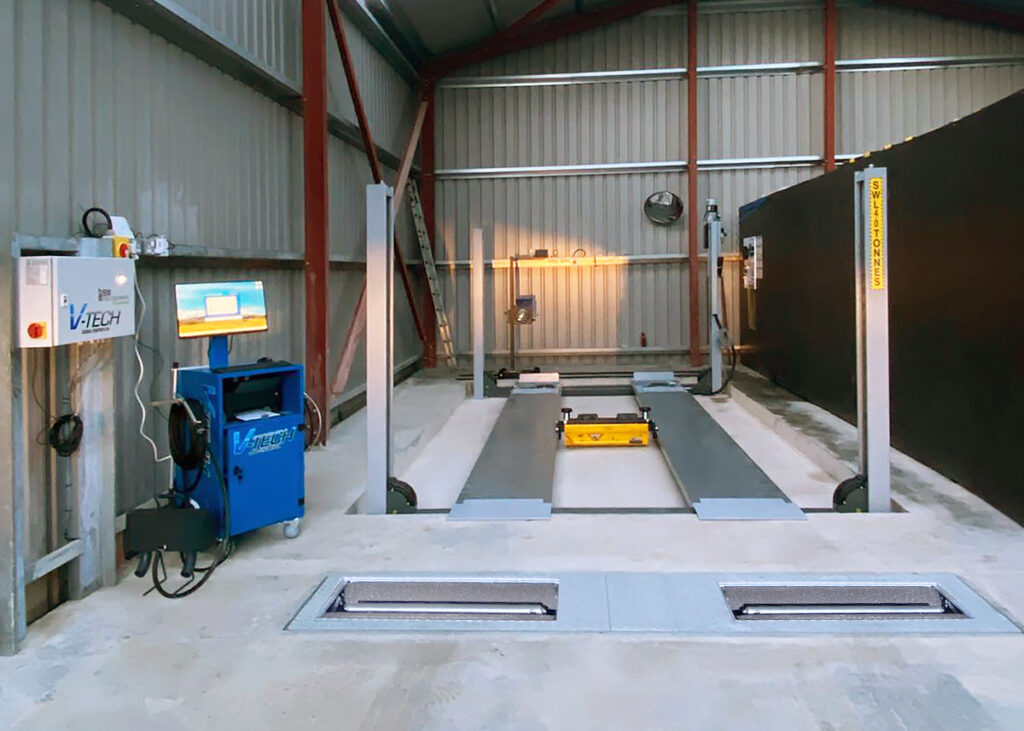
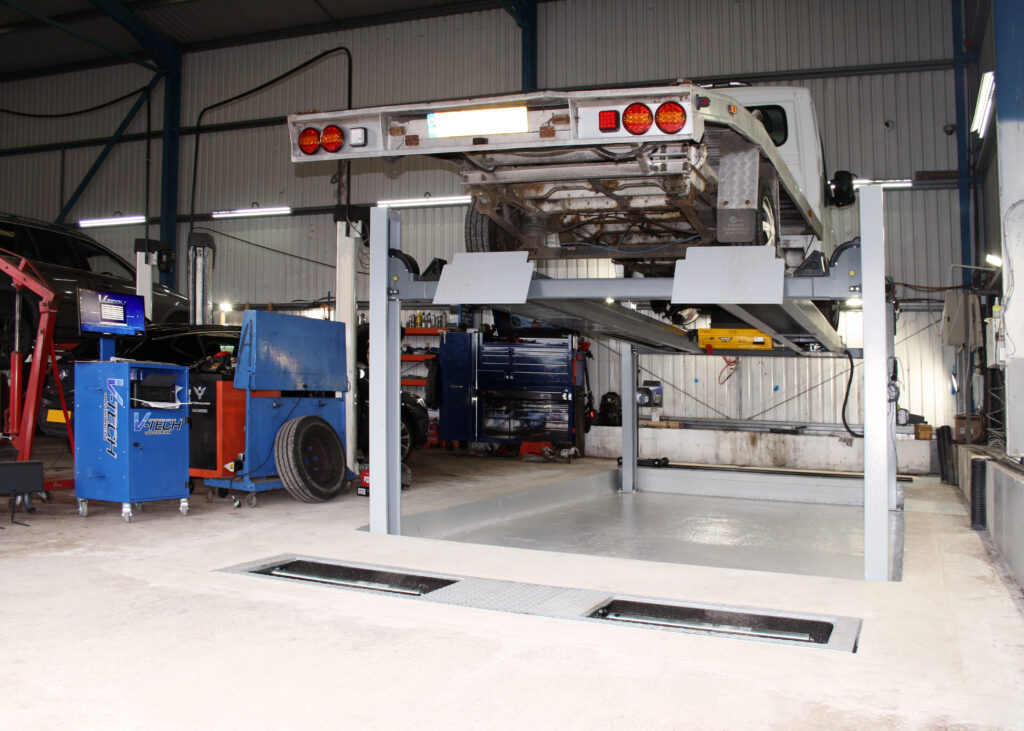
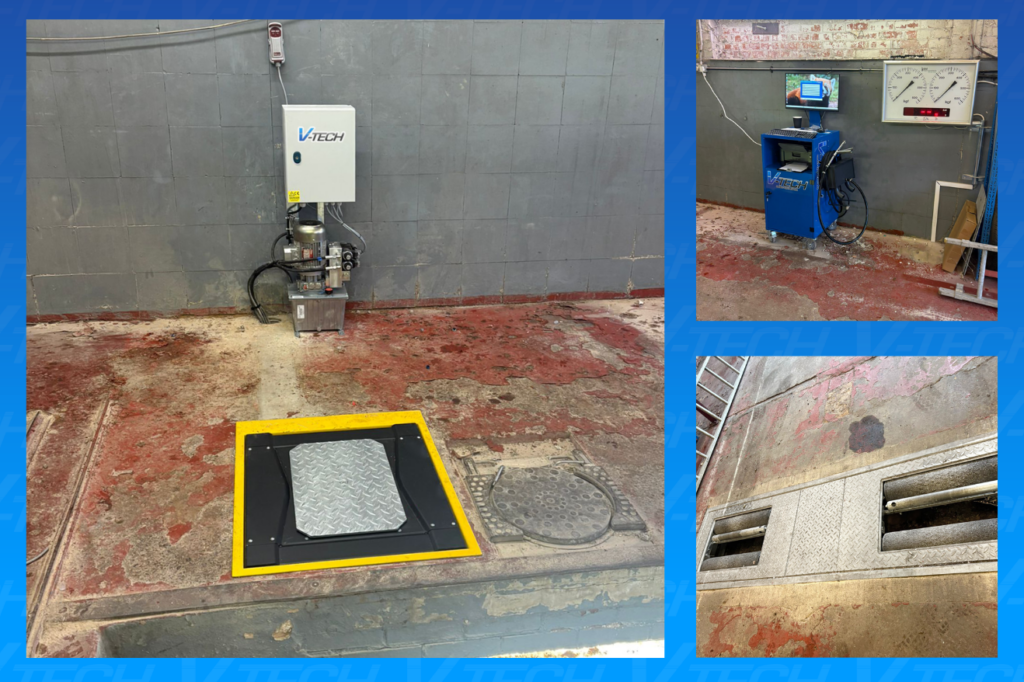
Isle Fleet Support Expands Workshop with New 6 Tonne 2-Post Lift

Based in Belton, Doncaster, Isle Fleet Support continues to invest in its vehicle workshop as it develops its service offering for local motorists and fleet customers.

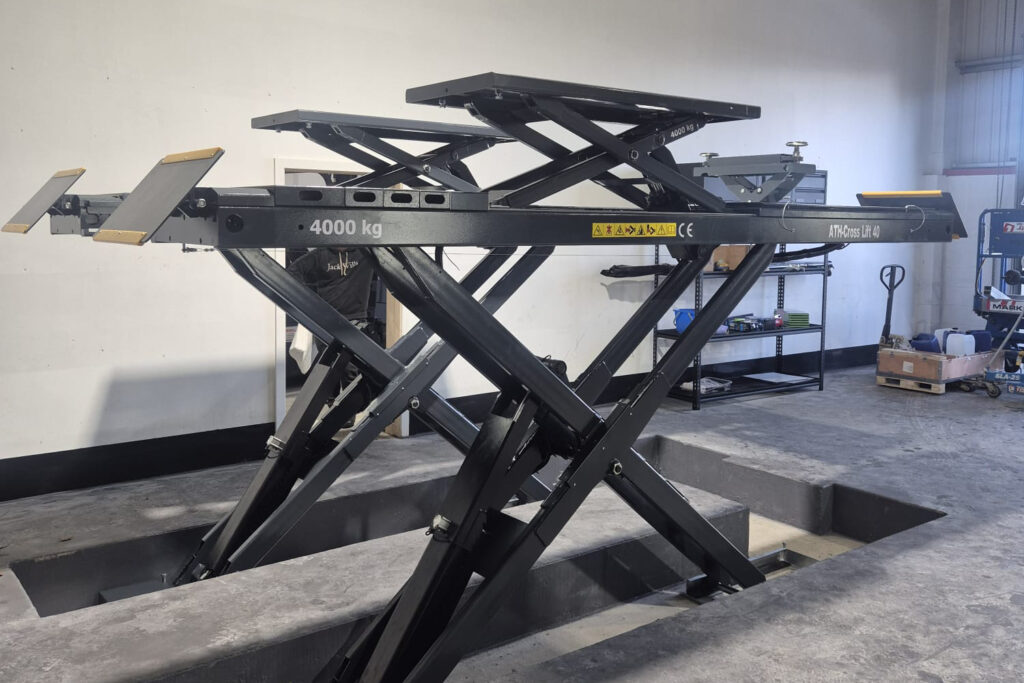
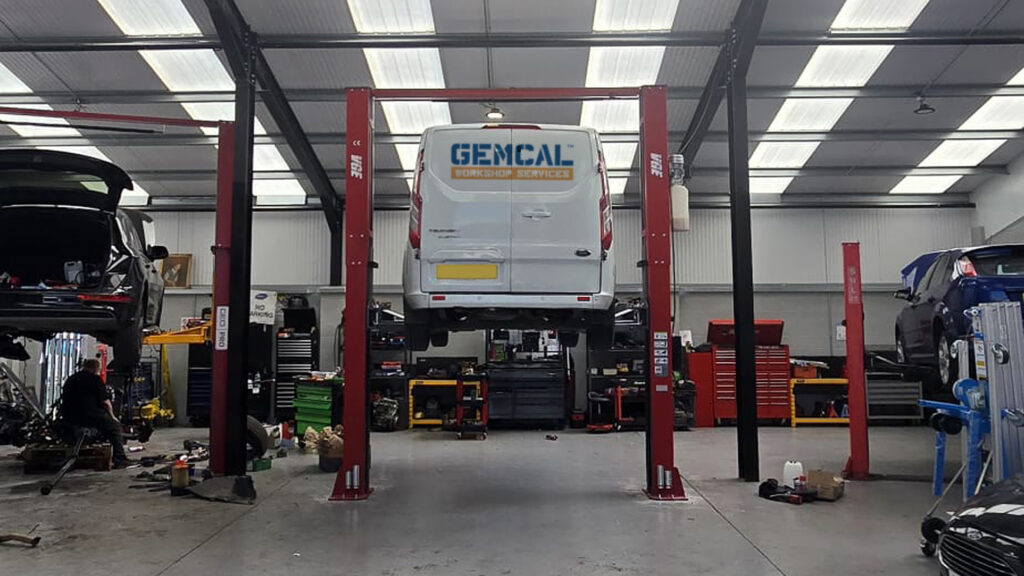
As part of this ongoing investment, the team at Isle Fleet Support recently added a new 6 Tonne Electric Release 2 Post Lift, supplied by Value Garage Equipment and installed and commissioned by Gemcal Workshop Services. Both businesses are part of the V-Tech Group, allowing Isle Fleet Support to benefit from a joined-up approach to workshop equipment supply, installation and support.

Expanding Workshop Capability

The new lift has been introduced to help the workshop handle a wide range of vehicles with greater flexibility, from cars and 4x4s through to light commercial vehicles. With a 6-tonne lifting capacity, the equipment gives the team additional confidence when working on heavier vehicles while supporting efficient day-to-day servicing, maintenance, and repair work.

For a growing workshop, dependable lifting equipment is a key part of building long-term capability. The clear-floor, baseless design of the lift gives technicians improved access around and beneath the vehicle, creating a more practical working environment. Electric release operation also supports smoother use in a busy workshop setting, helping jobs move through the bay efficiently.

Hassle-free Installation

The installation was completed by Gemcal Workshop Services, whose engineers commissioned the lift, readying it for use. With equipment supplied by Value Garage Equipment and installed by Gemcal, the project reflects the strength of the V-Tech Group’s combined expertise in workshop equipment.

The team at Isle Fleet Support are now well placed to continue expanding their workshop services, supported by equipment selected with both current workload and future growth in mind.

Everyone at V-Tech would like to thank the team at Isle Fleet Support for choosing Value Garage Equipment and Gemcal Workshop Services for this latest workshop investment.

Planning a workshop upgrade? Contact V-Tech to chat about equipment supply, installation and ongoing support for your garage or workshop. Call us today on 0208 498 1288 or email sales@v-techuk.com, and one of our team will be in touch to discuss your options.

Choosing the Right Scissor Lift for Cars and Vans: A Practical Guide for UK Workshops

Choosing the Right Scissor Lift for Cars and Vans | Garage Equipment UK

Choosing the right scissor lift is one of the most important decisions a workshop can make regarding garage equipment. A good vehicle lift does far more than raise a car or van off the ground. It shapes how quickly technicians can work, how safely they can inspect vehicles, how much space is available in the bay and what type of jobs the business can take on.

For garages, MOT stations, tyre bays, bodyshops and light commercial vehicle workshops, the right car scissor lift can make daily work smoother and safer. The wrong lift can have the opposite effect. It can restrict access, slow down repairs, limit the types of vehicles you can accept and create headaches when it comes to installation, servicing or MOT approval.

A scissor lift is popular because it provides workshops with a compact, professional, and versatile lifting solution. Unlike a 2-post lift or 4-post lift, a vehicle scissor lift uses a crossed-arm mechanism underneath the platform. The vehicle is lifted vertically, usually by a hydraulic system, with the “scissor” structure opening and closing as the platform rises and lowers. This design is one of the reasons scissor lifts are often chosen where space, workflow and vehicle access matter. Within the automotive industry, there are three main types: recessed scissor lifts, surface-mounted scissor lifts and mobile scissor lifts.

At V-Tech Garage Equipment, we supply a wide range of workshop equipment and services, including vehicle lifts, MOT bays, and scissor lifts, with support for delivery, installation, finance, servicing, and maintenance. That makes the buying decision easier, but it still helps to understand what to look for before you enquire.

This guide explains how to choose the right scissor lift for cars and vans, which specifications matter, which type of lift suits different workshop layouts, and what UK garages need to consider before ordering.

What is a Scissor Lift?

A scissor lift is a type of vehicle lift that raises a car or van using a set of crossed steel arms beneath the lifting platform. As the lift rises, the arms pivot and extend in a controlled vertical motion. When the lift lowers, the arms fold back down into a more compact position.

Most professional garage scissor lifts use hydraulic power. The hydraulic system drives the lift upward, while safety systems help control it during use and descent. The crossed arm design is often referred to as a pantograph mechanism. On a workshop vehicle lift, this provides the lift with strength, vertical movement, and a relatively compact footprint.

In practical terms, a scissor lift gives technicians a platform-style lift without large side posts. This can be a major advantage in workshops where space is tight or where door opening, bodywork access and bay layout are important. Scissor lifts are either drive-on or drive-over, making them useful for servicing, MOT testing, inspections, tyre and brake checks, suspension checks, wheel alignment, and general mechanical work.

The best scissor lift for your workshop depends on the vehicles you lift, the work you do and the physical space available. A tyre bay may want quick lifting and wheel-free access. An MOT station will need a DVSA-compliant MOT scissor lift with the right platform dimensions, headroom, play-detector compatibility, and jacking equipment. A garage working on vans will need to pay close attention to safe working load, platform length, vehicle height and weight distribution.

Why Scissor Lifts are Popular in Modern Garages

Scissor lifts are widely used because they solve many common workshop problems. They save space, lift quickly, provide a stable working platform, and can often be installed in areas where a traditional 4-post or 2-post lift is not ideal.

A key advantage is the absence of side posts. With no posts near the vehicle doors, technicians have better side access to interiors, sills, trim, paintwork, and lower body areas. This is particularly useful for bodyshops, detailing centres and workshops where getting around the vehicle matters as much as getting underneath it.

Scissor lifts are also efficient for high-volume work. On many drive-on models, the technician can position the car or van on the platforms and raise it without setting four separate swing arms. That can save time across repeat jobs such as inspections, servicing, tyre work and fleet maintenance. Depending on the lift and the vehicle, scissor lifts in workshops can offer easier access to the underside, enhanced stability, and less technician fatigue as key advantages.

For smaller premises, a compact garage scissor lift can be the difference between adding a lifting bay and having no practical space for one. Surface-mounted models can help avoid most groundwork requirements. Recessed scissor lifts sit flush with the floor when lowered, which keeps the bay neater and easier to move through. Mobile scissor lifts can suit lighter-duty tasks or flexible workshop layouts.

That said, a scissor lift is not automatically the answer for every garage. Some models limit access to parts of the vehicle because the lifting mechanism is located under the platform. That may make certain exhaust, prop shaft, transmission or centre tunnel jobs less convenient than they would be on a 2-post lift. The right choice depends on the balance of jobs you carry out most often.

The Main Types of Scissor Lift

There are three main categories to consider when choosing a car scissor lift or van scissor lift: recessed, surface-mounted and mobile. Each has strengths, trade-offs and installation requirements.

Recessed Scissor Lift

A recessed scissor lift is installed in prepared floor recesses so that the platforms sit flush or near-flush with the workshop floor when lowered. This is often the cleanest option for a professional workshop because the bay remains open and easy to drive across when the lift is not in use.

The main benefit is workflow. A flush floor makes vehicle positioning easier, improves access around the bay and reduces trip hazards. It is also useful in MOT bays and alignment bays where a neat, accurate platform position matters.

The trade-off is groundwork. A recessed vehicle scissor lift typically requires floor preparation, precise measurements, drainage considerations, electrical or hydraulic routing, and professional installation. For new builds or workshop refurbishments, this can be planned from the beginning. For existing garages, the extra groundwork needs to be included in the budget and schedule.

A recessed scissor lift is often the preferred option when the workshop wants a premium installation, durable daily use and a bay that looks and functions professionally.

Surface-Mounted Scissor Lift

A surface-mounted scissor lift sits on top of the existing workshop floor. It can be easier and quicker to install than a recessed model because less civil work is usually required. This makes it attractive for garages upgrading an existing bay, businesses that want to avoid cutting into the floor, or sites where recessing is not practical.

The main advantage is convenience. You can add professional vehicle-lifting capability without the same level of groundwork required for a recessed installation. Surface-mounted scissor lifts can be strong, stable and suitable for regular car and van lifting, provided the lift specification and floor condition are right.

The trade-off is drive-over height. Because the lift sits above the floor, low cars may need long run-up ramps or a low-profile lift design. Workshops that regularly service sports cars, modified vehicles, or low-clearance vehicles should check the minimum lowered height before buying.

A surface-mounted scissor lift can be a sensible choice for general repair garages, tyre bays and workshops that want a strong lift without major building work.

Mobile Scissor Lift

A mobile scissor lift is designed for flexibility. It can be moved around the workshop and used where a permanent installation is not required. These lifts are generally better suited to lighter-duty work than heavy fixed lifts, although exact capability depends on the model.

The attraction is obvious. A mobile car scissor lift can support occasional use, smaller garages, valeting areas, hobby use or workshops where the layout changes. It can also be useful as an extra lifting option when the main bays are busy.

The limitation is capacity and working height. Mobile scissor lifts may not offer the same lifting height, platform size, or safe working load as fixed, professionally installed scissor lifts. If you regularly lift vans, SUVs, EVs or fully loaded vehicles, a fixed lift with the correct capacity will usually be the better long-term investment.

A mobile scissor lift is best viewed as a versatile tool for tyre bays, fast-fit operations, and bodyshops, rather than as a replacement for a service lift.

Choosing a Scissor Lift for Cars

For a garage mainly lifting cars, the first question is what type of work the lift must support. A car lift for general servicing has different priorities from a tyre bay lift, a bodyshop lift or an MOT lift.

For servicing, you need reliable lifting height, good underside access, stable platforms and a safe working load that comfortably covers the vehicles you accept. Most modern cars are heavier than older models, especially hybrids and EVs, so it is worth thinking beyond the smallest hatchbacks. If your workshop handles SUVs, executive vehicles or electric cars, do not choose a lift based only on traditional car weights.

For tyre and brake work, wheel-free access matters. Some scissor lifts raise the vehicle by its wheels on long platforms. That is useful for inspections and general servicing, but wheel removal may require integrated jacking beams, secondary lifting tables or suitable jacking equipment. If tyres, brakes and suspension are core revenue lines, make sure the lift supports these jobs efficiently.

For bodywork, detailing and smart repair, side access can be more important than full underbody access. A scissor lift with no side posts can be ideal because technicians can move around doors, sills and lower panels more freely. This helps with polishing, wrapping, repairs and paint preparation.

For low cars, check the minimum platform height. A low-profile or recessed scissor lift may be needed where vehicles have limited ground clearance. Also check ramp approach angles, platform length and whether extensions are available.

A car scissor lift should be chosen for the cars you actually see every week, not just the cars you would like to see. Look at your job cards, vehicle mix and future plans before deciding.

Choosing a Scissor Lift for Vans

Lifting vans adds another layer of decision-making. Vans can be longer, taller and heavier than cars. They may carry racking, tools, parts or stock. Their weight distribution can vary significantly depending on whether they are empty, partially loaded or fully loaded.

For van lifting, a safe working load is critical. The lift must be rated for the heaviest vehicles you plan to raise, with a sensible safety margin. Do not assume that a car lift is automatically suitable for vans just because a van can physically fit on the platforms. Check the rated capacity, platform length, lifting points, wheelbase compatibility and manufacturer guidance.

Platform length is also important. Short platforms may not support longer wheelbase vans properly. A light commercial vehicle lift needs to accommodate the wheelbases and overhangs of the vehicles you work on. If the workshop services tradespeople, couriers, local fleets or camper conversions, this should be checked carefully.

Height is another factor. A van raised on a scissor lift needs enough roof clearance, especially in a building with heaters, lighting, beams, doors or mezzanine areas. Class 7 MOT bays have stricter headroom requirements than general workshop use, but even non-MOT van servicing needs a practical clearance check.

Vans may also change the business case. A workshop that can lift vans safely can attract fleet maintenance and trade customers, as well as higher-value jobs. But only if the equipment is specified properly. If vans are part of your growth plan, discuss them at the buying stage rather than treating them as an afterthought.

Scissor Lift or 2-Post Lift?

A 2-post lift is a workshop favourite because it gives excellent access to the underside of the vehicle and leaves wheels hanging free. It is often ideal for mechanical repairs, clutch work, exhausts, suspension work, and jobs that require full underbody access.

A scissor lift is often stronger in terms of space, speed, and platform stability. Many models are easier to drive onto and do not require arm positioning in the same way that a 2-post lift does. They also keep the sides of the bay clear of posts, which helps in tighter workshops or where door access matters.

The choice comes down to the work. If the garage carries out heavy mechanical repairs all day, a 2-post lift may still be the best main lift. If the garage needs a compact, drive-on vehicle lift for servicing, inspections, tyres, MOT work or mixed tasks, a scissor lift can be the better fit.

Many successful workshops use both. A 2-post lift handles deep mechanical work while a scissor lift handles fast-moving service, MOT or inspection tasks.

Scissor Lift or 4-Post Lift?

A 4-post lift gives a stable drive-on platform and is often used for MOT testing, alignment and long-duration work. It can be a strong choice when platform length, vehicle stability and straightforward drive-on operation matter.

A scissor lift can offer similar drive-on convenience while taking up less visual and physical space. It can also help where workshop width is restricted, although platform length and scissor placement still need to be checked. When choosing an MOT lift, remember that 4-post and scissor lifts are both platform lifts. Width restrictions may make a scissor lift attractive, but they also limit platform length options.

A 4-post lift may offer a broader capacity range and slightly easier access to the undercarriage. A scissor lift may suit workshops that want a cleaner bay, fewer posts and better use of space.

For MOT stations, the decision must be based on DVSA requirements, available bay dimensions, and the class of vehicle being tested. For general servicing, the decision is more about workflow and the jobs that generate the most profit.

Scissor Lifts for MOT Bays

If you are choosing a scissor lift for an MOT bay, the lift is not just a workshop tool. It is part of a regulated test lane. That means the lift, jacking equipment, layout, headroom and associated MOT equipment need to match the relevant requirements.

For Class 4 MOT testing, DVSA guidance states that the dimensions in the test bay section are minimum requirements and that the equipment or layout selected can affect which vehicles can be tested. It also advises applicants not to proceed with building alterations or equipment purchases until they receive written approval in principle (AIP) from DVSA.

For Class 4, a wheel-supporting platform lift must meet requirements including platform length, lift height, platform spacing, and a clearly marked safe working load. DVSA guidance lists a minimum platform length of 3.9m, a lift surface that can be raised at least 1.5m above the floor, and a safe working load of at least 3 tonnes, along with specific requirements for jacking equipment.

For Class 7, the requirements differ because the vehicles are larger. DVSA guidance sets out minimum test bay size, entrance and exit dimensions, headroom and lift requirements. It states that Class 7 lift headroom must be at least 4.8m, measured from the platform surfaces when fully lowered, and that wheel-supporting platform lifts must have platforms at least 4.8m long, platform surfaces capable of being raised at least 1.4m, and a clearly marked safe working load of at least 3.5 tonnes.

Capacity and Safe Working Load

Safe Working Load, often shown as SWL, is one of the most important scissor lift specifications. It tells you the maximum load the lift is designed to handle. The lift must be rated for the vehicles you intend to raise.

For a car workshop, think about the heaviest cars, SUVs and EVs you regularly service. For a van workshop, consider long-wheelbase vans, loaded service vans, and fleet vehicles. For MOT use, check the minimum requirements for the class of testing, but also think about your actual customer base.

The HSE warns that working under vehicles can be dangerous when lifting equipment is poorly maintained, incorrectly used or overloaded. It specifically advises users not to exceed the rated capacity of lifting equipment and to make sure vehicles are properly supported.

A lift with too little capacity is not a bargain. It is a restriction. It can limit bookings, create safety concerns, and reduce technician confidence. A properly rated vehicle scissor lift provides the workshop with greater flexibility and supports future growth.

Platform Length, Width, and Vehicle Access

Platform dimensions decide which vehicles the lift can handle comfortably. This is especially important for vans, SUVs, longer-wheelbase cars, and MOT lanes.

A platform that is too short can make positioning awkward. A platform that is too narrow can make loading uncomfortable. A lift that does not fit within your wheelbase range can limit the vehicles you can accept.

When comparing scissor lifts, check the full platform length, usable platform length, overall width, distance between platforms and approach ramp design. For MOT lifts, check the relevant DVSA requirements. For general workshop lifts, check your vehicle mix.

Also, think about your technician, not just the vehicle. Can they walk around the lift safely? Can doors be opened? Can tool trolleys move through the bay? Can the technician access the areas they need without having to work awkwardly?

A productive workshop bay is not just about lifting height. It is about comfortable, repeatable movement around the vehicle.

Full Height, Mid-Rise or Low-Rise Scissor Lift?

Just like a pair of jeans, scissor lifts come in different lift heights. The right height depends on the job.

A full-height scissor lift allows a technician to stand beneath the vehicle. This is the best choice for regular servicing, inspections, MOT work and general repairs.

A mid-rise scissor lift raises the vehicle high enough for many tyre, brake, body, and service tasks, but not high enough for full standing access to the underbody. It can be useful where ceiling height is limited or where the work is mainly around wheels and lower body panels.

A low-rise scissor lift is generally used for quick tasks, detailing, tyre work, bodyshops, or small garages where full-height lifting is not required. These are used as an alternative to lifting with trolley jacks and axle stands. It is compact and convenient, but it is not a replacement for a full workshop lift.

Before buying, decide whether technicians need to stand under vehicles, sit at wheel height or simply raise vehicles enough for access. Buying too little lifting height can limit your services. Buying more than you need can take up budget that may be better spent on jacking equipment, installation or servicing.

Installation Requirements

A scissor lift must be installed correctly. This includes checking the floor, power supply, hydraulic or pneumatic requirements, drainage, access, clearances and the intended use of the bay.

Surface-mounted lifts may not need groundwork, but the concrete still has to be suitable. Recessed lifts need accurate civil work. MOT lifts need even more care because layout and equipment approval matter.

Power supply should be checked before ordering. Some vehicle lifts can run on single-phase power, while others may need a three-phase supply. Some workshop equipment also requires compressed air. Confirm these details before planning installation dates, especially if electrical upgrades are needed.

Professional installation is also important for training. We offer delivery and installation support, which includes on-site training to ensure technicians are comfortable and confident using the equipment. That is worth building into the project, particularly when the lift will be used by multiple technicians.

A good installation should leave the workshop with more than a working lift. It should leave the team with confidence, clear operating procedures and a plan for ongoing maintenance.

Servicing and Maintenance

A scissor lift is a long-term investment. Like any piece of workshop equipment, it needs maintenance to perform reliably.

Preventative maintenance helps reduce downtime, protect safety systems, spot wear and keep the lift operating smoothly. Checks may include hydraulic components, locks, hoses, pivots, platforms, controls, electrical systems, fixings and general condition. The exact schedule should follow manufacturer guidance and the level of use in the workshop.

A busy MOT bay or tyre shop may use a lift dozens of times a day. A smaller repair garage may use it less often. Either way, waiting for a breakdown is usually more expensive than planned servicing.

At V-Tech Garage Equipment, we recommend service and maintenance packages to help keep equipment performing throughout the year. For a lift that sits at the centre of daily revenue, this makes commercial sense. If the lift is down, the bay is down.

When comparing scissor lift prices, factor in maintenance support in your decision. Ask about service availability, spare parts, response times, and post-installation support. The cheapest lift on day one may not be the cheapest lift over five years.

Common Mistakes When Buying a Scissor Lift

  1. Don’t buy only based on lifting capacity. Capacity matters, but it is only one part of the decision. Platform length, lifting height, access, installation, bay dimensions and service support all matter too.
  2. Don’t forget vans? A lift that suits small cars may not suit long-wheelbase vans, loaded trade vehicles, or heavier modern SUVs. If you want to grow into van servicing, choose a lift that supports that plan.
  3. Don’t ignore the floor and building requirements. A surface-mounted scissor lift still needs a suitable floor. A recessed scissor lift needs proper groundwork. A full-height lift needs enough roof clearance. A Class 7 MOT lift needs far more headroom than a standard car lift.
  4. Don’t underestimate the need for jacking. Platform lifts are excellent, but wheel-free work may require jacking beams or the use of integrated secondary lifting. If your team spends all day on brakes, tyres and suspension, this is not optional.
  5. Don’t treat installation and training as extras. Correct installation and proper operator training are central to safe use.
  6. Don’t fail to plan for servicing. Every lift needs maintenance. A workshop should know who will service it, how often it will be checked and what to do if a defect is found.

What to Ask Before Buying

Before ordering a scissor lift, ask the following questions:

  • What vehicles will we lift most often?
  • Will we lift vans, SUVs, EVs or loaded vehicles?
  • What is the heaviest vehicle we realistically expect to work on?
  • Do technicians need full standing height under the vehicle?
  • Do we need wheel-free lifting for tyres, brakes or suspension?
  • Is this lift for general servicing, MOT testing, bodywork, alignment or mixed use?
  • Do we have the correct floor depth, concrete condition and power supply?
  • Would a recessed or surface-mounted installation suit the building better?
  • Do we need a low-profile model for sports cars or lowered vehicles?
  • Will the lift layout affect other equipment such as brake testers, headlamp aligners, wheel play detectors or wheel aligners?
  • Who will install, train, service and inspect the lift?
  • For MOT stations, has the layout been checked against the relevant DVSA requirements before purchase?

These questions help turn a broad product search into a clear specification. That is how you avoid buying a lift that looks right online but fails to suit the bay in practice.

The Business Case for the Right Scissor Lift

A scissor lift is not just a cost. It is a revenue tool.

The right lift can help a garage increase throughput by making inspections, servicing and repairs quicker. It can help technicians work more comfortably, reduce time spent positioning equipment and make better use of tight workshop space. For MOT stations, the right lift can support a compliant and efficient test lane. Van workshops can open the door to more fleet work and light commercial servicing.

It can also improve customer perception. A clean, well-planned lifting bay signals professionalism. Customers may not know the technical specification of your vehicle scissor lift, but they notice when a workshop looks organised, modern and safe.

For independent garages, the right lift can create a competitive advantage. It helps the team take on more work, move jobs through the workshop faster and reduce bottlenecks. For growing workshops, it can be part of a larger plan that includes MOT bay equipment, wheel alignment, tyre equipment, brake testing and diagnostic tools.

Here at V-Tech Garage Equipment, we are a one-stop shop for garage equipment, including vehicle lifts, MOT bays, tyre changers, wheel balancers, brake testers, jacking beams, and more. That wider equipment view matters because a lift rarely works in isolation. It sits inside a full workshop system.

Save Space, Improve Efficiency

The best scissor lift is not simply the biggest, cheapest or most powerful model. It is the lift that matches your vehicles, your building, your technicians and your business plan.

For cars, focus on access, lifting height, low-profile needs and the type of work you do most often. For vans, pay close attention to safe working load, platform length, roof clearance and wheelbase. For MOT bays, prioritise compliance and layout. For all workshops, insist on professional installation, training, maintenance and thorough examination.

A well-chosen car and van scissor lift can transform a workshop. It can save space, improve efficiency, make daily work safer and support a wider range of profitable services. A poorly chosen lift can hold the business back.

Before you buy, speak to a garage equipment specialist who can assess your workshop, understand your vehicle mix, and recommend the right scissor lift for your bay. At V-Tech Garage Equipment, we can help with scissor lifts, vehicle lifts, MOT bay equipment, and provide nationwide installation, servicing, and ongoing workshop support.

Call us today on 0208 498 1288 or email sales@v-techuk.com, and one of our team will be happy to help.

FAQs

Are scissor lifts good for garages?

Yes, scissor lifts are a strong option for many garages because they are compact, stable and versatile. They are especially useful for servicing, inspections, MOT bays, tyre work, bodywork and workshops where space is limited. The key is choosing the right type, capacity and platform size for your vehicles.

Can a scissor lift lift vans?

Some scissor lifts can lift vans, but not all. You need to check safe working load, platform length, wheelbase suitability, lifting height and roof clearance. If you work on light commercial vehicles regularly, choose a scissor lift designed for vans rather than assuming a car lift will be suitable.

What is better, a scissor lift or a 2-post lift?

A 2-post lift is often better for deep mechanical work and full access to the underside. A scissor lift is often better for space-saving, drive-on convenience, servicing, inspections, MOT, or tyre bay use. Many workshops benefit from having both.

What is better, a scissor lift or a 4-post lift?

A 4-post lift can be excellent for MOT testing, alignment and stable platform lifting. A scissor lift can offer similar drive-on convenience with fewer posts and a more compact bay. The right choice depends on workshop layout, vehicle types, MOT requirements and the work being carried out.

Do scissor lifts need servicing?

Yes. Scissor lifts should be serviced and maintained according to manufacturer guidance and workshop usage. They also need appropriate inspections and thorough examinations by competent people where required. This helps protect safety, reduce downtime and keep the lift working correctly.

Is a recessed scissor lift better than a surface-mounted scissor lift?

A recessed scissor lift gives a cleaner, flush-floor installation and is often ideal for professional bays, MOT lanes and new workshop projects. A surface-mounted scissor lift is usually easier to install and may be better for existing workshops where groundwork needs to be kept to a minimum. Both can be excellent when specified correctly.

What should I check before installing a scissor lift?

Check vehicle types, safe working load, lifting height, platform dimensions, ceiling height, floor condition, power supply, bay layout, jacking requirements and servicing support. For MOT bays, check the relevant DVSA requirements before ordering equipment or starting building alterations.

Choosing the Right Tyre Changer for Your Workshop

Choosing the Right Tyre Changer for Your Workshop | Garage Equipment UK

A tyre changer is one of the most important pieces of garage equipment a workshop can buy. Whether you run an MOT bay, a fast fit tyre centre, a general repair garage, a fleet maintenance workshop or a mobile tyre fitting business, the right tyre changing machine can improve productivity, protect expensive alloy wheels, reduce technician strain and help your business complete tyre work more efficiently.

The wrong tyre changer, however, can slow the job down. A machine with the wrong clamping range, weak bead breaker, limited assist features or unsuitable power requirements can become a daily frustration. It may work well enough on standard steel wheels and ordinary passenger car tyres, but it may struggle as soon as you meet low-profile tyres, run-flat tyres, larger SUV wheels, van wheels, or high-value alloys.

This guide explains how to choose the right tyre changer for your workshop, what features matter most, which tyre machine suits each type of garage and why it is worth thinking beyond the initial purchase price. At V-Tech Garage Equipment, we supply and install premium garage equipment nationwide, including tyre changers, wheel balancers, MOT bay equipment, vehicle lifts, and other workshop equipment. The aim here is practical: to help you understand what you really need before you invest.

What Does a Tyre Changer Do?

A tyre changer, also called a tyre-changing machine, tyre-fitting machine, or tyre machine, is designed to remove and refit tyres from wheel rims in a controlled and efficient way. The basic process involves deflating the tyre, breaking the bead between the tyre and rim, clamping the wheel securely, demounting the old tyre, lubricating the bead, mounting the replacement tyre, inflating it and then balancing the wheel before refitting it to the vehicle.

Professional tyre changers reduce the manual effort required during tyre fitting. They also give the technician better control over the rim, tyre bead and mounting head. That control is important because modern wheels and tyres are not always forgiving. Low-profile tyres can have stiff sidewalls. Run flat tyres can be particularly difficult to mount and demount. Alloy wheels can be easily marked by poor technique or unsuitable clamps. A suitable tyre changer helps reduce these risks by holding the wheel securely and applying controlled force where needed.

Most professional tyre changers help with four core jobs: bead breaking, wheel clamping, demounting and mounting. Many machines also include or support extra features such as assist arms, blast inflation, pneumatic column movement, leverless operation, plastic jaw protectors, motorcycle adaptors and larger clamping ranges. These features make a major difference when the workshop handles a broad mix of cars, vans, SUVs, performance vehicles or commercial vehicles.

Why Choosing the Right Tyre Changer Matters

A good tyre changer is not just a tool. It affects workshop efficiency, technician safety, wheel protection and profitability. For a busy garage, shaving a few minutes off each tyre change can add up quickly. For an MOT station or repair garage that currently subcontracts tyre work, bringing tyre fitting in-house can create an additional revenue stream and give customers a more complete service.

The Health and Safety Executive notes that tyre removal, replacement and inflation should only be handled by competent staff, and identifies hazards including manual handling injuries, tool-related injuries and compressed air accidents. Better equipment does not replace training, but it can reduce unnecessary physical strain and support safer, more consistent working methods.

The right tyre changer can also help protect customer wheels. Many vehicles now come with larger alloy wheels, diamond-cut finishes, low-profile tyres, and tyre pressure monitoring systems. Damage to a wheel, bead or TPMS valve can be costly, especially on prestige and performance vehicles. That is why workshops should look beyond the cheapest tyre machine and consider the type of wheel and tyre work they expect to handle every week.

The Main Types of Tyre Changers

There is no single best tyre changer for every workshop. The best tyre changer depends on your workload, vehicle mix, available space, budget and power supply. The main categories are manual tyre changers, semi-automatic tyre changers, fully automatic swing-arm tyre changers, tilt-back tyre changers, leverless tyre changers, mobile tyre changers, motorcycle tyre changers, and truck tyre changers.

Manual Tyre Changers

Manual tyre changers are simple, low-cost machines often used by hobby mechanics, home garages and occasional users. They usually rely on a manual bead breaker and tyre bar rather than powered turntable operation. They are compact and affordable, but they are not the right choice for a professional workshop handling regular customer tyre work.

For a domestic enthusiast, a manual tyre changer can be better than relying on tyre levers alone. For a commercial garage, it will usually be too slow and too labour-intensive. If your workshop plans to fit tyres for paying customers, repair punctures, handle seasonal tyre changes, or support an MOT bay, a powered tyre-changing machine will normally be the better investment.

Semi-Automatic Tyre Changers

A semi-automatic tyre changer is often the entry point for small independent garages and for low- to medium-volume tyre work. These machines usually have a powered turntable and bead breaker, but the mounting arm or head is positioned manually. A swing-arm design keeps the machine relatively compact, making it useful where workshop space is limited.

Semi-automatic tyre changers are well-suited to standard passenger car tyres and occasional tyre fitting. They are usually more affordable than tilt-back or leverless machines, and they can be a sensible choice for a workshop that changes a few tyres a day rather than running a dedicated tyre bay.

The limitation is speed and convenience. The operator has more manual setup to do, especially when moving between different wheel sizes. If the workshop regularly handles low-profile tyres, run flats or larger SUV wheels, a basic semi-automatic tyre changer can start to feel underspecified. In that case, an assist arm or a higher specification automatic machine is worth considering.

Fully Automatic Swing Arm Tyre Changers

A fully automatic swing arm tyre changer sits above a basic semi-automatic model. It typically provides more powerful assistance and an improved workflow while retaining a compact swing-arm layout. For many general garages, this is a practical middle ground: more capable than a basic machine, but not as costly or space-hungry as a heavy-duty tilt-back model.

This type of tyre changer is well-suited to workshops that handle regular tyre fitting alongside servicing, repairs and MOT work. It provides the technician with a more efficient process for everyday tyres while still fitting neatly into a standard workshop layout. A fully automatic swing-arm tyre changer can be a strong choice for garages that want to keep tyre work in-house without building a full fast-fit operation.

Tilt-Back Tyre Changers

Tilt-back tyre changers are designed for faster setup and smoother operation. The rear column tilts back, giving better access to the wheel and making it quicker to work through different rim sizes. Generally, tilt-back machines are best-suited for higher-volume workshops and tyre bays because they offer faster, more consistent setup than basic swing-arm machines.

A tilt-back tyre changer is a good option for busy general workshops, MOT centres, tyre retailers, and garages that handle a high volume of modern vehicles. If your technicians are regularly changing tyres throughout the day, the extra efficiency can justify the investment. The better workflow also matters when staff are working on stiff sidewalls, large wheels and awkward tyre profiles.

When comparing tilt-back tyre changers, check the clamping range, bead breaker force, rim width capacity, assist arm options, air supply requirement and electrical supply. Some higher specification machines require three-phase power, which must be considered before installation.

Leverless Tyre Changers

A leverless tyre changer is designed to mount and demount tyres without using a traditional tyre lever in the usual way. This can reduce the risk of damage to the rim and tyre bead, especially on premium alloy wheels, low-profile tyres and run-flat tyres. Leverless tyre changers are generally aimed at tyre specialists, prestige vehicle workshops, performance centres and high-volume businesses that regularly deal with difficult wheel and tyre combinations.

If your workshop frequently handles expensive alloys, ultra-high-performance tyres, or run-flat tyres, a leverless tyre changer can be a serious upgrade. It may not be essential for every general garage, but it is worth considering if your customers expect high-quality work on valuable wheels. In many cases, a good tilt-back tyre changer with assist arms will be enough for mixed workshop use, while leverless machines are better for businesses where difficult tyres are routine rather than occasional.

Assist Arm Tyre Changers

An assist arm, sometimes called a helper arm or third arm, gives the operator extra controlled pressure during mounting and demounting. This is especially useful for low-profile tyres, run-flat tyres, stiff sidewalls and larger wheels. The assist arm helps keep the tyre bead in the correct position and reduces the physical effort needed from the technician.

For most professional workshops, an assist arm is one of the most valuable upgrades available on a tyre changer. If you only fit standard tyres occasionally, you may manage without one. If you handle modern cars, SUVs, vans, performance vehicles, or run-flats, an assist arm is strongly recommended. It improves control, reduces operator fatigue and helps lower the risk of rim or bead damage.

Single assist arms can be enough for general workshop use. Dual or multi-assist arm systems are better for high-volume tyre bays, run-flat specialists and workshops dealing with larger wheels. When assessing a tyre changer, do not simply ask whether it has an assist arm. Look at how the arm works, how easily it is controlled and whether it gives enough support for the tyres your technicians actually fit.

Mobile Tyre Changers

Mobile tyre changers are designed for vans and mobile tyre fitting businesses. They are usually more compact than fixed workshop machines and may be configured for vehicle installation. It should be noted that mobile tyre changers are generally used by mobile tyre-fitting van businesses and can be powered from a 12-volt power source, making them suitable for tyre fitting on the move.

A mobile tyre-fitting setup has different priorities than a static workshop. Space, weight, power supply, compressor capacity and secure installation are all crucial. The machine needs to be reliable enough for daily use but compact enough to work inside a van. Mobile operators should also consider wheel balancer options, air supply, storage, lighting, consumables, and safe working procedures at customer sites.

Motorcycle Tyre Changers

Motorcycle tyre changers are designed for smaller wheels and different rim profiles. Some tyre changers are built specifically for motorcycle tyres, while others use adaptors that allow a car tyre changer to hold motorcycle wheels correctly.

If motorcycle work is a core part of your business, dedicated motorcycle tyre equipment is usually the best option. If it is occasional, adaptors may be enough, provided the machine is compatible and the operator is trained. Motorcycle wheels can be prone to marking, so clamping protection and proper setup matter.

Truck and Heavy Commercial Tyre Changers

Truck, bus and heavy commercial tyres require specialist tyre changers. A standard car tyre changer is not suitable for large commercial vehicle tyres because the wheel diameter, tyre weight, clamping method, and bead-breaking requirements differ. It should be noted that truck and bus tyre changers use specialist heavy-duty systems, roller bead breaking and different clamping arrangements, with a much larger footprint and different installation requirements.

Workshops that handle HGVs, buses, fleet vehicles or commercial tyre work should consider a dedicated truck tyre changer. They may also need tyre safety cages, wheel handling equipment and specific inflation procedures. HSE guidance highlights that light commercial tyres can be inflated to pressures high enough to cause serious injury, and that enhanced safety measures may be required when inflating above 15 psi in certain circumstances.

Key Features to Compare When Buying a Tyre Changer

Once you know the type of tyre changer you need, the next step is comparing specifications. This is where many buyers make mistakes. A tyre changer might look suitable at first glance, but the details determine whether it will perform well in your workshop.

Clamping Range

The clamping range indicates which wheel sizes the machine can hold safely. Check both internal and external clamping figures. Do not just buy for the wheels you see today. Think about the vehicles your workshop is likely to see over the next five years. SUVs, larger alloy wheels and light commercial vehicles are common, so a wider clamping range gives the workshop more flexibility.

A machine with a limited range may be fine for older passenger cars, but unsuitable for larger modern wheels. If your workshop deals with vans, SUVs or performance vehicles, check the upper end of the clamping range carefully. Also consider rim width and maximum wheel diameter, not just wheel diameter in inches.

Bead Breaker Strength and Design

The bead breaker separates the tyre bead from the rim. Basic car tyre changers often use a side-mounted bead breaker blade. Heavy-duty, leverless and commercial machines may use roller bead breaker systems. Side-mounted bead breakers are common on car changers, while roller bead breaker systems are often used for stiff sidewalls and heavy-duty applications.

A weak bead breaker will slow the job down and make difficult tyres harder than they need to be. A strong, well-controlled bead breaker helps technicians work efficiently while reducing unnecessary force. For low-profile, run-flat, and van tyres, bead-breaker performance should be a priority.

Mounting Head and Wheel Protection

The mounting head, sometimes called the duck head, guides the tyre bead during mounting and demounting. On alloy wheels, protection is essential. Look for plastic inserts, nylon protection, rim protectors and well-designed clamps. These small details can prevent expensive wheel damage.

If your workshop handles prestige vehicles, diamond-cut wheels, or customer-supplied wheels, wheel protection should be treated as a buying requirement, not an optional extra. The tyre changer should give the technician a controlled process that reduces metal-to-metal contact wherever possible.

Assist Arms

Assist arms are no longer a luxury for many garages. Modern tyres can be stiff, wide and awkward. Low-profile and run-flat tyres often need controlled bead pressure to prevent the tyre from riding up or placing excess strain on the bead. A pneumatic assist arm gives the operator additional control while reducing physical effort.

If you are buying a tyre changer for a general repair garage, an assist arm is a sensible upgrade. If you are buying for a tyre bay, fast fit centre or performance workshop, it is close to essential.

Inflation System

Most tyre changers offer standard inflation through the valve. Some machines include blast inflation, which helps seat difficult beads by delivering a controlled burst of air. This can be useful when fitting certain tyres where the bead does not seat easily.

Inflation must be treated seriously. HSE warns that inflated tyres contain stored energy and that tyre failures can cause severe injuries or fatalities. For larger commercial tyres and higher-pressure applications, operators may need restraints, long enough airlines, and safe exclusion zones.

Power and Air Supply

Before buying a tyre changer, confirm that your workshop has the correct power and compressed air supplies. Many machines operate on 230V single-phase power, but some heavy-duty or high specification tyre changers require three-phase power. Pneumatic features, bead breakers and assist arms also need a suitable compressed air supply.

Do not leave this until delivery day. Check the machine specification, compressor capacity, electrical supply, floor space and access route into the workshop. If a machine needs a stable 10-bar air supply or a three-phase electrical supply, plan the installation properly.

Footprint and Workflow

A tyre changer needs more space than its footprint. The operator needs room to load wheels, move safely, use the bead breaker and handle tyres. You also need space for a wheel balancer, tyre storage, valves, weights, bead lubricant, airline access and waste tyres.

The best layout creates a smooth workflow: wheel off vehicle, tyre changed, wheel balanced, tyre inflated safely, wheel refitted. If your tyre changer is squeezed into a corner with poor access, even a good machine will underperform.

Choosing a Tyre Changer by Workshop Type

The easiest way to choose the right tyre changer is to start with your workshop profile.

Small Independent Garage

A small independent garage that changes a few tyres a day will usually be well served by a semi-automatic or automatic swing arm tyre changer. The machine should have a reliable bead breaker, a suitable clamping range, wheel protection, and, ideally, an optional assist arm.

The priority is value, reliability and ease of use. You may not need the fastest or most advanced tyre changer, but you do need a machine that can handle everyday car tyres without slowing down the workshop. If your customer base includes SUVs, vans and low-profile tyres, move up a level and choose a machine with an assist arm.

Busy General Workshop or MOT Test Centre

A busy general workshop or MOT test centre should consider a tilt-back tyre changer with an assist arm. MOT bays often see a wide mix of vehicles, and customers appreciate being able to have tyre issues resolved without being sent elsewhere. V-Tech Garage Equipment positions itself as a one-stop shop for garage equipment, including tyre changers, wheel balancers, MOT bays, brake testers, lifts, and air compressors, reflecting the fact that tyre equipment often forms part of a broader workshop setup.

For this type of business, speed and versatility matter. A tilt-back machine reduces setup time, while an assist arm helps with modern tyre profiles. The machine should have a good clamping range for passenger cars, SUVs and light commercial vehicles.

Tyre Bay or Fast-Fit Centre

A tyre bay or fast-fit centre should consider a heavy-duty tilt-back tyre changer, a leverless tyre changer, or an advanced assist-arm machine. This environment needs speed, durability and repeatable results. Dual assist arms, blast inflation, wide clamping capacity and robust construction are all worth considering.

The machine will be used all day, so saving operator effort is important. Technician fatigue can affect productivity and quality. A capable tyre changer maintains consistency in the process and helps the business handle more work without unnecessary strain.

Prestige, Performance, and Run-Flat Specialist

A workshop that handles premium brands, performance tyres, run-flat tyres, and expensive alloys should consider a leverless tyre changer or a high-specification tilt-back machine with advanced assist arms. Wheel protection is the key concern. Customers with high-value wheels expect careful handling, and a damaged alloy can quickly wipe out the profit from a job.

For this market, the right tyre changer also supports your reputation. Being able to say you use equipment designed for low-profile, run-flat, and UHP tyres gives customers confidence.

Fleet and Light Commercial Workshop

Fleet workshops and light commercial specialists need strength, range and reliability. Many mid to high-range car and van tyre changers can handle light commercial work if the clamping range and bead breaker strength are suitable. For heavier vehicles, truck or bus tyre changers may be required.

This type of buyer should also consider inflation safety, wheel handling, tyre cages, and staff training. The larger and higher the tyre pressure, the more important safe systems become.

Mobile Tyre Fitting Business

A mobile tyre-fitting business needs a compact, reliable mobile tyre changer that suits the van’s layout and power system. Space is tight, so every piece of equipment has to earn its place. The tyre changer, wheel balancer, compressor, generator or inverter setup, storage and consumables all need to work together.

Do not choose a machine purely on price. In mobile tyre fitting, downtime is expensive. A dependable machine, properly installed and supported, is vital.

Tyre Changer and Wheel Balancer Packages

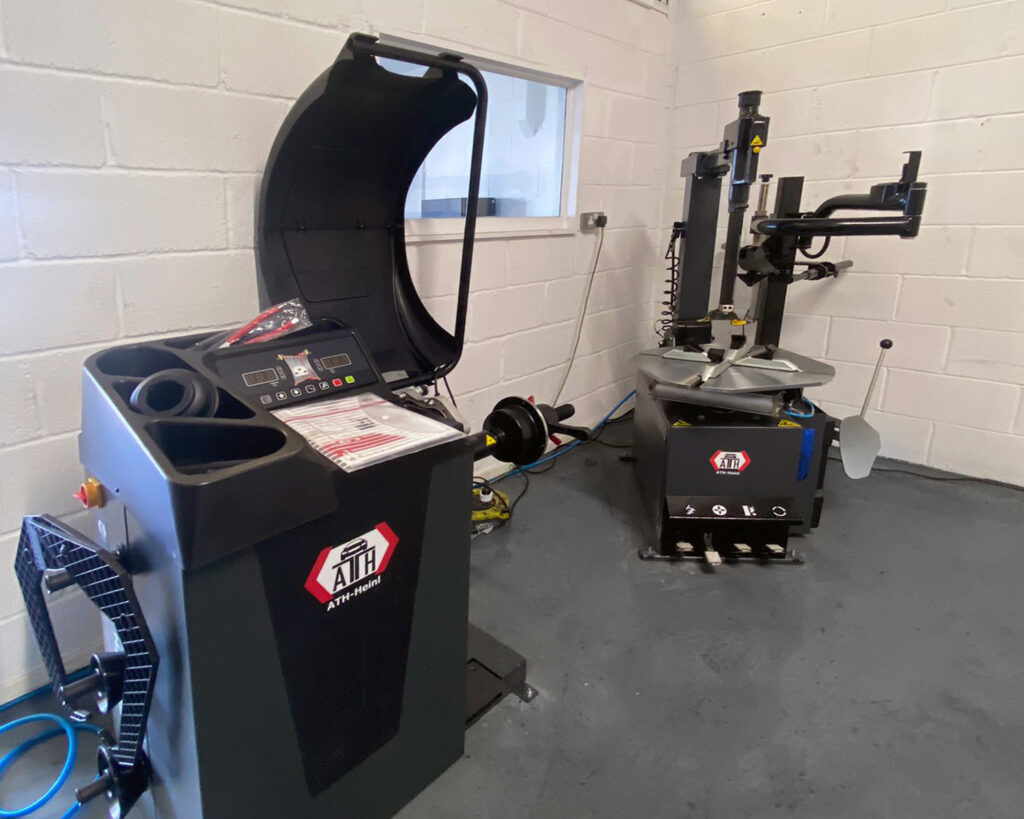
A tyre changer is only one part of a professional tyre fitting setup. After a tyre is fitted and inflated, the wheel usually needs balancing before being refitted to the vehicle. A wheel balancer helps identify and correct imbalance, improving ride quality and reducing vibration.

For many garages, buying a tyre-changer and wheel-balancer package makes sense. It ensures both machines are correctly matched to the work you want to carry out. It can also make installation planning easier, especially if you are building a new tyre bay, upgrading an MOT station or adding tyre fitting to an existing repair garage.

Safety, Training, and Competent Operation

Even the best tyre changer must be used correctly. Tyre changing involves heavy wheels, compressed air, bead seating, hand tools and moving machinery. HSE guidance is clear that tyre removal, replacement, and inflation should be carried out only by competent staff. It also highlights the risks from manual handling, tool injuries and compressed air accidents.

Training should cover machine operation, bead breaking, clamping, lubrication, TPMS awareness, inflation procedures, safe use of assist arms, wheel inspection and emergency procedures. Operators should understand when not to repair or inflate a tyre.

For puncture repairs, the British Tyre Manufacturers’ Association states that some minor damage to car and light van tyres can be repaired, principally punctures in the central tread area below 6mm, and that repairs should be carried out by a trained and competent operator in accordance with BS AU 159.

Common Mistakes When Buying a Tyre Changer

  1. Don’t buy too small. A workshop may choose a basic tyre changer because it is cheaper, only to find it struggles with the wheels customers actually bring in. If you regularly see SUVs, vans, low-profile tyres, or run-flats, buy for that reality.
  2. Remember the assist arms. Many garages try to save money by buying a machine without an assist arm, then regret it when difficult tyres take too long or place too much strain on technicians.
  3. Don’t forget to check the power and air requirements. A machine that needs three-phase power or a higher air supply may require additional installation work. This is not a problem if planned properly, but it can delay setup if missed.
  4. Remember to protect the wheel. If your tyre changer marks alloys, it will quickly become an expensive problem.
  5. Don’t buy without thinking about service and support. A tyre changer is a working machine. It needs maintenance, parts availability and support from a supplier who understands workshop equipment.

How Much Should You Spend on a Tyre Changer?

The right budget depends on your volume and tyre mix. A small garage doing occasional tyre work can start with a lower-cost semi-automatic tyre changer. A busy MOT bay or general workshop should budget for an automatic or tilt-back machine with an assist arm. A tyre centre or performance specialist should invest in a higher specification tilt-back or leverless model.

Think in terms of return on investment rather than purchase price alone. A better tyre changer can reduce time per job, lower technician fatigue, prevent damage claims and allow your workshop to accept jobs that a basic machine would struggle with. If the machine helps you keep tyre work in-house, it can also increase customer retention because drivers do not need to go elsewhere.

What is the Best Tyre Changer for a UK Garage?

For most small- to medium-sized UK garages, the best tyre changer is usually a robust automatic or tilt-back model with a suitable clamping range, a strong bead breaker, alloy-wheel protection, and at least one assist arm. This provides a good balance of cost, capability, and future-proofing.

For low-volume work, a semi-automatic tyre changer may be enough. For busy tyre bays, a tilt-back or leverless tyre changer with dual assist arms and blast inflation is the better choice. For mobile tyre fitting, choose a compact mobile tyre changer designed for van installation. For truck and bus work, use a dedicated commercial tyre changer.

The best tyre changer is not always the most expensive machine. It is the machine that matches your workload, wheel sizes, tyre types, staff skill level, workshop layout and growth plans.

Final Buying Checklist

Before choosing a tyre changer, ask these questions:

  • What vehicles do we work on most often?
  • How many tyres do we change per day or per week?
  • Do we regularly handle low-profile, run-flat, or UHP tyres?
  • Do we work on SUVs, vans, fleets, motorcycles or trucks?
  • What clamping range do we need?
  • Do we need a single assist arm or dual assist arms?
  • Do we need a tilt-back or leverless machine?
  • Do we have the correct power supply?
  • Do we have enough compressed air capacity?
  • Will the machine fit through our doors and into the planned space?
  • Do we need a wheel balancer at the same time?
  • What training will technicians need?
  • What service, parts and support are available?

Answering these questions will make it much easier to choose a tyre changer that will serve your business properly.

Speak to V-Tech Garage Equipment

Choosing the right tyre changer is easier when you match the machine to the workshop, not the other way around. A tyre changer for a mobile fitting van is not the same as one for a busy MOT bay. A machine for standard passenger car tyres is not always suitable for run-flat tyres, SUVs, or high-value alloy wheels.

At V-Tech Garage Equipment, we supply and install premium-quality garage equipment nationwide, including tyre changers, wheel balancers, MOT bay equipment, brake testers, lifts, compressors, and other workshop essentials. If you are setting up a new workshop, upgrading an existing tyre bay or adding tyre fitting to your garage, getting advice before you buy can help you choose equipment that fits your space, budget and workload.

For help choosing the right tyre changer for your workshop, contact V-Tech Garage Equipment to discuss your requirements, book a site visit or plan a complete tyre equipment package.

Call us today on 0208 498 1288 or email sales@v-techuk.com, and one of our team will be happy to help.

Choosing the Right Wheel Balancer for Your Garage, Tyre Bay, or Workshop

Choosing the Right Wheel Balancer for Your Workshop | Garage Equipment UK

A good wheel balancer is one of those pieces of garage equipment that quietly earns its keep every day. Customers may not always ask what machine you use, or whether your balancer has laser weight positioning, automatic data input or a diagnostic load force function. They simply expect their car to leave the workshop without steering-wheel vibration, wobbles that cause uneven tyre wear, or a return visit because “something still feels wrong”.

That is why choosing the right wheel balancer matters. For an independent garage, tyre bay, mobile tyre-fitting business, fast-fit centre, or MOT workshop, the right wheel-balancing machine can improve accuracy, speed up tyre work, reduce customer comebacks, and create another reliable revenue stream. The wrong machine can do the opposite. It can slow technicians down, lead to avoidable errors, cause issues with modern alloy wheels or vans, and leave your workshop limited just when your tyre service starts to grow.

At V-Tech Garage Equipment, we have positioned ourselves as a one-stop shop for premium quality garage equipment, including tyre changers and wheel balancers, with nationwide supply and installation support through V-Tech Group. That makes the buying decision more than a simple price comparison. You are not just buying a machine. You are choosing a long-term workshop tool that needs to match your workload, available space, technicians, the wheels you service, and the level of accuracy your customers expect.

What Does a Wheel Balancer Actually Do?

A wheel balancer measures the imbalance in a wheel and tyre assembly and tells the operator where to apply balancing weights so the assembly rotates smoothly. In simple terms, it helps even out the weight distribution around the wheel. Wheel balancing is best described as equalising the combined tyre and wheel’s weight distribution by adding small weights until it rotates evenly.

This is not a “nice to have” after a tyre change. It is part of professional tyre fitting. When a tyre is removed, replaced, repaired or rotated, the balance of the wheel and tyre assembly can change. Even small differences in weight can become noticeable once the wheel is spinning at road speed. The result is often vibration through the steering wheel, seat or floor, usually most obvious at higher speeds.

Modern wheel balancing machines offer much more than just spinning a wheel and displaying a number. Depending on the model, they can perform static and dynamic balancing, support alloy-wheel settings, facilitate adhesive weight placement, balance motorcycle wheels, and include features like optimisation, laser guidance, automatic measurement, and diagnostic checks. When comparing machines, it’s essential to consider the available balancing modes, data entry options, display type, measurement accuracy, cones, adaptors, clamping systems, space needs, and power supply.

Why Wheel Balancing Matters for a Garage Business

From the customer’s perspective, wheel balancing is about comfort and confidence. From the workshop’s point of view, it is about quality control, efficiency and reputation. A customer who pays for tyres and then feels vibration on the motorway is unlikely to blame the tyre manufacturer first. They are more likely to question the garage that fitted the tyres.

Unbalanced wheels can affect handling, create vibration, contribute to uneven tyre wear, increase stress on suspension components and reduce fuel efficiency. The RAC describes common symptoms, including vibration through the steering wheel, floor, or seats, which may lead to uneven tyre wear, poor handling, suspension stress, and reduced fuel efficiency.

For garages offering MOT work, it is worth being precise. Wheel balancing itself is not an MOT test item, but tyres, road wheels, wheel bearings, suspension and TPMS are all covered within the DVSA MOT inspection manual. The manual includes checks on wheel condition, tyre condition, tyre tread depth, tyre fitment, TPMS, and suspension. For most passenger vehicles and light goods vehicles up to 3,500kg, the primary tyre grooves must have at least 1.6mm tread depth across the central three-quarters and around the circumference.

That does not mean a balancer replaces good inspection, alignment checks or tyre pressure checks. It means balancing sits within a wider tyre and wheel service process. A workshop that fits tyres, checks valves, monitors TPMS, properly balances wheels, and advises customers on tyre condition offers a more complete service than one that treats balancing as an afterthought.

Start With Your Workshop Type and Workload

The best wheel balancer for one garage may be the wrong choice for another. A mobile tyre fitter working from a van has different needs to those of a high-volume tyre depot. A general repair garage that fits a few sets of tyres per week has different priorities from a fast-fit centre balancing dozens of wheels a day.

Before looking at brands or prices, start with these questions.

  • How many wheels will you balance per day or per week?
  • What percentage of your work is cars, vans, SUVs, motorcycles or performance vehicles?
  • Do you regularly handle large alloy wheels?
  • Do you fit tyres as a core service, or only occasionally?
  • Are you planning to grow your tyre fitting revenue?
  • How experienced are your technicians?
  • How much workshop floor space do you have?
  • Do you need a machine that works alongside a tyre changer in a compact bay?

It is important to consider workshop volume, vehicle and wheel types, budget, return on investment, space, technician skill level, power requirements and future growth as key decision factors when choosing a wheel balancer.

That future growth point is important. Many garages buy for today’s workload, then outgrow the machine within a year. If you currently fit tyres occasionally but want to build a tyre bay, a cheap manual or entry-level balancer may hold you back. If you already have a steady tyre service, a semi-automatic or fully automatic wheel balancer can save time on every job and reduce operator error.

Manual, Semi-Automatic, Fully Automatic or Diagnostic?

Most wheel balancers fall into four broad categories: manual or hand-spin balancers, semi-automatic balancers, fully automatic 3D balancers, and diagnostic machines such as road-force balancers.

A manual wheel balancer is the budget option. It suits very low-volume tyre work, occasional use or mobile setups where cost and footprint are the main concerns. The operator usually enters measurements manually and may need more skill to achieve consistent results. The benefit is affordability. The compromise is speed and repeatability.

A semi-automatic wheel balancer is a reliable middle ground for many independent garages. These machines automate certain measurements, minimise manual input, and provide a better balance between price, accuracy, and productivity. Some describe semi-automatic models as an optimal mix of speed and cost, while others see semi-automatic balancers as durable workhorse options for many independent garages.

A fully automatic 3D wheel balancer is designed for faster operation and fewer input errors. These machines can automatically measure wheel parameters, making them well-suited to busy garages, alloy wheel work and high-volume tyre bays. Remember that fully automatic 3D balancers measure parameters automatically and are particularly suitable for alloys and high-volume tyre bays.

A diagnostic wheel balancer, often associated with load-force measurement, is designed for specialist workshops that want to address more complex vibration issues. A standard balancer corrects imbalance. A diagnostic balancer can go further by identifying issues such as tyre uniformity, rim runout, bead seating problems, or other non-balance vibration causes. Some specialist machines use a diagnostic load roller to simulate road conditions and detect vibration issues that standard balancers may miss.

Motorised vs Non-Motorised Wheel Balancers

A non-motorised wheel balancer can make sense for occasional or mobile use, but most commercial garages will benefit from a motorised wheel-balancing machine. A motorised balancer spins the wheel at a consistent speed, helping improve repeatability and reducing technician effort. At V-Tech, we recommend using motorised balancers in nearly all garage settings due to their ability to spin under power, at a steady speed, and with shorter cycle times.

For a busy tyre bay, the difference is not just convenience. It is throughput. If a technician saves even a small amount of time on each wheel, that saving quickly multiplies over the course of a full day of tyre fitting. Faster cycle times also help when several vehicles are waiting, or when tyre changing, balancing and wheel refitting all need to happen efficiently in one bay.

For a mobile tyre service, the choice is more nuanced. A compact non-motorised balancer may be suitable where space, weight and power supply are limited. However, if the mobile business handles steady daily tyre fitting, a compact motorised option may still be worth considering, provided it fits the van layout and power setup.

Data Input: Manual, Semi-Automatic and 3D

Data input is one of the biggest differences between cheap wheel balancers and professional workshop machines. The machine needs accurate wheel measurements to calculate where weights should be fitted. If those measurements are entered incorrectly, the balance result can be wrong before the spin even begins.

Manual input machines rely heavily on the operator. The technician measures and enters values such as wheel diameter, width and distance. This can work, but it takes time and leaves more room for mistakes, especially if multiple staff members use the machine.

Semi-automatic machines reduce the input burden. They may automatically measure some dimensions while the operator enters others. For a small or medium workshop, this can offer a sensible upgrade without moving straight to the highest price bracket.

Fully automatic or 3D automatic wheel balancers measure all essential parameters autonomously, saving time and minimising operator errors. Some high-end diagnostic balancer models employ advanced technology to determine wheel dimensions, choose weight modes, and assess rim runout.

For garages with less experienced technicians, automatic data entry can be especially valuable. Training still matters, but the machine helps enforce consistency. For high-volume tyre bays, it removes small, repetitive tasks that slow the process.

Laser Weight Positioning and Alloy Wheel Modes

Modern vehicles often have larger alloy wheels, more visible rims and customers who care about appearance. That makes weight placement more important. Clip-on weights are not always suitable, and adhesive weights are often used to keep the finish clean.

Laser positioning systems guide the operator to the correct point for adhesive weights. It should be noted that laser systems show where to place adhesive weights, reduce balancing errors and are useful for hidden weights on alloy wheels.

For garages that regularly service alloy wheels, performance cars, SUVs, and newer vehicles, laser weight positioning is a serious feature rather than a luxury. It improves accuracy, helps keep wheel weights hidden and gives the technician a clearer process. It can also reduce the likelihood of repeat spins due to poor placement.

Look for alloy-wheel modes, split-weight programmes and hidden-weight functions. These features allow the machine to calculate adhesive weight positions behind spokes or in less visible areas of the rim. The result is a cleaner finish and a more professional service.

Cones, Adaptors and Clamping Systems

A wheel balancing machine is only as accurate as the way the wheel is mounted. Poor centring can create a false imbalance reading, leading the technician to chase a problem that was caused by the balancer rather than the vehicle.

Standard cones will suit many passenger car wheels, but they will not cover every job. If your garage services vans, larger SUVs, light commercial vehicles or motorcycles, you may need additional adaptors. While it is true that standard cones fit most passenger car wheels, van and LCV adaptors are required for vehicles such as Transits and Transporters, and motorcycle adaptors are needed if you service bikes.

A quick-release nut is also worth considering. It does not make the machine more glamorous, but it saves time every time a wheel is mounted or removed. In a busy workshop, that matters.

Advanced centring systems can improve accuracy on high-end alloys and more sensitive wheel assemblies. If your workshop handles prestige vehicles, modified cars or customers who are highly sensitive to vibration, better clamping and centring equipment may be more important than the base machine price suggests.

Space, Power and Workshop Layout

A wheel balancer is not huge compared with a lift or MOT bay, but it still needs enough space to be safe and practical. You need room for the machine, room for the operator, room to load and unload wheels, room for wheel weights and tools, and a sensible position close to the tyre changer.

It is suggested you have an approximate footprint of 1m by 1.2m, with side clearance for loading and unloading, typical 230V single-phase power and machine weights commonly between 80kg and 140kg, depending on the model. Always check the exact specification before buying, especially if the machine is going into a tight workshop or mobile tyre van.

The ideal position is close enough to the tyre changer to create a smooth workflow, but not so close that technicians are forced to work awkwardly. Wheels are heavy, repetitive handling is tiring, and clutter around tyre equipment increases the chance of mistakes or damage.

If you are planning a new tyre bay or workshop refit, map the tyre process from start to finish. Vehicle comes in. The wheel comes off. The tyre is demounted. The new tyre is mounted. Assembly is inflated. The wheel is balanced. Wheel goes back on the vehicle. Torque is checked. TPMS or pressure checks are completed. The wheel balancer should sit naturally in that flow.

Accuracy, Repeatability and Cycle Time

Accuracy is not just about the number displayed on the screen. It is about repeatability. A good wheel balancer should give consistent results when the same wheel is removed and remounted correctly. If results vary too much, technicians lose confidence, and jobs take longer.

Remember that higher-quality balancers provide finer gram resolution, better repeatability, and quicker balancing cycles. Additionally, most motorised balancers typically take about 6 to 10 seconds per spin cycle.

Cycle time becomes more important as volume increases. A small garage balancing a few wheels a week may not notice the difference between an entry-level cycle and a faster professional machine. A tyre depot balancing full sets all day absolutely will.

However, do not buy on spin speed alone. A machine that spins quickly but requires slow data entry, awkward clamping or repeated corrective spins may not be faster in real workshop use. Look at the complete process: mount, measure, spin, fit weights, check and remove.

Load Force and Diagnostic Balancing: When Is It Worth It?

Most garages do not need a diagnostic load force balancer for every customer. A good semi-automatic or fully automatic wheel balancer will be sufficient for many tyre-fitting and repair businesses. However, diagnostic balancing becomes valuable when a workshop regularly deals with vibration complaints, high-performance vehicles, premium wheels or customers who have already been elsewhere without the problem being solved.

Load force balancing goes beyond basic weight imbalance correction. These systems employ a load roller to mimic road conditions, allowing for the detection of problems like tyre uniformity issues, rim runout, improper bead seating, and tyre pull.

This matters because not every vibration is caused by imbalance. A tyre can be balanced in the traditional sense but still cause vibration due to stiffness variations, a bent rim, or poor bead seating. A diagnostic balancer helps the technician identify whether the issue is weight-, tyre-, rim-, or mounting-related.

For a specialist motorsport tyre centre, a prestige workshop, or a very high-end dealership environment, diagnostic balancing can become a strong selling point. For most workshops, there isn’t a strong business case for these machines.

Matching the Machine to Your Customer Base

For a small independent garage, a semi-automatic wheel balancer is often the sensible starting point. It offers higher productivity than a manual model, without the higher cost of a fully automatic 3D machine. Look for a motorised balancer, clear display, reliable cones, alloy modes and good support.

For a busy general repair workshop, a fully automatic or 3D automatic wheel balancer is more attractive. It reduces operator error, speeds up data input and suits a wider range of wheels. Add laser weight positioning and a quick-release nut if tyre fitting is a regular service.

For a dedicated tyre bay or fast-fit centre, the wheel balancer should be chosen for throughput and accuracy. A fully automatic machine with laser positioning, optimisation mode, van adaptors and strong clamping equipment is usually a better investment than a cheaper machine that slows the whole bay down.

For a mobile tyre-fitting business, compact size, low weight, low power requirements, and durability are key. Non-motorised options can work for occasional use, but a compact motorised balancer may be better if the business is serious about daily tyre fitting.

For motorcycle workshops, do not assume a standard car wheel balancer will do the job. You need the correct motorcycle adaptors and modes.

For van and light commercial work, check shaft capacity, wheel diameter, weight limits and LCV adaptors. We specifically recommend motorised machines with LCV or van adaptors and at least semi-automatic sensing for larger vans.

Budget and Return on Investment

Price matters, but it should not be the only buying criterion. A cheaper wheel balancer can become expensive if it causes delays, limits the work you can accept or leads to customer comebacks.

A quick internet search gives you indicative price bands:

  • under £1,000 for manual or hand-spin equipment
  • £1,000 to £2,000+ for semi-automatic machines
  • £2,000 to £4,000+ for fully automatic machines
  • £5,000 to £10,000+ for diagnostic load-force-style equipment

These are guide ranges only, and the actual cost will depend on the brand, specifications, supplier offers, and included accessories.

To judge return on investment, consider more than just the machine cost. Consider the number of tyres fitted per week, balancing charges, time saved per wheel, the reduction in repeat work, the ability to handle larger wheels, and whether the machine helps you sell more complete tyre services.

Bear in mind that wheel balancing should be a chargeable service, with typical UK prices of £5 to £10 per wheel. Having it as a separate line item on an invoice, alongside tyre disposal, shows the real value of the service you offer. Local pricing varies, but the point is straightforward: wheel-balancing equipment can generate direct revenue while also supporting tyre fitting, repair, and customer retention.

If you are already fitting tyres, a better balancer may not need to bring in many extra jobs to make sense. It may pay back through time saved, fewer mistakes, and more confidence when taking on alloy wheels, vans, or higher-value work.

Maintenance, Calibration and Safe Use

A wheel balancer is precision workshop equipment. It needs to be installed correctly, kept clean, used properly and maintained. If the shaft, cones, clamping system or measurement arm are damaged, accuracy can suffer.

HSE guidance on work equipment maintenance states that maintenance should be carried out by competent people with suitable information, instruction, and training. It also recommends planned maintenance, reporting procedures for damaged or faulty equipment and using the manufacturer’s instructions as a guide.

For a garage, this means choosing a supplier that can support the machine after delivery. Ask about installation, calibration, warranty, spare parts, technician training and service response. Key areas of supplier support include professional installation, maintenance, calibration, spare parts, warranty, and technical assistance.

Do not overlook training. Even the best fully automatic wheel balancer can be misused. Technicians need to know how to clean mounting faces, choose the right cone or adaptor, enter or verify data, select the correct programme, place weights accurately and recognise when a vibration issue may be caused by something other than imbalance.

Should You Buy a Tyre Changer and Balancer Package?

If you are setting up a new tyre bay, expanding a general workshop, or launching a mobile tyre-fitting service, a tyre changer and wheel balancer package can be a smart choice. The equipment is designed to work together in a single tyre service process, and packages can simplify specification, installation, and budgeting.

You can find tyre changers and wheel balancers within V-Tech’s wider garage equipment range, and remember that our tyre-changing equipment packages with compatible wheel balancers can offer value and convenience for workshops getting started with tyre changing.

The key is to avoid an unbalanced package. There is little point in buying a highly capable tyre changer and pairing it with a wheel balancer that is too slow, too basic or missing adaptors for the same customer base. Equally, a top-spec balancer may be wasted if the tyre changer cannot handle the wheels you plan to service.

A good supplier should ask which vehicles you work on, what wheel sizes you expect, how many tyres you fit, how much space you have, and whether you need finance, delivery, installation, or training.

Wheel Balancer Buying Checklist

Before choosing a wheel balancer for your garage, confirm the following.

  • What wheel sizes can the machine handle?
  • What is the maximum wheel weight?
  • Is it suitable only for cars, or also for vans and SUVs?
  • Does it support motorcycle wheels with adaptors?
  • Is it manual, semi-automatic or fully automatic?
  • Is the spin motorised?
  • Does it have alloy wheel modes?
  • Does it include laser weight positioning?
  • Are cones, adaptors and quick-release equipment included?
  • What is the footprint?
  • What power supply does it need?
  • How fast is the balancing cycle?
  • What training is provided?
  • Is installation included?
  • How is calibration handled?
  • What warranty is offered?
  • Are spare parts available in the UK?
  • Can the supplier support future service and repair?

It may be long, but this checklist prevents a common buying mistake: comparing headline prices without comparing capabilities. A machine may look cheaper until you add the adaptors, accessories, delivery, installation, training and service support needed to make it work properly in a real workshop.

Common Mistakes to Avoid

  1. Don’t buy purely on price. Budget matters, but a wheel balancer is a daily-use machine. A small saving upfront can disappear quickly if the machine slows down tyre work or cannot handle the wheels your customers bring in.
  2. Remember adaptors. Many workshops assume standard cones will cover everything. They will not. Vans, motorcycles, certain alloys and larger wheels may need specific equipment.
  3. Don’t underestimate the value of automatic measurement. Manual input is fine for low-volume use, but as soon as several technicians use the machine, automation can reduce variation and training headaches.
  4. Are you buying for today rather than tomorrow? If you want tyre fitting to become a bigger part of your garage revenue, choose a balancer that can grow with that service.
  5. Don’t neglect maintenance and calibration. A wheel balancing machine should be treated as precision equipment, not just another lump of workshop kit.

Final Recommendation: Choose the Balancer That Fits Your Work, Not Just Your Budget

The right wheel balancer should match your workload, customer base and growth plans. For occasional tyre work, a manual or compact machine may be enough. For most independent garages, a semi-automatic motorised wheel balancer offers a strong balance of price and performance. For busy tyre bays, fast-fit centres and workshops that handle lots of alloy wheels, a fully automatic 3D wheel balancer with laser positioning is usually the smarter long-term choice. For specialist vibration diagnosis and premium tyre service, a diagnostic load force balancer may be worth the investment.

Most importantly, buy the complete solution. The machine, cones, adaptors, clamping system, installation, training, maintenance and supplier support all affect the result your customer feels on the road.

At V-Tech Garage Equipment, we supply a wide range of garage equipment, including tyre changers and wheel balancers, and support workshops with premium equipment for MOT bays, tyre bays and general vehicle repair. If you are planning a new tyre-fitting setup, upgrading an older wheel-balancing machine, or comparing semi-automatic and fully automatic models, speak to us for practical advice tailored to your workshop space, vehicle mix, and budget.

For help choosing the right wheel balancer for your workshop, contact V-Tech Garage Equipment to discuss your requirements, book a site visit or plan a complete tyre equipment package.

Call us today on 0208 498 1288 or email sales@v-techuk.com, and one of our team will be happy to help.

FAQs

What is the best wheel balancer for a small garage?

For many small independent garages, a semi-automatic motorised wheel balancer is the best starting point. It gives better speed and consistency than a manual machine without the higher cost of a fully automatic 3D balancer.

Is a fully automatic wheel balancer worth it?

A fully automatic wheel balancer is worth considering if you balance wheels regularly, have multiple technicians, handle alloy wheels or want to reduce manual input errors. Fully automatic 3D machines are designed to measure key wheel parameters automatically and are well-suited to higher-volume tyre work.

Do I need laser weight positioning?

You do not always need it, but it is very useful for alloy wheels and adhesive weights. Laser systems help guide accurate weight placement and can support hidden weight positioning for a cleaner finish.

What wheel balancer do I need for vans?

Choose a motorised wheel balancer with suitable van or LDV adaptors, enough wheel weight capacity and at least semi-automatic measurement. Always check the machine’s maximum wheel diameter, width and weight before buying.

Can a wheel balancer fix every vibration problem?

No. A standard wheel balancer corrects imbalance, but vibration can also be caused by tyre defects, bent rims, bead seating problems, wheel bearing issues, suspension faults or alignment problems. Diagnostic load-force balancers can help identify some causes of unbalanced vibration.

How often should a wheel balancer be maintained?

Follow the manufacturer’s maintenance and calibration guidance. HSE guidance also recommends regular maintenance of work equipment, competent maintenance staff, planned maintenance procedures, and the avoidance of faulty or damaged equipment.

Arnold Clutch and Gearbox Centre adds a new Class 4 ATL MOT bay in Nottingham

Arnold Clutch and Gearbox Centre was supplied with a full V-Tech Class 4 ATL MOT package, centred around our proven Italian 4-post Class 4 ATL lift

A well-established Nottingham specialist has strengthened its workshop offering with a new, fully equipped Class 4 ATL MOT bay.

Arnold Clutch and Gearbox Centre in Nottingham has built its reputation on specialist repair and maintenance work, helping motorists with the kind of technical jobs that demand experience, precision and dependable workshop processes. As demand continued to grow, the business identified an opportunity to expand its in-house capabilities by installing a brand-new Class 4 ATL MOT bay.

From the outset, the project was about more than supplying equipment. Arnold Clutch and Gearbox Centre needed a complete solution to take the bay from concept to completion, with support for planning, workshop layout, installation, and compliance. Working closely with the customer from the early stages, we helped shape the project from the ground up, advising on how the new bay could best fit within the available space and support an efficient workflow in the workshop.

A Complete Project, Managed from the Start

A new MOT bay installation involves far more than the equipment itself, which is why project management played an important role throughout the process. We supported Arnold Clutch and Gearbox Centre from the beginning, helping to plan the installation, review the workshop layout and ensure the bay was designed to work effectively within the site.

This early involvement helped provide the customer with a clear route forward, with practical guidance on creating a professional Class 4 ATL testing environment that would meet both operational needs and compliance requirements. We also assisted with the DVSA application process, supporting the journey to a fully prepared, ready-to-use MOT bay.

A Complete Class 4 ATL MOT Package

To create the new bay, Arnold Clutch and Gearbox Centre was supplied with a full V-Tech Class 4 ATL MOT package, centred around our proven Italian 4-post Class 4 ATL lift. This was complemented by a headlamp aligner, a Class 4 specification jacking beam, and our renowned Class 4 ATL brake tester.

The package also included a V-Tech integrated combi gas and smoke emissions analyser, providing the workshop with a complete testing solution designed to support efficient and accurate Class 4 MOT testing.

More Than the Main Test Equipment

For any ATL bay to operate effectively, the ancillary equipment is just as important as the major testing products. To ensure Arnold Clutch and Gearbox Centre had everything required from day one, the installation also included a full ATL MOT bay ancillary pack featuring convex mirrors, wall charts, a brake decelerometer, MOT tool board, and all necessary tools and accessories.

By supplying the complete package, we helped create a bay that was not only compliant and practical but also organised to support technicians through the full MOT testing process.

Delivered, Installed and Supported

Once the planning stage was complete, we managed the delivery and installation of the equipment, bringing the project together as a complete working solution. Full product installation formed part of the package, followed by product training to ensure the team could use the equipment confidently and get the most from the new bay.

This end-to-end approach helped deliver a smooth installation process and a clear path from initial planning through to day-to-day operation for Arnold Clutch and Gearbox Centre.

A Valuable Investment in Workshop Capability

For Arnold Clutch and Gearbox Centre, the new Class 4 ATL MOT bay represents a significant investment in workshop capability and customer service. With support from V-Tech across planning, layout, project management, DVSA application assistance, installation, and training, the business now has a modern, fully equipped MOT testing facility built around its operational needs.

The finished bay gives this Nottingham workshop a professional Class 4 ATL solution that complements its established repair expertise and puts it in a strong position for the future.

If you’re planning to upgrade your workshop or open a new MOT centre, V-Tech can help you every step of the way. From design and layout to equipment supply, installation, and training, we can support you throughout the process. Call our team on 0208 498 1288 or email sales@v-techuk.com

Own an AutoStop Decelerometer? V-Tech Now Has You Covered.

If you’re currently using an AutoTest AutoStop decelerometer, such as the MicroPlus, MiniPlus, Tecalemit DE/9045 or DE/9046, there’s important news.

V-Tech is now the authorised UK distributor for AutoTest products, which means we can officially support your existing equipment with expert calibration, servicing, and technical assistance.

Stay Compliant. Stay Operational.

Since April 2023, DVSA regulations require decelerometers to be calibrated every 12 months. An out-of-date calibration certificate could jeopardise your MOT compliance and disrupt your testing operations.

That’s where we come in.

Professional Calibration for the Full AutoStop Range

V-Tech now provides:

  • DVSA-compliant annual calibration
  • Calibration for all AutoStop models, including legacy Tecalemit units
  • Fixed-price quotations
  • Rapid turnaround to minimise downtime
  • Full certification for audit purposes

Our experienced technicians ensure your decelerometer is tested, verified, and returned ready for immediate use, giving you total confidence at inspection time.

Minimise Downtime with Express Service

We understand how critical your decelerometer is to daily MOT operations. Any delay can impact productivity and revenue. Our streamlined calibration process is designed to minimise disruption and keep your MOT bay operational.

A Single Point of Support

As the authorised UK distributor, V-Tech can now support you beyond calibration, including:

  • Technical advice and troubleshooting
  • Replacement units if required
  • Ongoing product support
  • Access to the latest AutoTest models

You no longer need to search in vain for calibration providers. You can now deal directly with an approved UK distributor who understands both the equipment and the compliance requirements.

Is your calibration due?

Don’t risk falling out of compliance. Book your AutoStop calibration with V-Tech today and keep your MOT centre accurate, compliant, and audit-ready. Call our Service team on 0208 498 1288 or email service@v-techuk.com to arrange your next AutoTest calibration.

Class 7 MOT Test Centre Installation in the Welsh Valleys

At the heart of the installation is our Italian 5-tonne, 4-post 5.7m Class 7 ATL lift, complete with integrated radius plates and play detectors

Motor Vehicle Services has recently opened a brand-new Class 7 MOT Test Centre in the Welsh Valleys, strategically located between Neath and Port Talbot to support commercial vehicle operators throughout South Wales with high-quality, DVSA-compliant testing services. This facility has been equipped with a complete suite of advanced MOT testing and workshop equipment supplied by V-Tech, enabling the team to test vehicles up to 3.5t GVW with confidence.

The new facility has been purpose-built to meet growing regional demand for high-quality Class 7 MOT testing for light commercial vehicles. Designed around efficiency, compliance and long-term reliability, the centre is fully equipped with a complete V-Tech ATL package, delivering a professional, future-ready testing environment from day one.

Fully Integrated Testing Solutions

At the heart of the installation is our Italian 5-tonne, 4-post 5.7m Class 7 ATL lift, complete with integrated radius plates and play detectors to ensure accurate and consistent inspections. Supporting this is a fully integrated suite of specialist MOT equipment, including a PC-based brake tester, a combined gas-and-smoke emissions analyser, a precision headlamp aligner, and a Class 7 ATL jacking beam, creating a seamless, DVSA-compliant workflow throughout the bay.

The installation also included a comprehensive ATL ancillary package, ensuring the site was delivered fully equipped and inspection-ready. From convex mirrors and compliance wall charts through to decelerometer and tool boards, every detail was considered to guarantee operational readiness.

End-to-end Project Delivery

Crucially, the project was delivered as a complete turnkey solution. We managed full delivery, installation and commissioning, followed by on-site product training to ensure the Motor Vehicle Services team could begin testing with total confidence. This end-to-end approach enabled the new centre to open smoothly and begin serving customers without delay.

The new Class 7 facility now provides businesses and vehicle owners around Neath, Port Talbot and the wider South Wales region with a convenient, high-specification MOT testing solution closer to home. By investing in premium European-manufactured equipment and a fully integrated ATL system, Motor Vehicle Services has positioned itself as a leading provider of commercial vehicle testing in the Welsh Valleys.

This latest expansion reflects the company’s commitment to raising testing standards locally while supporting the growing number of light commercial vehicles operating across the region.

If you’re planning to upgrade your workshop or open a new MOT centre, V-Tech can help you every step of the way. From design and layout to equipment supply, installation, and training, we can support you throughout the process. Call our team on 0208 498 1288 or email sales@v-techuk.com

South West Motors Invests in a Complete Class 7 ATL MOT Test Centre with V-Tech

At the heart of the installation is our Italian Class 7 4-post ATL lift with 5.7m-long platforms, complete with radius plates and play detectors

When South West Motors in Fishponds, Bristol, decided to expand its workshop capabilities, it wasn’t simply adding another service. It was investing in the future of its business.

With a strong local reputation and a growing customer base that includes light commercial and heavier vehicles, the next logical step was clear: bring Class 7 MOT testing in-house and take full control of their testing capability. That’s where V-Tech came in.

Building a Future-Proof Testing Facility

South West Motors required a fully compliant, high-performance Class 7 Automated Test Lane (ATL) to test larger vehicles confidently and efficiently. From the outset, the objective was to install a professional, DVSA-ready solution that would increase revenue potential while enhancing customer convenience.

We supplied and installed a complete, fully integrated Class 7 ATL package tailored to their workshop layout in Fishponds.

At the heart of the installation is our Italian Class 7 4-post ATL lift with 5.7m-long platforms, complete with radius plates and play detectors, providing the robust foundation required for heavy-vehicle testing. Supporting this is our MTS-connected brake tester for precise, reliable braking analysis, alongside a combined emissions analyser to ensure full compliance for diesel and petrol vehicles.

To complete the testing capability, we installed our proven headlamp aligner and a Class 7-approved 2.8t jacking beam, providing the flexibility and precision required for modern heavy-vehicle inspections.

We also provided a comprehensive ATL ancillary package, including convex mirrors, wall charts, specialist MOT tools, and decelerometer equipment, ensuring the bay was fully prepared for operation.

More Than Equipment: A Complete Turnkey Solution

At V-Tech, we understand that investing in an MOT test lane is a major business decision. That’s why our involvement didn’t stop at equipment supply.

Our team handled full delivery and professional installation at the Bristol site, ensuring everything was positioned, calibrated and compliant with current regulations. Once installed, we provided comprehensive on-site training so the South West Motors team could begin testing with total confidence.

The Commercial Advantage

By bringing Class 7 MOT testing in-house, South West Motors is strengthening its position in the local market. Customers with larger vans and light commercial vehicles no longer need to be referred elsewhere, keeping both MOT and associated repair work within the business.

The result? Increased revenue retention, improved workflow efficiency, and a broader service offering that supports long-term growth.

For independent workshops looking to expand into heavier-vehicle testing, South West Motors’ investment demonstrates that the right equipment partner makes all the difference.

At V-Tech, we don’t just supply MOT equipment. We deliver complete testing solutions designed to help garages grow.

If you’re planning to upgrade your workshop or open a new MOT centre, V-Tech can support you every step of the way. From design and layout to equipment supply, installation, and training, we can help you throughout the process. Call our team on 0208 498 1288 or email sales@v-techuk.com

Add a Profitable DPF Cleaning Service to Your Workshop with Oxyhtech DPF Cleaning Machines

Oxyhtech DPF Cleaning Machines UK | Profitable DPF Cleaning

Diesel vehicles are not going anywhere overnight. Even with the growth of hybrid and electric cars, UK garages, vehicle workshops, fleet repair centres and MOT test centres still see thousands of diesel cars, vans and commercial vehicles every week. Many of those vehicles have one thing in common: they rely on a diesel particulate filter, better known as a DPF, to control soot and particulate emissions.

For many drivers, a blocked DPF is a frustrating repair bill. For the right garage, it is also a strong commercial opportunity.

V-Tech Garage Equipment is now introducing Oxyhtech DPF cleaning machines into the UK market, giving workshops a professional way to add diesel particulate filter cleaning to their service list. This is not just another piece of workshop equipment. It is a chance to create a high-value, repeatable service that helps customers avoid costly DPF replacement, supports better vehicle performance and gives your workshop another reason to win and keep business.

If you operate a garage, MOT test centre, fleet workshop, commercial vehicle repair centre or independent vehicle workshop, DPF cleaning could become one of the most useful add-on services you offer.

Why DPF cleaning is becoming a must-have workshop service

A DPF is fitted to diesel vehicles to trap soot and reduce particulate emissions. Over time, soot, ash, oil residue, AdBlue residue and other deposits can build up inside the filter. In normal use, the vehicle will try to burn off soot through regeneration. The issue is that regeneration is not always enough.

Urban driving, short journeys, stop-start delivery routes, poor servicing, faulty sensors, EGR problems and injector issues can all lead to DPF saturation. Once a filter becomes blocked, the vehicle can experience warning lights, power loss, poor fuel economy, repeated regeneration cycles, high exhaust backpressure, and, in some cases, limp mode.

For the customer, that means stress. For the workshop, it creates demand.

The old answer was often simple: send the DPF away to a specialist, fit a replacement, or attempt a basic clean with mixed results. Each option has a problem. Subcontracting sends revenue outside your business. Replacement can be expensive for the customer. Basic methods may not remove the deeper residue that causes recurring faults.

A professional DPF filter cleaning machine gives your workshop a better option. You can diagnose the issue, remove the filter, clean it using a controlled process, dry it correctly, measure the result and reinstall it with confidence. That changes DPF work from an awkward job into a structured service line.

Why V-Tech Garage Equipment is bringing Oxyhtech to the UK

At V-Tech Garage Equipment, we have built our reputation by supplying and installing premium garage equipment for UK garages, MOT bays, tyre shops, commercial workshops and vehicle repair centres. As a business, we already supply workshop equipment, MOT equipment, lifts, brake testers, and emissions equipment, and we complete garage projects.

Introducing the Oxyhtech brand is a natural next step.

Oxyhtech manufactures professional workshop machinery designed for modern vehicle maintenance, including DPF cleaning systems, engine decarbonisation equipment and related cleaning technology. Its DPF cleaning machines are built for workshops that want to offer a professional, repeatable, and profitable in-house filter cleaning service.

For UK workshop owners, this matters because buying a DPF cleaning machine is not only about the equipment itself. You need the right supplier, the right advice and a clear understanding of how the machine fits into your space, your customers and your revenue goals.

That is where V-Tech Garage Equipment adds value. We understand the practical realities of UK workshops, from independent garages and MOT test centres to commercial vehicle sites and fleet maintenance operations. We can help you look at the equipment as a business investment, not just a technical purchase.

What does an Oxyhtech DPF cleaning machine do?

An Oxyhtech DPF cleaning machine is designed to clean blocked or restricted filters through a controlled process that acts on the filter’s core. The system targets soot, ash and solid residue that restrict exhaust gas flow. The aim is to restore filter flow, reduce backpressure and return the DPF to a condition suitable for refitting.

The Oxyhtech cleaning process is built around professional control, not guesswork. It includes an initial backpressure measurement, detergent injection, controlled water and air cleaning, drying, and a final backpressure measurement. This gives the workshop a clear before-and-after result, which is useful for the technician and reassuring for the customer.

That reporting element is important. Many customers do not understand what is happening inside a DPF. They see a warning light and fear the worst. A clear technical report helps you show the value of the clean, explain the improvement and justify the cost of the service.

The system is also designed to clean without cutting, opening or welding the filter. That helps protect the component and supports a cleaner, more professional workflow.

A sales-led service, not just a repair job

The biggest mistake a workshop can make is to treat DPF cleaning as a one-off emergency repair. It can be much more than that.

A professional DPF cleaning service can support multiple revenue streams in a single job. First, there is the diagnostic work. A vehicle with a DPF fault should be checked properly before any cleaning is performed. That can include fault code reading, live data checks, pressure readings, sensor checks, EGR checks and injector checks.

Second, there is the labour for removal and refitting. A DPF clean is rarely just a machine cycle. It is a full workshop job that requires a technician’s skill.

Third, there is the cleaning service itself. This is the premium part of the job. It is where the customer pays for a specialist solution that may help them avoid the cost of a replacement filter.

Fourth, there are related repairs and maintenance. A blocked DPF is often both a symptom and a fault. Your team may also identify issues with glow plugs, thermostats, pressure sensors, exhaust temperature sensors, EGR valves, injectors, turbo operation or servicing history.

Fifth, there is future customer retention. A customer who has had a professional DPF clean, seen a before-and-after report, and avoided a large replacement bill is far more likely to return for servicing, diagnostics, MOT repairs, and future maintenance.

That is why DPF cleaning should be viewed as a workshop profit centre. It gives you a reason to attract new diesel customers, serve existing customers better and keep more work under your own roof.

Why MOT test centres should pay attention

MOT test centres are in a strong position to benefit from DPF cleaning demand. Diesel emissions, visible smoke, warning lights and DPF condition are all areas customers are increasingly aware of. A missing DPF, where one was fitted from new, is an MOT failure. Drivers also know that emissions-related failures can lead to extra cost and inconvenience.

This creates a clear opportunity for MOT stations that also operate repair facilities.

When a diesel vehicle presents with emissions concerns, DPF warning lights, poor performance, frequent regeneration or suspected DPF restriction, a workshop with an in-house DPF cleaning machine can offer a more complete solution. Instead of telling the customer to find a third-party specialist, you can keep the work in-house.

For MOT test centres, the benefit is not only the cleaning revenue. It is the customer journey. The driver comes to you for a test, receives expert advice, books the required work and returns to you for future servicing. That is how a single MOT visit can turn into long-term customer value.

Ideal customers for a DPF cleaning service

A DPF cleaning machine can suit many types of workshop, but the strongest business case often comes from sites that already see regular diesel traffic.

Independent garages can use DPF cleaning to stand out from local competitors. Many garages can diagnose a DPF fault, but fewer can offer a full, professional in-house clean. That gives you a stronger sales message and helps you attract work from drivers actively searching for DPF cleaning near them.

MOT test centres can add DPF cleaning to a broader emissions and diesel repair offering. This is especially useful for centres that already handle MOT repairs and want to increase average job value.

Fleet workshops can reduce downtime by bringing DPF cleaning into their own maintenance process. Delivery vans, taxis, service vehicles, and urban fleet vehicles are often subject to driving patterns that increase DPF issues.

Commercial vehicle workshops can build a high-value service for vans, trucks, buses and industrial vehicles, depending on the Oxyhtech machine and configuration selected.

Diesel specialists can use the equipment to strengthen their reputation as technical experts. If your workshop already handles diagnostics, injectors, turbos, EGR and emissions systems, then professional DPF cleaning is a natural fit.

DPF Cleaner or DPF Cleaner Plus: choosing the right setup

Oxyhtech offers DPF cleaning solutions for different workshop profiles. The right choice depends on the type of vehicles you want to serve now and the work you want to win in future.

For garages focused on passenger cars, vans, and light commercial vehicles, the Oxyhtech DPF Cleaner is designed to provide a professional cleaning solution for light-vehicle workshops. It supports DPF and FAP filter cleaning, along with related components such as EGR systems and intercoolers, depending on the setup and process used.

For workshops working with larger vehicles, fleets or industrial applications, the Oxyhtech DPF Cleaner Plus opens the door to heavy-duty work. This is especially relevant for workshops handling trucks, buses, commercial fleets, agricultural vehicles or industrial vehicles.

The commercial question is simple: what market do you want to own?

If your current customer base is primarily cars and vans, a light-vehicle solution may be the best starting point. If you already serve fleets, trucks, or heavier applications, the Plus option may provide the extra capability you need. Some workshops will want to future-proof the business by choosing a configuration that allows them to expand into heavier work later.

At V-Tech Garage Equipment, we can help you make that decision based on your workshop layout, customer mix, expected volume and growth plans.

Why customers will pay for professional DPF cleaning

Customers do not usually want to buy a DPF clean. They want their car or van back to normal. They want the warning light gone, the power restored, the fuel economy improved, and the risk of MOT failure reduced. They also want to avoid the shock of a replacement DPF if a clean is a suitable option.

That is where your sales process matters.

A professional DPF cleaning service should be explained in simple terms. The filter is blocked. The blockage is increasing backpressure. The engine cannot breathe correctly. Regeneration is not solving the issue. A professional clean removes built-up residue from the filter and allows the system to work correctly again, provided any underlying faults are also dealt with.

When customers understand the problem, the value becomes clear.

A replacement filter can be costly. Repeated forced regenerations may not remove ash. Ignoring the issue can lead to further damage. A professional clean gives the customer a practical, technical and often more cost-effective option.

The key is to avoid selling it as magic. Sell it as a measured workshop process. Diagnose first. Clean correctly. Dry properly. Measure the result. Repair related faults if needed. That is the difference between a professional DPF service and a quick fix.

How DPF cleaning helps increase workshop revenue

Adding a DPF cleaning machine can increase revenue in several ways.

It creates a new billable service. Instead of turning away DPF jobs or sending them to another company, you can invoice the diagnostic work, labour and cleaning service yourself.

It increases average repair order value. A DPF job can include diagnostics, removal, cleaning, drying, refitting, road testing and related parts. This can make it a higher-value job than many routine repairs.

It attracts new customers. Many drivers search online for DPF cleaning when they have a warning light or failed regeneration. A dedicated DPF-cleaning page, a local SEO campaign, and clear workshop signage can help you capture that demand.

It supports fleet contracts. Fleets care about uptime. If you can offer professional DPF cleaning for vans or commercial vehicles, you can approach local delivery firms, taxi operators, trades, local authorities and businesses that run diesel vehicles.

It improves customer retention. Once a customer trusts you with a technical emissions issue, they are more likely to use you for servicing, MOT, diagnostics and future repairs.

It protects profit margins. Subcontracting may be convenient, but it gives away control, margin and customer ownership. Bringing the service in-house gives you more control over turnaround, quality and profitability.

Building a DPF cleaning service around the machine

The best results come when the machine is part of a clear workshop process. Before launching, decide how you will package, price and promote the service.

Start with service packages. For example, you might offer a diagnostic-only visit, a standard DPF cleaning service, a DPF clean with EGR inspection, and a fleet maintenance package for repeat customers. Clear packages make the service easier for advisors to sell and easier for customers to understand.

Train front-of-house staff. Service advisors should know the signs of DPF problems, the benefits of professional cleaning and the limits of the service. They should be able to explain why a diagnosis is needed before cleaning and why related faults must be addressed.

Use before and after results. The backpressure readings and reports are not just technical documents. They are sales tools. They help prove value and build trust.

Promote it locally. Add DPF cleaning to your website, Google Business Profile, social media, MOT reminder emails and workshop signage. Use terms such as DPF cleaning near me, professional DPF cleaning, DPF filter cleaning, diesel emissions repair and DPF cleaning machine service.

Target fleet customers. A simple campaign to local van fleets, taxi firms, couriers, builders, utilities and service companies can help generate repeat work. For these customers, the pitch is not only about the repair cost. It reduces downtime and planned maintenance.

Why buy from V-Tech Garage Equipment?

Choosing a DPF filter cleaning machine is a business decision. You need to consider capability, installation, training, support, finance, and return on investment.

V-Tech Garage Equipment specialises in supplying and installing premium garage equipment nationwide. We support UK workshops with equipment advice, delivery, installation, training and after-sales support. We also understand how new equipment fits into a real garage environment, from available space and workflow to technician use and commercial return.

By introducing Oxyhtech to the UK market, V-Tech Garage Equipment is giving garages access to a professional DPF cleaning solution backed by a supplier that already understands MOT bays, workshop equipment and garage growth.

Whether you are adding your first specialist emissions service or expanding a busy diesel repair operation, our team can help you choose the right Oxyhtech setup and plan the service around your business.

Turn DPF problems into a profitable workshop service

Blocked DPFs are a regular problem for UK diesel drivers. They affect performance, fuel use, emissions and MOT confidence. For garages and MOT test centres, there is also a clear opportunity.

With an Oxyhtech DPF cleaning machine, your workshop can offer a professional, high-demand service that keeps more work in-house, gives customers a practical alternative to replacement and helps build long-term loyalty.

The market is already there. Diesel drivers need help. Fleet operators need uptime. MOT customers need solutions. Workshops need profitable services that make sense in the real world.

V-Tech Garage Equipment is now bringing Oxyhtech DPF cleaning machines to the UK, giving garages, vehicle workshops, and MOT test centres the chance to add a serious revenue-generating service to their business.

To find out which Oxyhtech DPF cleaning machine is right for your workshop, speak to V-Tech Garage Equipment today. Our team can help you review your workshop requirements, discuss finance options, and plan how to make DPF cleaning a profitable part of your service offering.

Upgrading an MOT Lane to ATL Specification 

When Shallaw Kamal took ownership of Redhill Garage in Nottingham, he inherited an existing MOT test lane based around a traditional inspection pit. While the lane was already installed, it needed recommissioning under new ownership, and Shallaw also wanted to upgrade the facility to Automated Test Lane (ATL) specification at the same time. 

The challenge was to modernise the lane efficiently, ensure full DVSA compliance, and make best use of the existing infrastructure, ideally without unnecessary downtime or expense. 

The V-Tech Solution 

V-Tech worked closely with Shallaw to assess the existing MOT lane and define the most effective upgrade path. By combining new equipment with targeted upgrades, V-Tech delivered a fully compliant ATL-ready solution tailored to the site. 

The project included: 

  • Supply and installation of a recessed PD2700 single-sided play detector, integrated into the pit to improve steering and suspension inspections while maintaining a clean, professional lane layout 
  • Upgrade of the existing Class 4 brake tester to meet current DVSA ‘Connected’ MOT requirements, ensuring seamless communication with the MOT testing service 

By upgrading rather than replacing where possible, V-Tech helped keep costs under control while delivering a modern testing environment. 

From Existing Lane to ATL-Ready 

The MOT lane at Redhill Garage was successfully recommissioned and upgraded in January 2026, allowing Shallaw to begin one-person MOT testing under his ownership. 

The completed ATL specification lane delivers: 

  • Full compliance with current DVSA and MOT regulations 
  • Improved test efficiency and workflow 
  • Modern, reliable testing equipment designed for everyday workshop use 
  • A future-ready MOT facility capable of supporting business growth 

Supporting MOT Stations at Every Stage 

From recommissioning existing lanes to full ATL upgrades, V-Tech supports MOT stations with practical, compliant solutions that work for real workshops. For Shallaw and Redhill Garage, the result is a professional MOT testing setup ready to serve customers with confidence. We want to thank Shallaw for choosing to work with us on this project. 

If you’re planning to upgrade your workshop or open a new MOT centre, V-Tech can help you every step of the way. From design and layout to equipment supply, installation, and training, we can support you through the whole process. Call our team on 0208 498 1288 or email sales@v-techuk.com 

✖